Illegal gold digging intensifies near Johannesburg as abandoned shafts draw zama zamas
Around Roodepoort, west of Johannesburg, illegal miners have moved in beside a long-running animal charity as higher gold prices revive work in abandoned shafts. Police action has not stopped the trade.
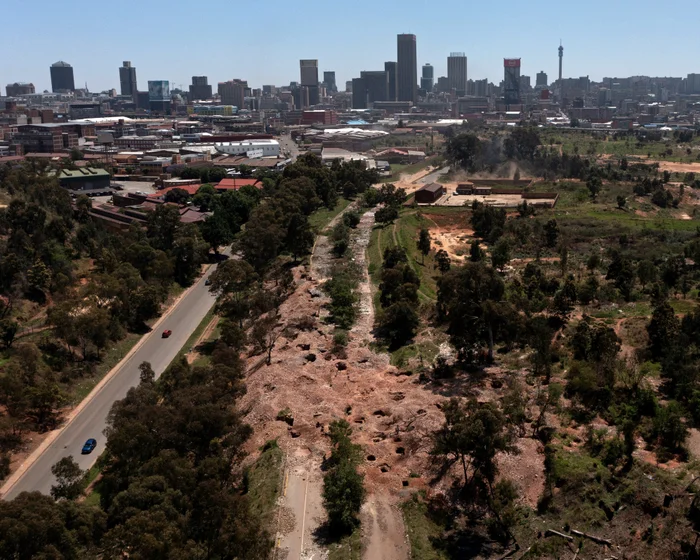
Illegal gold mining is pressing closer to daily life in the townships around Roodepoort, west of Johannesburg, where abandoned mine shafts still mark the ground. Cora Bailey, who has treated injured animals in the area since 1991, says she has encountered illegal miners throughout that time. As the price of gold has risen, so has activity in those shafts.
In late September, dozens of zama zamas arrived to dig for gold across a dirt road from her charity, Claw, short for Community Led Animal Welfare. Zama zama is the name widely used in South Africa for illegal miners. It means roughly “to take a chance” in Zulu.
Bailey’s account, reported by The Guardian, places the latest digging in a landscape already shaped by old mining. The shafts are not new workings opened under a formal licence. They are abandoned infrastructure that people without legal title are re-entering in search of remaining gold.
The Guardian’s framing of the story is blunt: there is no end in sight for the drivers of illegal mining, and police action appears ineffective. The report does not present a single incident as an isolated clash. It treats the September arrival beside Claw as part of a longer pattern Bailey has watched since the early 1990s.
That pattern matters because the costs are not only underground. The headline concerns attached to the trade around Johannesburg include sinkholes and scarred land, alongside the way people involved in the work are cast as scapegoats. The available reporting names those harms without supplying new measurements of how much ground has collapsed or how many people have been arrested in this latest push.
Roodepoort sits on the western side of the Johannesburg mining belt, where formal gold extraction left a dense legacy of shafts, dumps and unstable ground. When prices rise, that legacy becomes an incentive. People with few other options can reach ore that formal operators have left behind, using methods that sit outside safety rules, environmental controls and tax systems.
Claw’s presence on the same dirt road shows how informal digging collides with ordinary neighbourhood institutions. An animal-welfare charity that has worked in the townships for decades now has dozens of miners working opposite it. The report does not describe violence at the site or damage to the charity’s animals, and those details should not be assumed.
Who benefits, and who is blamed, remains contested. Illegal mining is often discussed through the figure of the zama zama alone. The Guardian’s account points past that single image to drivers that persist even when police act, without naming a new syndicate, a price level or a government programme in the material available here.
What is clear from the reporting is geographic and personal. The activity is in abandoned shafts around Roodepoort. It intensified as gold became more valuable. It arrived in force in late September opposite Claw. And a woman who has worked there since 1991 describes the encounters as continuous, not new.
What happens next is not settled in the account. The Guardian concludes that the forces pulling people into illegal mining are still in place and that policing has not brought them under control. Any claim of a timetable for closures, prosecutions or land repair would go beyond what the report establishes.
Residents, charities and local authorities around western Johannesburg are therefore left with the same unstable ground: old shafts, fresh digging and a gold market that continues to reward the risk. Until those conditions change, the scene across the road from Claw is likely to remain a measure of a problem the authorities have not yet contained.
Primary source: The Guardian World. Newzly rewrites and structures source reporting for clarity; verify critical details at the original.