Somalia's top court rejects president's term extension amid political crisis
Somalia's highest court has turned down an extension of the president's term, clouding plans for the country's first nationwide elections since 1969, which had been due next year.
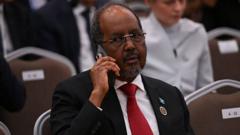
Somalia's top court has rejected an extension of the president's term, adding a legal ruling to a political crisis and unsettling the timetable for national elections. The BBC reported that the country's first nationwide elections since 1969 are due next year and that this schedule has now been thrown into doubt.
The dispatch is brief. It establishes the court's bottom line and the electoral consequence without setting out the judgment's reasoning, the length of the proposed extension or any response from the presidency. Those omissions matter because a term dispute is difficult to assess without the legal text and the official reaction.
The electoral claim itself is stark. According to the BBC, Somalia is approaching a nationwide vote of a kind it has not held since 1969. That long interval is the context in which next year's plan has been treated as a milestone, and it is why a sudden doubt over the calendar carries weight beyond a single officeholder's remaining months in power.
Term extensions are especially contentious because they decide who holds executive authority while election preparations are underway. A rejection by the top court indicates that judges, rather than the presidency alone, are being asked to fix the outer limit of the current term. The available report does not say whether the ruling is final, whether it can be revisited or how other branches of government are expected to comply.
Several facts that usually anchor a story of this kind were not included. The BBC item, as provided, does not name the legal provision at issue, describe any split on the bench or quote political leaders. Until the judgment and formal statements are published, those points should be treated as unknown rather than inferred.
What the report does make clear is the political effect. A timetable described as thrown into doubt is not the same as a cancelled election, but it removes the assumption that institutions were aligned on when the president's mandate ends and when balloting begins. The path to a nationwide poll is therefore more contested than the earlier schedule suggested.
The stakes sit in that gap between a promised vote and an unsettled mandate. If the first nationwide elections since 1969 slip, or if disagreement persists over who may remain in office while they are organized, public confidence in the process can erode even before any ballots are cast. This account does not record new statements from election officials or outside governments, so the scale of any delay remains unstated.
The ruling is framed as arriving amid political crisis, which places it inside a wider struggle over power rather than as an isolated procedural point. Without further on-the-record material, it is not possible to say which political actors sought the extension or how they intend to answer the court. Naming factions or attributing motives would go beyond the source.
What happens next depends on whether the presidency and the bodies responsible for elections accept the court's limit and reset the route to next year's vote. The BBC account leaves open whether the timetable can be restored, revised or argued over further. Any new date would have to come from institutions whose authority is part of the same dispute.
For now, the verifiable core is narrow. Somalia's top court has rejected the president's term extension, and the plan for a first nationwide election since 1969, due next year, is in doubt. Clearer ground will depend on the judgment text, official responses and any revised schedule, none of which were set out in the initial report.
Primary source: BBC World. Newzly rewrites and structures source reporting for clarity; verify critical details at the original.