Illegal Gold Mining Surges Around Johannesburg as Soaring Prices Fuel Shaft Digs
Surging global gold prices are driving informal miners into abandoned shafts across Johannesburg's western townships, leaving behind scarred terrain and infrastructure risks while community advocates report that ongoing police crackdowns remain largely ineffective.
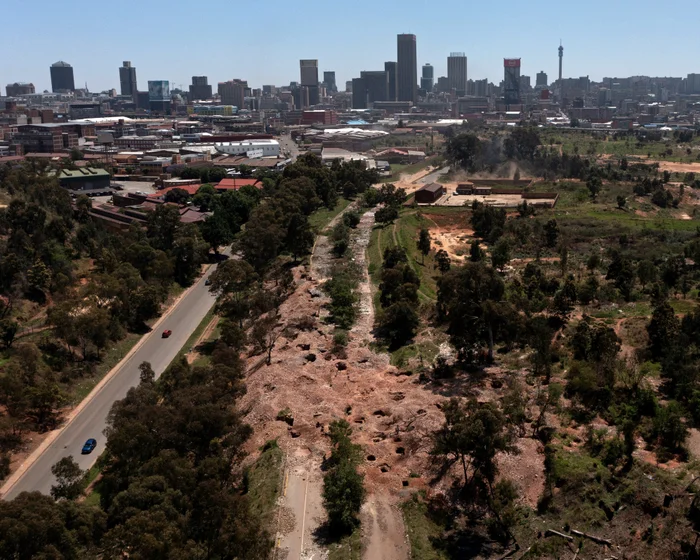
Surging international gold prices have sparked an aggressive resurgence of informal and unauthorized gold mining across the western outskirts of Johannesburg. In township areas around Roodepoort, dozens of informal miners—locally referred to as zama zamas—have converged on disused mine shafts, digging directly across from local facilities and public roads in a desperate pursuit of residual gold deposits.
For long-time community advocates, the sudden uptick in digging represents an intensifying chapter in a decades-long struggle. Cora Bailey, who founded the animal welfare organization Community Led Animal Welfare in 1991, has observed informal extraction nearby since she began treating injured animals in the area. Recently, however, teams of miners arrived to dig open ground directly across a dirt road from her charity's compound, illustrating how close to community centers the practice is unfolding.
The term zama zamas originates from a Zulu phrase roughly translating to "to take a chance," underscoring the perilous nature of underground labor that informal diggers undertake. Lured by escalating bullion values, workers navigate unstable, labyrinthine tunnels that were shuttered by commercial mining conglomerates decades ago. Many descend deep underground without standard safety gear, structural supports, or adequate ventilation, risking lethal cave-ins and toxic fumes.
The immediate toll on the surrounding landscape has grown increasingly visible throughout the region. Decades of heavy historical extraction followed by unregulated tunneling have destabilized the earth, sparking dangerous sinkholes and leaving expansive tracts of terrain severely scarred. Residential roads, surface infrastructure, and boundary lines are frequently compromised as ground integrity collapses beneath informal dig sites.
For local charities and residents living near abandoned mining concessions, the physical degradation creates immediate day-to-day hazards. Open excavations and haphazardly abandoned pits endanger local domestic animals and livestock that wander into freshly excavated ground. In addition, the expansion of informal operations adjacent to established settlements has heightened community anxiety regarding safety and ground instability.
Law enforcement authorities have repeatedly conducted targeted raids to dismantle informal operations and seize rudimentary processing equipment, yet observers note these interventions appear largely ineffective. Displaced groups routinely return to the shafts or relocate to adjacent seams once police units depart. Analysts and local witnesses suggest that treating informal mining primarily as a standard policing issue overlooks the deeper economic and structural factors keeping the trade alive.
The persistence of the trade reflects deep structural unemployment and regional economic pressures, which make artisanal extraction one of the few viable livelihoods available despite extreme danger. While informal laborers often face public blame and political scapegoating for municipal deterioration and crime, community leaders stress that these miners sit at the lowest rung of complex illicit supply networks. High-level buyers and shadowy syndicates reap the vast majority of financial rewards while front-line diggers bear the physical risks.
The crisis is further compounded by the unresolved legacy of historic mining operations, which left thousands of shafts decommissioned but inadequately secured or rehabilitated. When commercial mining firms ceased operations, remaining mineral seams were left accessible to anyone willing to breach superficial barriers. Without comprehensive environmental remediation and effective sealing, these open fissures remain permanent magnets for informal extraction.
With gold prices holding at elevated levels, observers see no imminent decline in the fundamental drivers propelling men into the shafts. Local organizations like CLAW and nearby township residents continue to operate amid growing environmental precarity, warning that temporary security sweeps will not resolve the underlying crisis. Until authorities establish durable frameworks addressing economic vulnerability, shaft rehabilitation, and illicit trade networks, the ground beneath western Johannesburg will remain contested and perilous.
Primary source: The Guardian World. Newzly rewrites and structures source reporting for clarity; verify critical details at the original.