Illinois Prepares for Army Detonation in Iowa as Wind Forecast Spares Border
Illinois officials mobilized environmental and emergency resources ahead of a major military munitions detonation in Iowa, as favorable wind patterns were projected to carry lead dust away from border communities.
In this piece
Illinois emergency and environmental agencies prepared monitoring operations ahead of a controlled U.S. Army detonation of lead azide explosives at an Iowa…
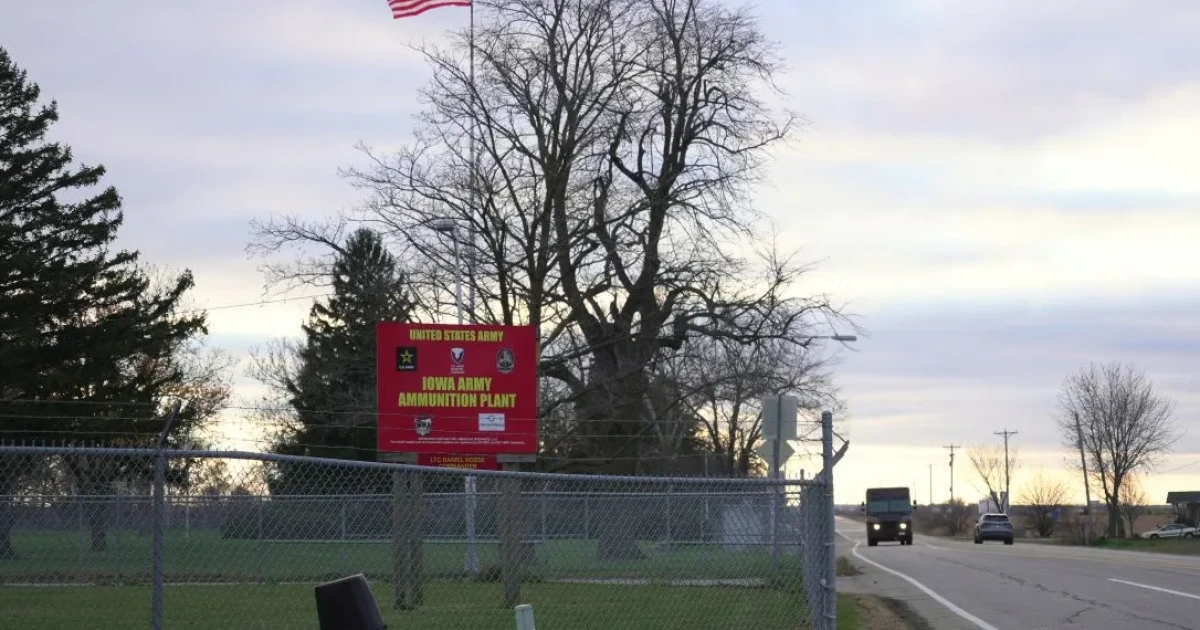
Illinois emergency management and environmental officials mobilized monitoring resources and issued advisories ahead of a planned U.S. Army detonation of nearly five tons of degraded explosives in neighboring Iowa. The high-profile disposal operation at the Iowa Army Ammunition Plant prompted widespread regional scrutiny due to concerns over toxic airborne contaminants crossing state lines. However, updated meteorological assessments signaled that prevailing wind patterns would likely push the resulting plume away from Illinois communities.
The Army scheduled the controlled open detonation of approximately 10,000 pounds of lead azide, a primary explosive compound that had become unstable in storage at the Middletown facility near Burlington, Iowa. Military officials determined that the aging compound posed an imminent hazard, warning that freezing winter temperatures could exacerbate its chemical instability. Despite local resistance and legal challenges, federal authorization cleared the Army to proceed with destroying the deteriorating munitions.
Because the ammunition plant sits roughly ten miles west of the Mississippi River, the announcement triggered immediate apprehension across western Illinois. Public health advocates and residents worried that an open detonation could cast a heavy plume of lead dust into neighboring agricultural and residential areas. Lead exposure carries well-documented neurological and health risks, prompting local officials to demand strict oversight of airborne particulates.
Meteorological forecasts from the National Oceanic and Atmospheric Administration and military modeling provided initial relief for Illinois authorities. Projected wind trajectories showed currents moving primarily out of the east and northeast, steering atmospheric fallout to the south and southwest across portions of southeastern Iowa and northeastern Missouri. The projected track significantly reduced the likelihood that detectable concentrations of lead dust would breach the Illinois border.
Despite favorable wind projections, Illinois Gov. JB Pritzker directed multiple state agencies to maintain a high state of vigilance. The Illinois Environmental Protection Agency, the Department of Public Health, and the Illinois Emergency Management Agency and Office of Homeland Security coordinated contingency preparations. State officials established a dedicated informational dashboard to keep the public updated on atmospheric readings and safety guidance.
Elected officials on both sides of the river criticized the Army’s communication timeline and demanded full environmental transparency. U.S. Rep. Eric Sorensen, a former television meteorologist representing parts of northwestern and western Illinois, urged border communities such as Hancock County to monitor local advisories closely. Sorensen emphasized that while atmospheric modeling was encouraging, volatile weather conditions along the river corridor warranted ongoing vigilance.
The debate over the open detonation highlighted longstanding tensions surrounding military waste disposal and community safety. Open-air burning and detonation of hazardous munitions have drawn persistent opposition from environmental groups, who advocate for closed-containment destruction technologies to prevent atmospheric lead dispersion. Military representatives maintained that the immediate risk of an unintended explosion left no viable alternative to an open detonation before freezing temperatures set in.
To address cross-border concerns, regional monitors and environmental personnel deployed air sampling equipment around the perimeter of the facility and downwind zones. Illinois officials indicated they would continue reviewing real-time sensor data and air quality reports following the blast. Authorities encouraged residents near the border to report unusual dust accumulation or smoke while continuing normal daily routines.
Moving forward, state and federal regulators will evaluate post-detonation air sampling and soil test results to verify whether hazardous residues remained within acceptable safety thresholds. The operation is expected to intensify broader policy discussions regarding how the Department of Defense manages and decommissions hazardous stockpiles near populated borders. For Illinois communities along the Mississippi River, the episode underscores the critical role of real-time weather forecasting and interstate coordination in shielding the public from sudden environmental hazards.
Primary source: Google News Illinois. Newzly rewrites and structures source reporting for clarity; verify critical details at the original.