business·Delhi·New Delhi District
India's Manufacturing Push Faces U.S. Friction Over Trump Tariffs
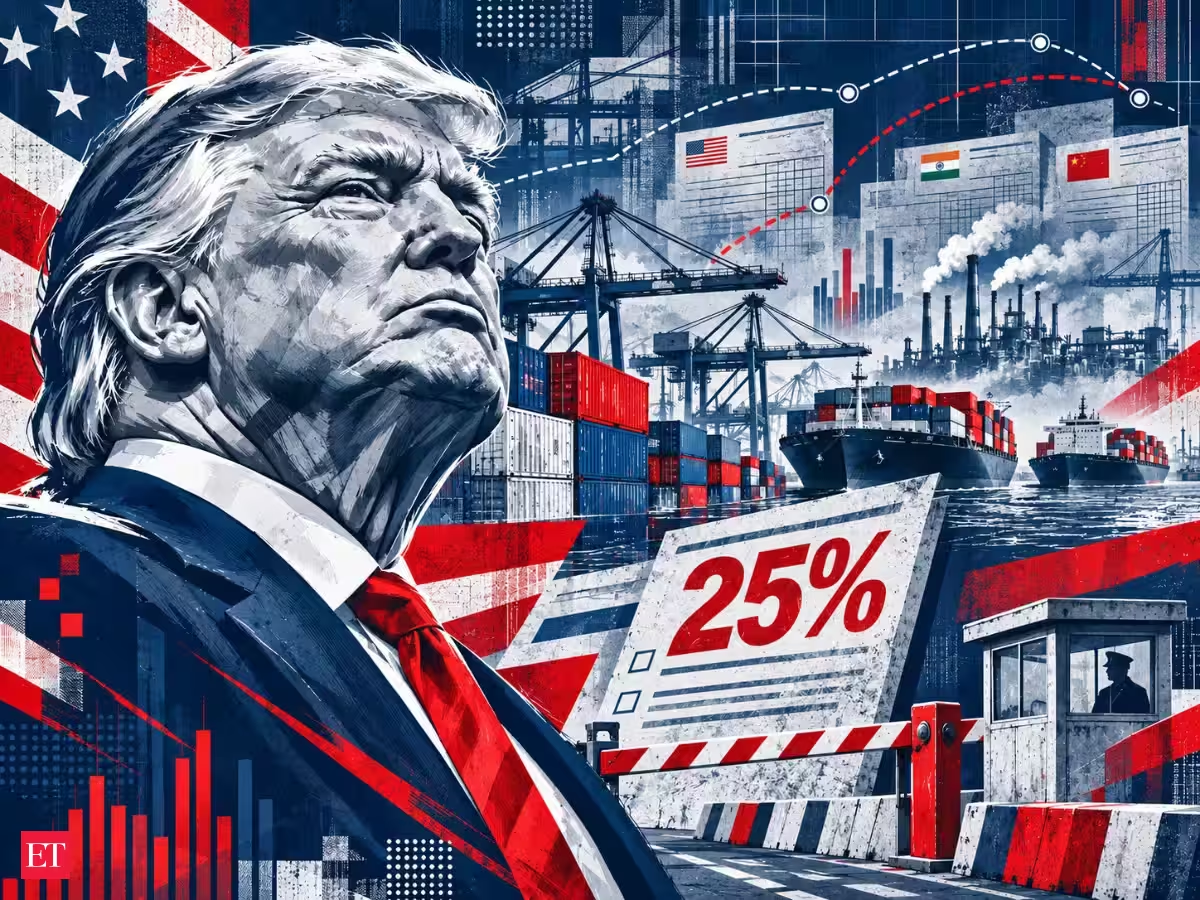
As India accelerates its drive to replace China in global supply chains, the Trump administration is pushing back with proposed tariffs of up to 25% and scrutiny of New Delhi's manufacturing incentives.
In this piece
India's expanding manufacturing incentives have drawn sharp scrutiny from the Trump administration under Section 301 trade investigations. Proposed U.S. tariffs…
India's ambitious drive to establish itself as a primary global alternative to China's manufacturing base is running into significant friction from Washington. The administration of U.S. President Donald Trump has voiced strong displeasure over New Delhi's industrial support measures, placing key economic policies under direct scrutiny. The pushback marks an escalating trade dispute between two strategic partners whose commercial ties are becoming increasingly strained.
At the center of Washington's grievances is a Section 301 trade investigation launched by the Trump administration to examine foreign manufacturing subsidies. American trade authorities are taking direct aim at India's flagship Production-Linked Incentive schemes and the broader "Make in India" initiative. Officials in Washington argue that these government-funded programs grant local enterprises an unfair edge and distort international markets.
To pressure New Delhi into policy shifts, the U.S. administration has proposed steep import tariffs reaching up to 25% on a broad basket of Indian goods. At the same time, Washington has kept the door open for compromise, suggesting the duties could drop to 17% if the two countries finalize a bilateral trade agreement. This dual strategy of punitive threats paired with conditional relief has added urgency to ongoing bilateral talks.
Over recent years, Indian policymakers have positioned the nation as a natural beneficiary of multinational corporations adopting a "China Plus One" sourcing model. New Delhi deployed tens of billions of dollars across critical sectors such as electronics, pharmaceuticals, and green technology to lure high-value assembly lines. Those efforts have yielded tangible gains in attracting international investment and boosting outbound shipments.
However, the White House views the rapid expansion of these state-backed programs with growing skepticism. U.S. trade representatives have cited concerns regarding industrial overcapacity and government intervention in export-oriented sectors. From Washington's vantage point, policies designed to foster domestic manufacturing run counter to principles of open and reciprocal market access.
The confrontation highlights an inherent contradiction in American foreign economic policy toward the Indo-Pacific region. While the United States has spent years encouraging allies to decouple key supply chains from Beijing, punitive trade actions against New Delhi risk penalizing the very industrial base capable of absorbing that relocated capacity. Analysts observe that aggressive tariff enforcement may inadvertently complicate shared strategic goals.
For India, the prospect of hefty U.S. tariffs represents a serious obstacle to sustaining economic growth and export momentum. Major industries that depend on the American consumer market could face higher barriers, potentially chilling foreign direct investment. Negotiators on both sides are now tasked with hammering out terms that address Washington's trade deficit and subsidy concerns without gutting New Delhi's industrial roadmap.
As negotiations progress, the coming months will test whether bilateral diplomacy can resolve deep-seated disagreements over trade architecture. Observers emphasize that reaching an accord will require delicate compromises on market access, tariff thresholds, and industrial incentives. Until a definitive trade pact is reached, the trajectory of U.S.-India commercial relations will remain clouded by tariff threats and regulatory uncertainty.
Primary source: Economic Times. Newzly rewrites and structures source reporting for clarity; verify critical details at the original.