Israel faces four paths out of election deadlock as count continues
With 85% of votes counted, neither main bloc appears positioned to secure a majority. Coalition compromises could break the impasse, but another election may be the likeliest outcome.
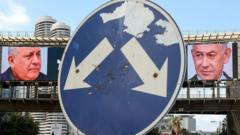
Israel appears headed for political deadlock, with 85% of votes counted and neither main bloc looking likely to secure a parliamentary majority, according to the BBC. Another election could become the most likely outcome unless party leaders overcome commitments that currently stand in the way of a coalition.
The contest pits Prime Minister Benjamin Netanyahu’s governing alliance against an opposition bloc led by Gadi Eisenkot. Winning the largest share of seats does not itself settle who governs: the decisive question is whether a leader can assemble enough parliamentary support to sustain an administration.
One route would be a national unity government bringing Netanyahu and Eisenkot together. The BBC identifies this as a possible solution, but Eisenkot campaigned on replacing Netanyahu, making participation in a government under his leadership a substantial political reversal rather than a straightforward coalition agreement.
A second possibility would be an Eisenkot-led government relying on Arab parties. Their support could provide a route around the parliamentary impasse, but most Jewish parties in his bloc have rejected such cooperation, according to the BBC. Turning that possibility into an agreement would therefore require changes to positions taken during the campaign.
A third route would involve right-wing parties breaking away from the opposition to support Netanyahu. BBC reporting identifies Naftali Bennett and Avigdor Lieberman as potential partners, while stressing that both campaigned to remove him. Disagreements over military conscription for the ultra-Orthodox also complicate cooperation with his existing allies.
The fourth scenario is another election if negotiations fail. That would leave Netanyahu serving as caretaker prime minister while the country prepares to vote again. The BBC’s assessment presents this as potentially the most probable outcome, not an announced decision or an inevitable consequence of the incomplete count.
The underlying difficulty is that the parties’ objections concern both leadership and policy. As RBC-Ukraine’s analysis notes, parties can share positions on security while remaining divided over Netanyahu and the composition of a governing alliance. Electoral arithmetic alone therefore cannot resolve the dispute: a workable arrangement would also need political commitments its participants are prepared to defend.
Israel’s government-formation process provides time for those negotiations rather than requiring an immediate agreement. Under the Knesset’s published explanation, the president assigns a lawmaker the task of forming a government within seven days of publication of the election results. The initial negotiating period is 28 days, with extensions totalling up to 14 days permitted.
For now, the remaining count and subsequent coalition discussions will determine which options remain viable. The central question in the BBC’s analysis is whether leaders will revise their campaign positions to avoid another vote. Until a governing arrangement emerges, all four scenarios remain possibilities rather than settled outcomes.
Primary source: BBC World. Newzly rewrites and structures source reporting for clarity; verify critical details at the original.