Justice Department to oppose bid to block Army lead detonation in Iowa
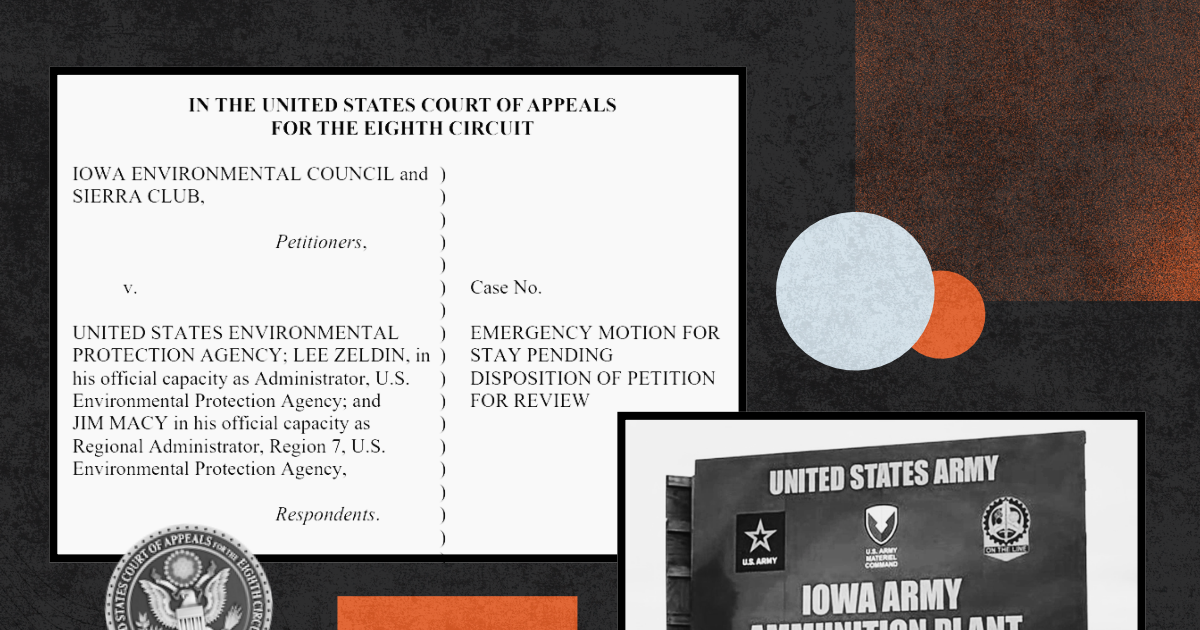
The Justice Department plans to oppose an effort to stop a U.S. Army lead detonation in Iowa, Iowa Public Radio reported. The move would put the federal government behind letting the operation go forward.
In this piece
Iowa Public Radio reported that the Justice Department will oppose a bid to block a U.S. Army lead detonation in Iowa. The headline does not identify the…
The U.S. Justice Department plans to oppose a bid to block a U.S. Army lead detonation in Iowa, according to a report by Iowa Public Radio. The headline account does not include the government's legal filing, the identity of the parties seeking to stop the detonation, or the location inside the state.
A bid to block an operation of this kind is generally a request that a court halt the activity, often while a broader dispute is heard. Iowa Public Radio's report, as circulated in a news summary, states the department's intention to oppose that request. It does not quote officials or describe the legal theory the government will use.
The Justice Department commonly represents federal agencies, including the Army, when their actions are challenged in court. Opposition in this setting would mean the department is asking the court not to stop the detonation. That posture is procedural as well as substantive: it signals that the government wants the operation to remain available while any case continues.
The available report does not say what material would be detonated, how much lead is involved, or whether the event is a one-time action or part of a recurring practice. "Lead detonation" indicates that lead is part of what the Army intends to set off. Further technical details are not in the source material used for this article.
Lead is a toxic metal, and disputes over military detonations often turn on how blast residue, noise, and debris are controlled. Nothing in the Iowa Public Radio headline specifies alleged harms, permit status, or environmental findings tied to this particular operation. Those questions would have to be answered from court papers or a fuller report.
Iowa is identified as the setting. No city, county, or installation is named in the summary. Readers should not assume a particular arsenal, training range, or community is the site until that is confirmed in primary reporting or court records.
The challengers are also unnamed. A bid to block an Army action can come from residents, advocacy groups, local governments, or other litigants, but this account does not say which. Their arguments, and any request for emergency relief, are not described.
Why the dispute matters is straightforward even with limited facts. A court order stopping the detonation would delay or prevent an Army operation the government is prepared to defend. A decision allowing it to proceed would leave objectors to seek other remedies, if any case continues. Either result can affect nearby communities and the military's schedule, but the scale of those effects is not established here.
Federal cases of this type often move first on whether an immediate halt is justified, then on the merits if the lawsuit remains active. The Iowa Public Radio report does not give a hearing date, a judge, or a docket number. Timing and venue therefore remain unknown from this account.
Public records would be the next place to look: a Justice Department filing, an Army statement, or a court order. Until those appear in reporting, claims about safety findings, cleanup plans, or political reaction would go beyond what has been published.
What happens next is a judicial decision on the effort to block the detonation, with the Justice Department arguing against that block. Iowa Public Radio has reported the department's planned opposition. The outcome, and any conditions a court might impose, have not been reported in the material available here.
Primary source: Google News Iowa. Newzly rewrites and structures source reporting for clarity; verify critical details at the original.