Karnataka Leader D.K. Shivakumar Criticizes Centre Over Delimitation and Demands All-Party Talks
Karnataka leader D.K. Shivakumar criticized the Centre for progressing with delimitation without an all-party meeting. He warned that the demographic formula risks marginalizing southern states despite their economic contributions.
In this piece
Karnataka Deputy Chief Minister D.K. Shivakumar criticized the central government for advancing parliamentary delimitation without an all-party meeting.…
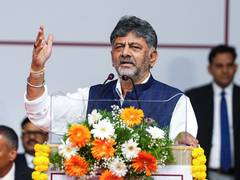
Karnataka Deputy Chief Minister D.K. Shivakumar criticized the central government for advancing plans related to parliamentary delimitation without convening an all-party consultation. Speaking to reporters according to an ANI News report, Shivakumar termed the proposed exercise unfair to southern states and cautioned against decisions that could diminish regional political representation.
Shivakumar argued that southern states contribute significantly to the country's economic growth and overall national development. He asserted that any seat reallocation formula based purely on demographic shifts risks reducing southern states to a political minority, adding that regional leaders will not allow their democratic influence to be curtailed.
A primary grievance highlighted by Shivakumar was the absence of structured dialogue across political parties. He stressed that a subject as consequential as electoral boundary redrawing requires wide consensus rather than unilateral administrative movement, calling on the Union government to immediately convene an all-party meeting to address state-level concerns.
The delimitation debate centers on the eventual lifting of the constitutional freeze on parliamentary seat totals, which was enacted decades ago to encourage population stabilization. Under standard population-based reapportionment, northern states with higher fertility rates could see substantial seat increases, whereas southern states that achieved superior family planning and human development outcomes could lose relative legislative power.
To counter what they view as an impending imbalance, Shivakumar indicated that southern leadership is actively pursuing regional coordination. Consultations among chief ministers and party leaders from states including Karnataka, Kerala, and Telangana are currently being explored to formulate a united front aimed at protecting their states' collective interests.
The remarks align with broader concerns raised across the opposition INDIA bloc, where regional leaders have expressed mounting unease over federal balance. Opposition figures have repeatedly argued that penalizing progressive administrations for successful population control policies threatens the core compact of Indian cooperative federalism.
Central authorities and proponents of regular delimitation have historically pointed out that legislative boundaries must periodically reflect demographic realities to safeguard equal voter representation. While the Union government has not finalized specific formulas or timelines ahead of the upcoming national census, supporters of the process argue that independent statutory commissions will conduct the exercise transparently and constitutionally.
The controversy highlights deeper friction surrounding fiscal and political federalism between southern state administrations and New Delhi. Regional leaders frequently tie parliamentary representation directly to their long-term ability to negotiate central tax devolution, federal policy priorities, and infrastructure investments, warning that diminished representation could weaken their economic leverage.
As debates over the upcoming census and subsequent constituency revisions intensify, southern regional leaders are expected to step up demands for structural representation guarantees. With regional parties preparing for joint discussions and potential parliamentary interventions, the push for formal inter-party consultations is poised to remain a prominent issue on the national political agenda.
Primary source: Google News Karnataka. Newzly rewrites and structures source reporting for clarity; verify critical details at the original.