King Charles to discuss legacy of slavery with Commonwealth leaders at summit
The king opened his Caribbean tour in Nassau with an acknowledgment of 'the great suffering of the past,' confirming that reparations will be on the agenda at the Commonwealth Heads of Government Meeting in Antigua and Barbuda.
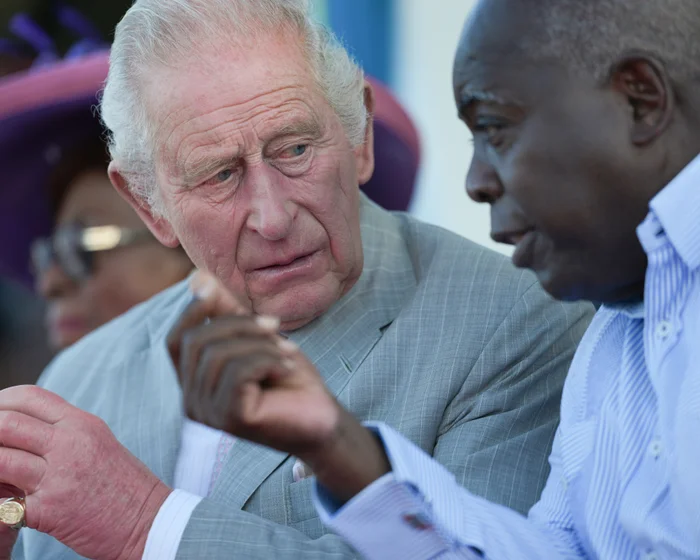
King Charles has confirmed he will discuss the legacy of slavery with Commonwealth leaders at their upcoming summit, opening his Caribbean tour in Nassau with a ceremonial welcome and a direct acknowledgment of 'the great suffering of the past.'
The king arrived in the Bahamas on Tuesday and attended a youth rally at Clifford Park — the site where the country officially gained its independence from British colonial rule in 1973 — in a moment laden with historical symbolism.
Charles told attendees it was 'only right' to confront 'the great suffering and injustices of the past in these islands and beyond,' and acknowledged that much of Bahamian culture's vibrancy had been 'born out of darkness.' His remarks marked one of his most direct public engagements with Britain's role in the transatlantic slave trade.
The tour, which the king is undertaking alongside Queen Camilla, will also take in Guyana before culminating in Antigua and Barbuda for the Commonwealth Heads of Government Meeting, known as CHOGM, which runs through early November.
The visit comes as Caribbean nations have renewed pressure on Britain to engage formally in reparations discussions. CARICOM, the Caribbean Community bloc of 23 member and associate member states, successfully pushed for the issue to be placed on the CHOGM agenda in the lead-up to the summit.
CARICOM Secretary-General Carla Barnett framed the issue in unambiguous terms, stating that 'reparations is fundamentally about justice.' Commonwealth Secretary-General Shirley Botchwey also signalled openness to dialogue, saying it 'wouldn't hurt' for the king to offer an apology.
Buckingham Palace confirmed, however, that Charles would not issue a formal apology during the tour — a position consistent with the British government's longstanding policy, which also rules out financial reparations. The palace said the monarch would nonetheless not 'shy away' from addressing Britain's involvement in the slave trade.
Historians note that Britain transported approximately 3.2 million enslaved Africans across the Atlantic between the 15th and 19th centuries, making it one of the largest slave-trading nations in Europe. Caribbean states argue that the economic and social consequences of that history continue to shape inequality across the region today.
The debate over reparations has intensified in recent years, with several Caribbean governments explicitly linking colonial-era wealth extraction to persistent development gaps. Some have called for a formal acknowledgment and a structured reparative process, while others have pressed for debt cancellation or targeted investment as practical alternatives.
The outcome of the CHOGM discussions is expected to set the tone for Britain's relationship with its former Caribbean colonies for years to come. With the king having signalled willingness to place the conversation on the table, observers will be watching closely for whether the summit produces concrete commitments or remains at the level of symbolic acknowledgment.
Primary source: The Guardian World. Newzly rewrites and structures source reporting for clarity; verify critical details at the original.