Leaked Russian Records Indicate Nearly 500,000 War Deaths in Ukraine
Leaked internal records from Russia's federal data agency indicate that nearly 500,000 Russian soldiers have died in Ukraine, fundamentally reshaping male mortality patterns across the country since the full-scale invasion began.
In this piece
An investigation based on leaked Russian state mortality records indicates that nearly 500,000 soldiers have died during the war in Ukraine. The figures,…
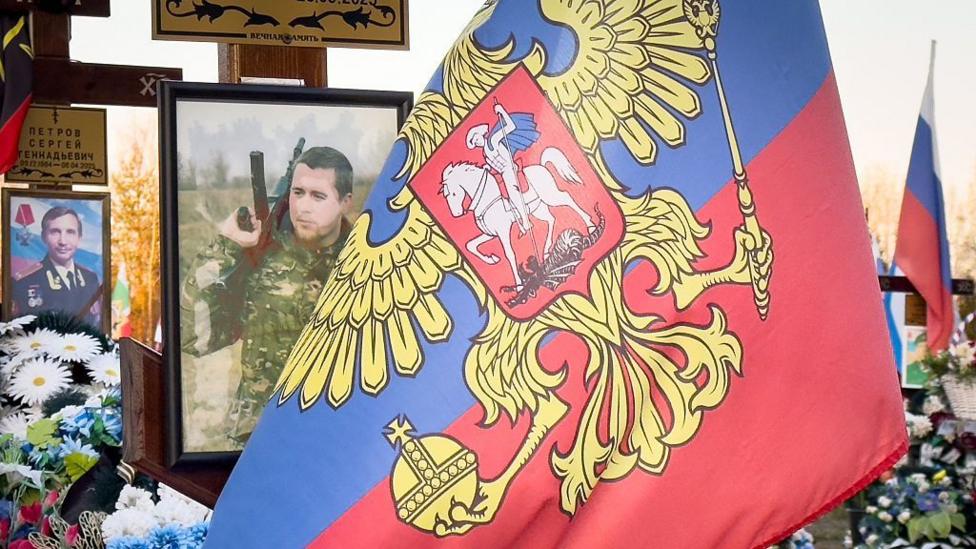
Leaked government mortality records from Russia indicate that nearly 500,000 Russian military personnel have died since Moscow launched its full-scale invasion of Ukraine, according to an investigation by BBC Russian and independent media outlet Mediazona. The findings, drawn from internal state data, offer one of the most comprehensive looks to date at the scale of Russian casualties during the ongoing conflict.
The figures emerged from a cache of more than 11 million individual death records maintained by Russia's federal state statistics service, Rosstat, covering mortality data from 2021 through September 2026. The database was obtained following a cyberattack attributed to hacker groups, including the Belarusian Cyber Partisans and the Ukrainian group Silent Crow, before being analyzed by data researchers and investigative journalists.
To assess the authenticity and reliability of the leaked registry, journalists cross-referenced the records against an independently verified open-source database of confirmed Russian military fatalities. That verification effort matched approximately 90 percent of the names already documented through public death notices, obituaries, and cemetery records, establishing a high degree of correlation between the registry and confirmed battleground deaths.
The data reveals a dramatic transformation in mortality patterns across Russia, disproportionately affecting younger generations of men. In 2025, war-related fatalities accounted for roughly 65 percent of all recorded deaths among Russian men aged 18 to 24. A similar trend emerged among men aged 25 to 34, where conflict-related deaths constituted 59 percent of all male fatalities within that age group.
The staggering figures stand in stark contrast to the Russian government's official posture, which has treated military casualty numbers as a tightly guarded state secret. The Russian Ministry of Defense has not released regular casualty updates since the early months of the invasion, repeatedly dismissing external casualty evaluations as hostile Western propaganda.
In the wake of mounting battlefield casualties, Russian statistical agencies systematically restricted public access to detailed demographic information. Rosstat previously ceased public releases of mortality tables broken down by external causes of death, which demographers and researchers had long relied upon to trace excess male mortality caused by military operations.
The leaked documentation also illuminates the grinding, attritional nature of combat along the front lines in eastern and southern Ukraine. The statistical records suggest that tens of thousands of Russian servicemen lost their lives in localized assaults over small, heavily damaged, and largely depopulated settlements, underscoring the severe human cost of incremental territorial pushes.
Demographic researchers and investigative analysts emphasize that the figure of nearly 500,000 likely represents a conservative baseline rather than a complete ceiling. Delayed administrative registrations, unresolved missing-in-action declarations, and unrecovered remains on contested frontlines suggest that cumulative military deaths could ultimately be higher than the current state records reflect.
The profound surge in young male mortality poses significant long-term demographic and economic challenges for Russia. Beyond the immediate grief borne by hundreds of thousands of families, the sudden loss of a substantial portion of the working-age male workforce is expected to deepen existing labor shortages and accelerate longer-term demographic contraction.
As fighting continues across the active front lines, international monitors and independent analysts will continue monitoring alternative statistical channels, inheritance registries, and open-source memorials. The leak of Rosstat's internal mortality registry provides crucial empirical grounding to an attritional war whose full human toll remains obscured behind official state silence.
Primary source: BBC World. Newzly rewrites and structures source reporting for clarity; verify critical details at the original.