Leonid Meteor Shower Set to Peak Tuesday Night With Bright, Fast Streaks
The annual Leonid meteor shower is set to reach its peak on Tuesday night, offering stargazers an opportunity to observe fast, luminous meteors streaking across dark night skies.
In this piece
The Leonid meteor shower is scheduled to peak on Tuesday night, bringing a burst of bright, high-speed shooting stars to dark night skies. Observers across…
Skywatchers are turning their attention upward this week as the annual Leonid meteor shower prepares to reach its peak activity on Tuesday night. The recurring celestial event is widely regarded by astronomers and casual observers alike for producing remarkably bright and fast-moving meteors across the night sky.
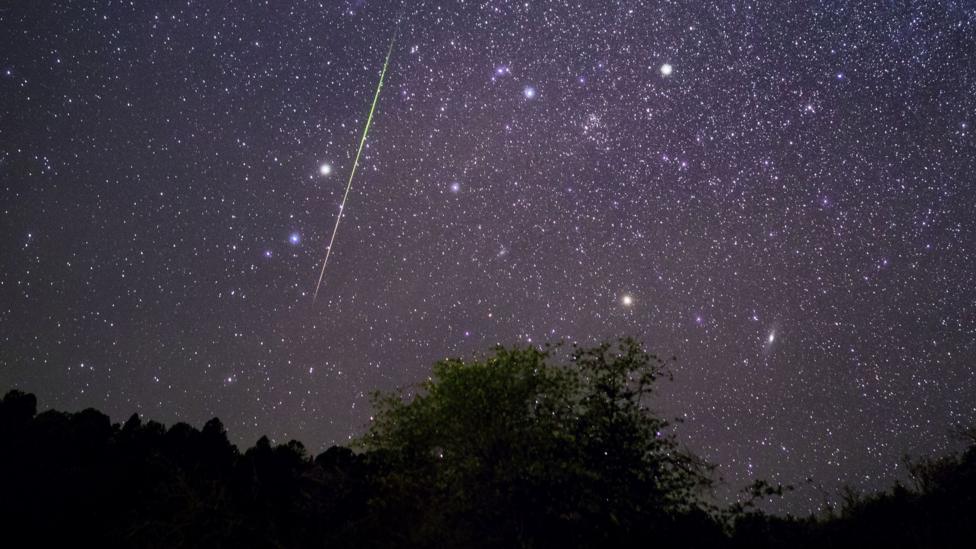
The Leonids occur every year in mid-November when Earth passes through the orbital debris trail left behind by comet 55P/Tempel-Tuttle. As small particles of dust and ice shed by the comet collide with Earth's upper atmosphere, friction causes them to vaporize and produce luminous streaks of light commonly known as shooting stars.
Leonid meteors are recognized in astronomical circles for their extraordinary velocity, typically traveling at speeds exceeding forty miles per second. Because these particles strike the atmosphere head-on at such high velocity, they frequently leave persistent glowing vapor trails behind them and can occasionally produce vivid fireballs that illuminate the surrounding sky.
The shower takes its name from the constellation Leo, from which the meteors appear to originate when viewed from the ground. While locating the radiant point can help identify meteors belonging to the Leonids, astronomers generally advise viewers not to look directly at the constellation, as meteors can streak across any part of the open sky.
The best viewing opportunities typically occur during the pre-dawn hours on Wednesday morning, once the radiant constellation has risen sufficiently high above the horizon. The absence of ambient artificial lighting is critical for catching fainter streaks, making rural areas and open parks significantly better vantage points than urban centers.
Local atmospheric conditions will play a decisive role in determining the quality of the display for skywatchers in any given area. Overcast skies or heavy cloud cover can obstruct visibility entirely, while atmospheric clarity and minimal ground fog will allow observers to catch even brief, delicate streaks of light.
In addition to weather patterns, the presence and phase of the moon can influence how many meteors remain detectable to the naked eye. Bright moonlight tends to wash out fainter streaks, meaning observers often fare best when viewing during periods when the moon is either low or absent from the sky.
For amateur astronomers and science enthusiasts, annual meteor showers like the Leonids offer a direct, accessible window into the dynamics of the solar system. Observing these recurring events requires no specialized equipment such as telescopes or binoculars, allowing anyone with access to open skies to experience planetary science firsthand.
As Tuesday night approaches, observers are encouraged to monitor local meteorological forecasts and allow their eyes ample time to adjust to darkness before looking upward. While activity levels can vary from hour to hour, patient viewers positioned under clear, dark skies can anticipate catching periodic glimpses of one of the autumn season's most enduring celestial spectacles.
Primary source: BBC Science. Newzly rewrites and structures source reporting for clarity; verify critical details at the original.