NASA's Perseverance Rover Discovers 'Ghostly' Silica-Rich Rocks Outside Jezero Crater
Scientists analyzing data from NASA's Perseverance Mars rover have discovered pale, silica-rich rocks in an exposed region of ancient crust, providing fresh evidence of long-lost aqueous environments outside Jezero Crater.
In this piece
NASA's Perseverance rover has uncovered a cluster of unusually bright, light-toned rocks nicknamed 'Idubi' in the Lac de Charmes region outside Jezero Crater.…
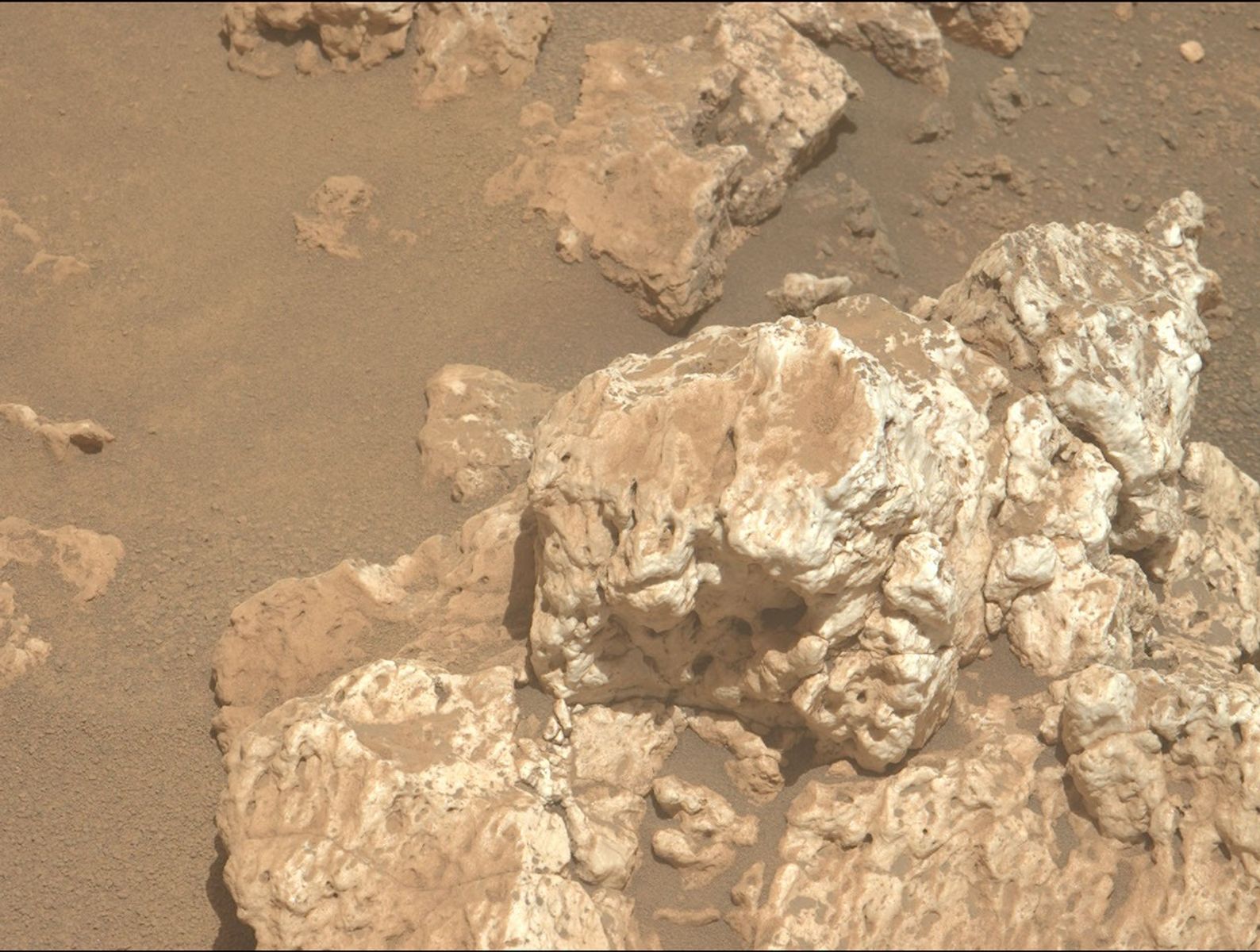
NASA's Perseverance rover team has uncovered an unusual cluster of eerily bright, light-toned rocks scattered across an ancient section of the Martian surface outside Jezero Crater. The discovery occurred during the rover's ongoing geological investigation of the "Idubi" area within the surrounding "Lac de Charmes" region, where billions-of-years-old crust lies exposed. Science team members were immediately drawn to the pale formations, which stand in sharp visual contrast to the reddish, dust-covered expanse of the Red Planet.
The pale geological specimens, referred to by researchers as the "ghostly rocks" of Idubi, feature noticeably light surfaces and heavily pitted textures. Unlike the darker, basaltic rock fragments commonly found across the local terrain, these rocks appear anomalous in both tone and structure. Mission specialists noted that their striking appearance prompted immediate remote targeting with the rover's mast-mounted instruments to evaluate their origin and mineral properties.
Subsequent data downlinked from Perseverance confirmed that the fragments are not typical volcanic igneous rocks or standard impact debris. Spectroscopic measurements collected by instruments including SuperCam revealed that the bright float rocks are rich in hydrated silica. This chemical fingerprint demonstrates that the rock materials underwent significant chemical transformation driven by liquid water in the ancient Martian past.
Writing in an official mission update, Candice Bedford, a research scientist at Purdue University and member of the Perseverance science team, highlighted the importance of the find for reconstructing Mars' planetary evolution. Bedford noted that the presence of hydrated silica in Idubi provides compelling evidence of long-lasting aqueous systems operating within this region of ancient crust. The discovery suggests that water-rock interactions were active and chemically potent outside the primary lake basin.
On Earth, hydrated silica typically precipitates within environments characterized by sustained water flow, including hydrothermal spring systems, groundwater circulation, and soil-forming horizons. These geochemical environments often provide stable temperatures and rich chemical energy, making them prime habitats for microbial life on our own planet. Planetary geologists study comparable Martian formations to determine whether similar hospitable conditions once persisted across early Mars.
Beyond demonstrating the presence of water, hydrated silica holds extraordinary astrobiological value due to its preservation properties. In terrestrial rock records, fine-grained silica precipitating from mineral-rich fluids can rapidly entomb microorganisms, preserving delicate cellular structures and chemical biosignatures over billions of years. Consequently, identifying silica-rich deposits is one of the highest priorities for researchers searching for potential traces of ancient Martian life.
The investigation at Idubi marks an important chapter in Perseverance's expanded mission outside the perimeter of Jezero Crater. By climbing into the Lac de Charmes region, the rover is examining ancient crustal units that predate or formed independently of the crater's former lake system. These rocks grant scientists a rare direct look at Mars' oldest crustal history and the environmental processes that shaped the planet during its earliest epochs.
Mission researchers are continuing to evaluate the geochemical and imaging data collected from the ghostly rocks to clarify the exact nature of the fluid systems that produced them. The findings will help the Perseverance team map the distribution of altered minerals across the region and determine how extensive these ancient aqueous systems were. Insights from Idubi are also expected to inform future route planning as the rover presses forward with its ongoing exploration and sample campaign.
Primary source: NASA Breaking News. Newzly rewrites and structures source reporting for clarity; verify critical details at the original.