Scotland Faces Severe Travel Disruption as Storm Boelo Brings 80mph Winds
Transport operators across Scotland have cancelled key rail lines and issued road warnings as Storm Boelo, the second named storm in two days, approaches with gusts reaching 80 mph.
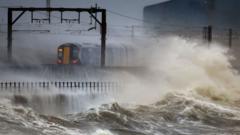
Scotland is bracing for widespread travel disruption and hazardous conditions as Storm Boelo sweeps across the country, bringing heavy rainfall and destructive wind gusts forecast to reach up to 80 mph. Transport operators and emergency services have issued extensive travel warnings, with multiple rail services preemptively cancelled across high-risk corridors.
The Met Office has issued amber and yellow weather warnings across large swaths of Scotland, Northern Ireland, and northern England as the intense Atlantic low-pressure system moves inland. Forecasters warned that the most severe winds will batter exposed coastal areas, higher ground, and island communities, with inland gusts widely exceeding 50 to 65 mph.
Rail operator ScotRail and Network Rail confirmed precautionary line closures beginning Saturday evening to protect passenger safety. Key routes facing closures and cancellations include sections between Kilwinning and Ayr, lines connecting Glasgow Queen Street with Oban and Fort William, and northern Highland lines towards Kyle of Lochalsh and Wick.
Across the lines that remain open, safety-mandated speed restrictions are severely extending journey times and triggering short-notice cancellations. Cross-border and intercity operators, including London North Eastern Railway and TransPennine Express, have similarly advised passengers against non-essential travel along affected northern routes.
On the roads, transport authorities and police have urged drivers to exercise extreme caution as high winds and torrential downpours heighten the danger of localized flooding, aquaplaning, and fallen trees. Bridge restrictions and high-sided vehicle warnings are in place across vulnerable river crossings and coastal highways, with officials advising motorists to delay non-urgent trips.
The arrival of Storm Boelo marks the second major named storm to strike the region in just two days, following closely behind Storm Austen. While Austen primarily soaked southern and central areas with persistent rainfall, Boelo carries a harsher combination of gale-force winds and downpours directed straight across northern Britain.
Because Storm Austen left ground across many river catchments heavily saturated, meteorologists and environmental agencies caution that even moderate additional rainfall could rapidly cause surface water flooding. The sodden soil also increases the vulnerability of trees, raising the likelihood that strong gusts could uproot timber, damage overhead power lines, and block critical road arteries.
Coastal communities face heightened risks from large swells, hazardous wave overtopping, and flying debris propelled by the storm's gale-force westerly winds. Emergency services have warned the public to stay clear of sea walls, promenades, and exposed cliffs, noting that sudden surges pose an immediate danger to life.
Railway engineers and municipal road teams plan to conduct safety inspections at first light once the worst of the gales subside, searching tracks and carriageways for blockages, fallen utility poles, and structural damage before services can be restored. Transport operators have stressed that lines will remain shuttered until physical route checks verify that running conditions are entirely safe.
Forecasters project that conditions will gradually moderate from late Sunday into early next week as the center of the storm tracks northeastward towards the North Sea. However, transport officials emphasize that residual delays and cancellations are likely to spill into Monday morning commutes as maintenance teams work to clear debris and normalize transport schedules.
Primary source: BBC Science. Newzly rewrites and structures source reporting for clarity; verify critical details at the original.