Lifestyle report warns chemical-treated mushrooms may harm liver and kidneys
A Divya Bhaskar lifestyle report says mushrooms treated with chemicals are being sold in markets and may harm the liver and kidneys. It points readers to home checks and buying precautions.
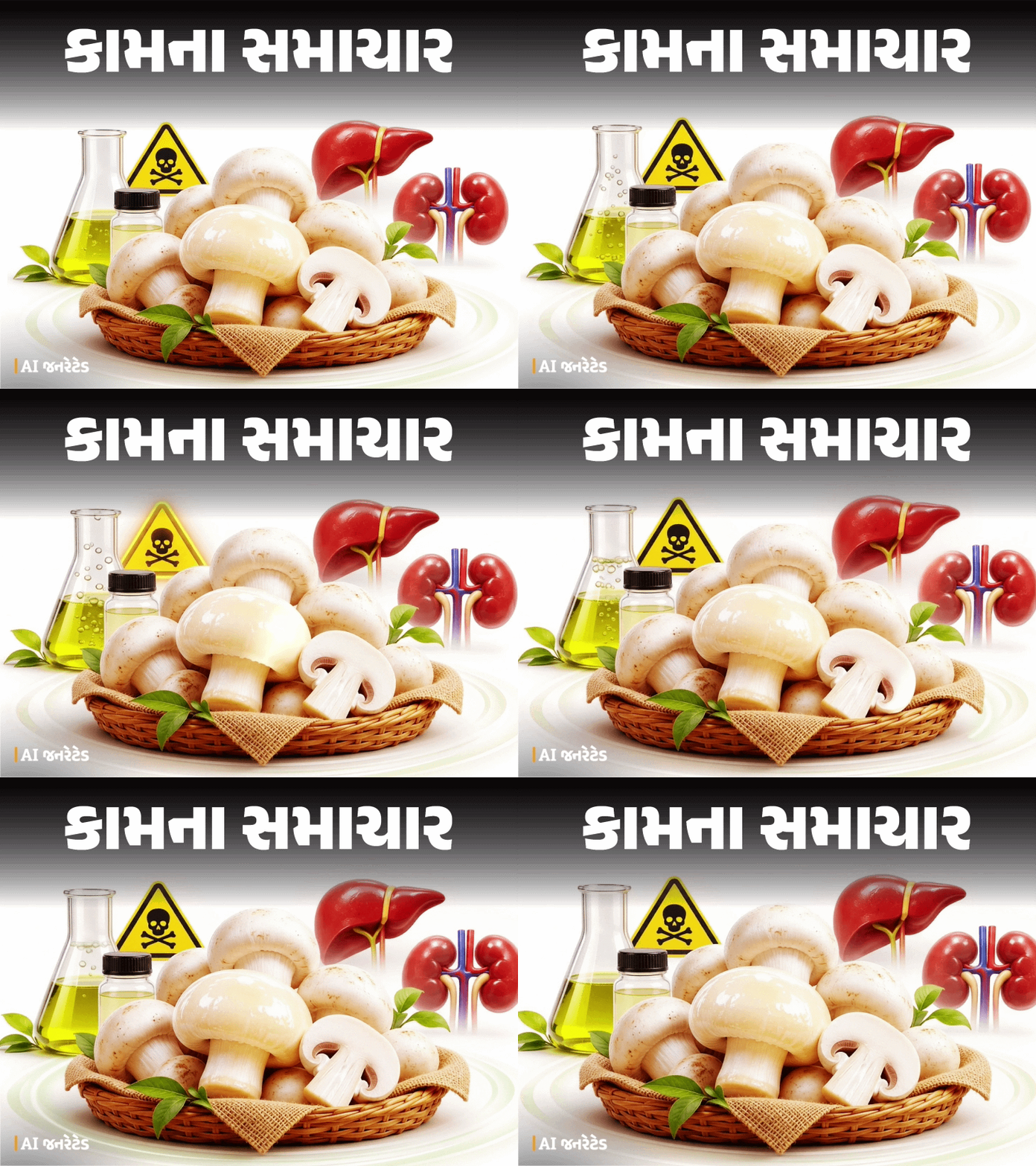
In this piece
Divya Bhaskar’s lifestyle desk warns that mushrooms on sale may have been treated with chemicals and could damage the liver and kidneys. The headline says…
A lifestyle report is warning shoppers that mushrooms sold in the market may have been treated with chemicals and could damage the liver and kidneys. Divya Bhaskar’s lifestyle desk presents the item as a consumer-health alert. The headline says buyers can learn to recognize suspect mushrooms at home and should keep 11 matters in mind at the time of purchase.
The published headline and page address are the material available for this account. They describe chemical treatment, possible liver and kidney harm, home identification, and a set of 11 buying precautions. Named chemicals, laboratory results, brands, prices, and the wording of those 11 points are outside that text.
The headline states that mushrooms described as chemical-treated are being sold. It ties that practice to a risk of harm to the liver and the kidneys. It gives no figure for how common the sales are and names no market, district, or seller.
Mushrooms are a familiar fresh food, and shoppers often judge them by look, smell, and firmness when a package carries little information. The Divya Bhaskar item says home checks can help people recognize the mushrooms it describes as chemical-treated. The headline alone does not set out those steps, so they are not restated here.
The same headline says buyers should pay attention to 11 matters while purchasing. Those points are the guidance the original piece says it offers. Repeating a generic shopping list in their place would go beyond the source, so this story leaves the checklist with the original report.
Possible injury to the liver or kidneys is a serious health claim, which is why the warning draws attention even before case details are public. The headline presents the risk as linked to chemically treated mushrooms. It supplies no patient count, hospital report, or completed investigation, and it is not a finding that every mushroom on sale is unsafe.
Food educators have long told shoppers to buy fresh produce from sellers they trust and to set aside food that looks, smells, or feels abnormal. That ordinary caution sits beside this report and explains why a call to look carefully before buying fits everyday shopping. It is general practice, separate from any laboratory result unique to the Divya Bhaskar item.
The warning matters because many households cook mushrooms soon after purchase, so any treatment applied before sale can reach the table quickly. People who already have liver or kidney disease have reason to take food cautions seriously and to speak with a clinician if they feel unwell after eating. The available headline identifies no patients, hospitals, or cluster of illnesses.
Place is also open in the material at hand. The report appears in Gujarati on Divya Bhaskar, an Indian news site, while the headline names no state, district, or city. A term in the web address resembles “gaya”; that string alone does not establish where the mushrooms were sold.
Readers who want the home-identification method and the 11 buying points can consult the original Divya Bhaskar lifestyle article. Any later notice from food-safety authorities would sit on top of this consumer warning. Until those details are in hand, the sound reading is a caution about chemically treated mushrooms and possible liver and kidney harm.
Primary source: Divya Bhaskar Lifestyle. Newzly rewrites and structures source reporting for clarity; verify critical details at the original.