Lula victory complicates Trump's push for influence in Latin America
Brazilian President Luiz Inácio Lula da Silva's re-election checks Washington's regional ambitions, while disputes over sovereignty, trade and technology threaten a fragile improvement in relations with Donald Trump.
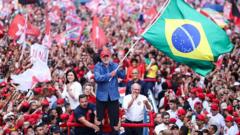
Brazilian President Luiz Inácio Lula da Silva's re-election has complicated Donald Trump's efforts to strengthen Washington's influence across Latin America, keeping a prominent critic in power. Lula defeated Flávio Bolsonaro, denying the US president's political allies a victory in the region's largest economy.
The result secured Lula a fourth presidential term after a closely contested runoff. CNN reported that Bolsonaro, the son of former president Jair Bolsonaro, challenged the outcome following a judicial decision extending voting hours, adding a dispute over election procedures to the political aftermath.
Trump's response illustrated the uncertainty surrounding his relationship with Lula. According to the Associated Press, he questioned the count without presenting evidence of manipulation, even as leaders elsewhere congratulated the Brazilian president and signalled their willingness to continue working with him.
The BBC's account describes a relationship that has improved without resolving its underlying disagreements. Lula made resistance to US pressure part of his political message, presenting disputes with Washington as questions of national sovereignty rather than simply differences between two presidents.
Trade has been central to that confrontation. The BBC reported that Trump imposed punitive tariffs linked to his objections to Jair Bolsonaro's prosecution, prompting Lula to challenge US involvement in Brazilian judicial affairs. Subsequent diplomatic contacts helped ease tensions, but did not eliminate the possibility of renewed economic pressure.
The election also interrupts a broader regional trend. Right-leaning governments aligned with Washington have gained ground across Latin America, while Lula has maintained an independent position. His survival means personal rapport with Trump cannot be assumed to translate into Brazilian support for US regional priorities.
Beyond tariffs, the BBC identified potential friction over US military actions in the region, technology companies and Brazil's Pix instant-payment system. These disputes involve different institutions and commercial interests, making the relationship harder to stabilise through meetings between the presidents alone.
Europe's response highlighted Brazil's alternatives to closer alignment with Washington. Euronews reported that European Commission President Ursula von der Leyen and European Council President António Costa welcomed Lula's victory after working with him on the EU-Mercosur trade agreement. European leaders emphasised continued cooperation on trade, international institutions and climate policy.
That partnership has limits of its own. Euronews noted continuing differences over Russia's war in Ukraine, with Brazil retaining close ties to Moscow through BRICS. Nevertheless, European support demonstrates that disagreements with Washington do not leave Lula without other diplomatic and economic partners.
The immediate test is whether the election dispute spills into another bilateral confrontation. The BBC's analysis frames the outlook around Washington's willingness to avoid intervention in Brazilian affairs and Lula's response to perceived pressure. Warmer relations provide room for negotiation, but the issues that drove the earlier rupture remain unresolved.
Primary source: BBC World. Newzly rewrites and structures source reporting for clarity; verify critical details at the original.