Maharashtra Withdraws High Court Challenge to Centre's Food Safety Authority
The Maharashtra government has withdrawn its Bombay High Court petition challenging the Centre's food safety powers, shelving an escalating legal clash between the state Food and Drug Administration and the central regulator.
In this piece
Maharashtra has formally withdrawn its legal petition in the Bombay High Court challenging the Food Safety and Standards Authority of India. The lawsuit,…
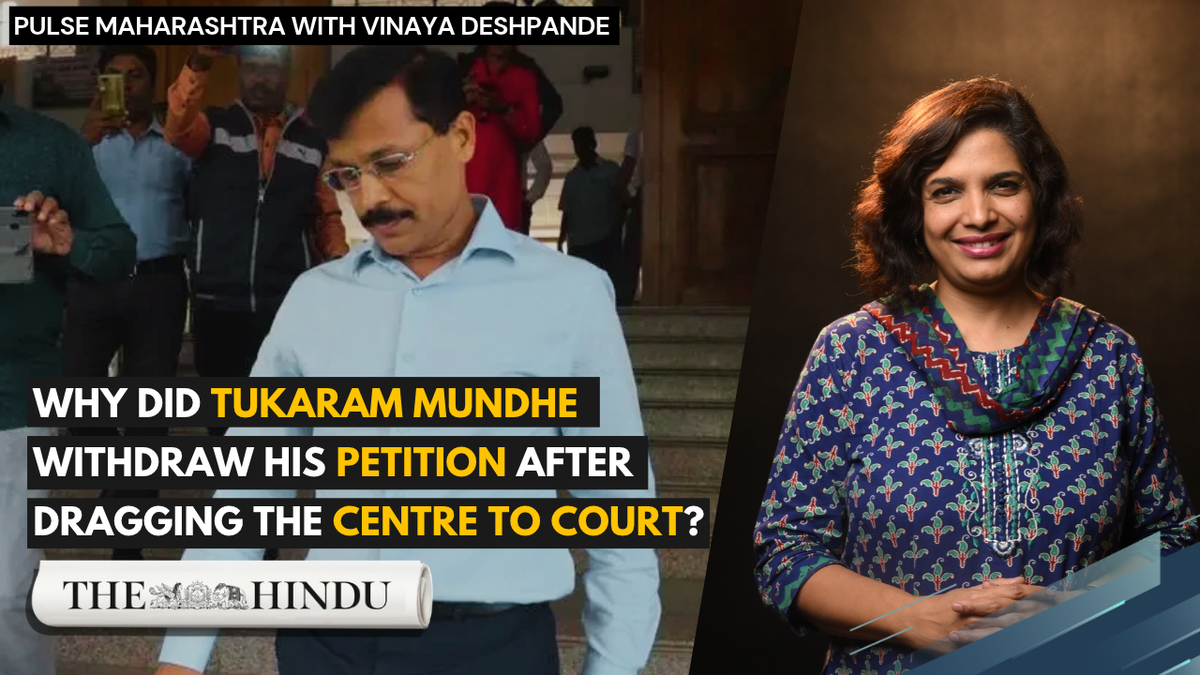
The Maharashtra government has formally withdrawn its legal challenge in the Bombay High Court against the Union government and the Food Safety and Standards Authority of India, ending an unprecedented courtroom confrontation between the state and the Centre. The Advocate General informed a division bench of the High Court that the state wished to withdraw the writ petition unconditionally, prompting the court to dispose of the matter without recording any official justification for the sudden reversal.
The petition, initiated in September by Maharashtra's Food and Drug Administration under Commissioner Tukaram Mundhe, contested the constitutional validity of several regulatory amendments implemented by the central food authority. State authorities had argued that these rules unlawfully eroded state oversight by stripping local food inspectors of the power to inspect, sample, and penalize food business establishments that operate under central licenses.
At the center of the dispute was the state's contention that the Centre had established an overlapping enforcement machinery that directly encroached upon powers constitutionally designated to state administrations. The FDA's plea asserted that by designating Central Food Safety Officers and independent Central Licensing Authorities, the national regulator bypassed the decentralised enforcement structure originally mandated under the Food Safety and Standards Act of 2006.
Under the contested framework, state food safety officers were effectively barred from entering or conducting surprise checks at manufacturing plants, large distributors, and commercial premises possessing central clearance. Maharashtra officials cautioned that this division of responsibilities hampered emergency public health interventions and created jurisdictional voids that unscrupulous manufacturers could exploit.
The legal fight introduced severe political friction, marking a rare instance where a state administration governed by a Bharatiya Janata Party-led coalition dragged the BJP-led central government into judicial scrutiny. Legal observers and political analysts noted that the confrontation exposed growing tensions between regional executive autonomy and federal statutory centralization across regulatory sectors.
State records indicated that the original petition had received legal clearance and administrative approval before being lodged before the High Court. However, the abrupt decision to withdraw the litigation followed high-level political interventions aimed at averting further public discord between Mumbai and New Delhi.
Following the court's disposal of the petition, authorities indicated that the underlying grievances over regulatory boundaries would be pursued through bilateral administrative consultations rather than adversarial litigation. Central regulatory leadership reportedly signaled a willingness to examine state concerns regarding inspection coordination and operational bottlenecks through institutional dialogue.
The controversy underscores broader structural debates regarding regulatory federalism in India, particularly as central bodies increasingly consolidate oversight over consumer health, market commerce, and commodity standards. While central authorities advocate for uniform national standards to ease business compliance, state agencies maintain that localized surveillance remains indispensable for consumer protection.
While the immediate courtroom clash has concluded, the operational questions regarding dual enforcement and local authority remain largely unresolved on the ground. State inspectors continue to navigate regulatory ambiguity, leaving industry stakeholders and public health watchdogs watching closely to see whether future administrative guidelines will formally restore concurrent inspection powers to state officers.
Primary source: Google News Maharashtra. Newzly rewrites and structures source reporting for clarity; verify critical details at the original.