Missouri Prepares for Potential Environmental Fallout from Iowa Lead Azide Blast
Missouri has mobilized its emergency operations center and environmental monitoring teams ahead of a planned controlled military detonation of five tons of unstable lead azide at an ammunition plant in southeast Iowa.
In this piece
Missouri emergency management and environmental officials are tracking a planned military detonation of unstable lead azide at an Army plant in southeastern…
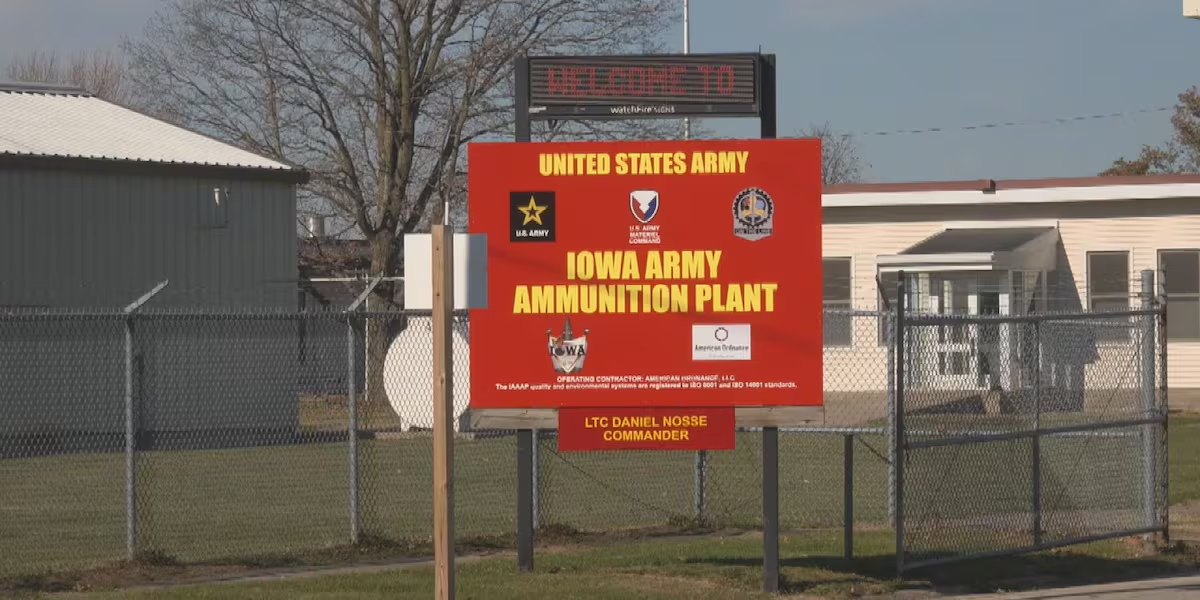
Missouri state officials are preparing emergency response teams and environmental monitoring networks ahead of a planned military detonation of highly unstable explosives in neighboring Iowa. The U.S. Army intends to destroy approximately five tons of degraded lead azide at the Iowa Army Ammunition Plant in Middletown, prompting neighboring jurisdictions to prepare for potential airborne and environmental fallout.
Governor Mike Kehoe announced that the state will activate its State Emergency Operations Center alongside a multi-agency coordination team to track developments in real time. The military installation, situated roughly 57 miles north of the Missouri state line, has drawn heightened scrutiny across the region due to concerns that blast debris and toxic dust could drift across state borders.
Lead azide is an inorganic chemical compound routinely utilized by the defense sector as an initiating primary explosive in detonators and military munitions. Over several decades of storage inside 68 barrels at the southeastern Iowa facility, the material dried, crystallized, and deteriorated into an acutely shock-sensitive state. Military specialists concluded that attempting to move or repackage the volatile stockpiles would present an unacceptable hazard to personnel, leaving an in-place controlled detonation as the designated path forward.
The blast operation had originally been scheduled for late November before drawing legal challenges and urgent appeals from environmental advocates and public officials. In response to mounting concerns and an impending cold weather front that could further affect the chemical compound, Acting Secretary of the Army Adam Telle ordered the detonation rescheduled. The postponement provided regional agencies additional time to coordinate containment expectations and deploy environmental monitoring equipment.
Environmental and health authorities have expressed significant concern over the airborne dispersal of lead particulates resulting from the high-energy blast. Lead is an established heavy-metal neurotoxin capable of causing acute and chronic neurological harm, developmental impairments, and cardiovascular complications, with elevated vulnerability observed among young children and pregnant individuals. Even minor localized contamination can settle across topsoil, rooftops, and municipal water catchments.
To safeguard public health downwind, the Missouri Department of Natural Resources and the Department of Health and Senior Services have established enhanced oversight protocols. Environmental personnel are prepared to conduct testing on surface waterways and municipal drinking supplies across northern Missouri, paying particular attention to tributaries feeding into the Mississippi River corridor. Air sampling units will also track atmospheric particulate concentrations to evaluate whether plume dispersal exceeds baseline thresholds.
Meteorological modeling currently suggests that prevailing atmospheric conditions could significantly mitigate risks to Missouri communities. Forecasters project light winds shifting out of the north during the operational window, a dynamic expected to disperse the blast plume before concentrated levels can cross the state boundary. Nevertheless, border communities including Wayland, Canton, and Hannibal remain on alert for sudden shifts in velocity or wind direction.
The incident underscores broader ongoing challenges faced by federal defense facilities tasked with managing aging munitions stockpiles near civilian populations. As munitions infrastructure dating back to mid-twentieth-century production runs approaches or exceeds design life spans, disposal specialists face intricate technical decisions balancing transport hazards against open-air destruction risks. Community representatives across both Iowa and Missouri have increasingly petitioned for heightened transparency surrounding military chemical storage sites.
State officials emphasized that interagency teams will remain mobilized through the completion of the blast window and subsequent atmospheric readings. Should monitoring stations detect anomalous contamination or hazardous particulate density, state emergency management personnel stand ready to issue targeted advisories to agricultural producers and municipal water utilities.
The Army and regional emergency management agencies have committed to publishing updated plume dispersion models and post-blast environmental data as the operation concludes. Missouri authorities will continue to assess air and water samples across the northern border region over the coming days to confirm that no hazardous contaminants threaten downstream residents or environmental resources.
Primary source: Google News Missouri. Newzly rewrites and structures source reporting for clarity; verify critical details at the original.