NASA Image Shows Kutryk During Space Station Solar Array Work
NASA describes a spacewalk by Canadian astronaut Joshua Kutryk and NASA astronaut Anil Menon to install a roll-out solar array, with Earth below the International Space Station.
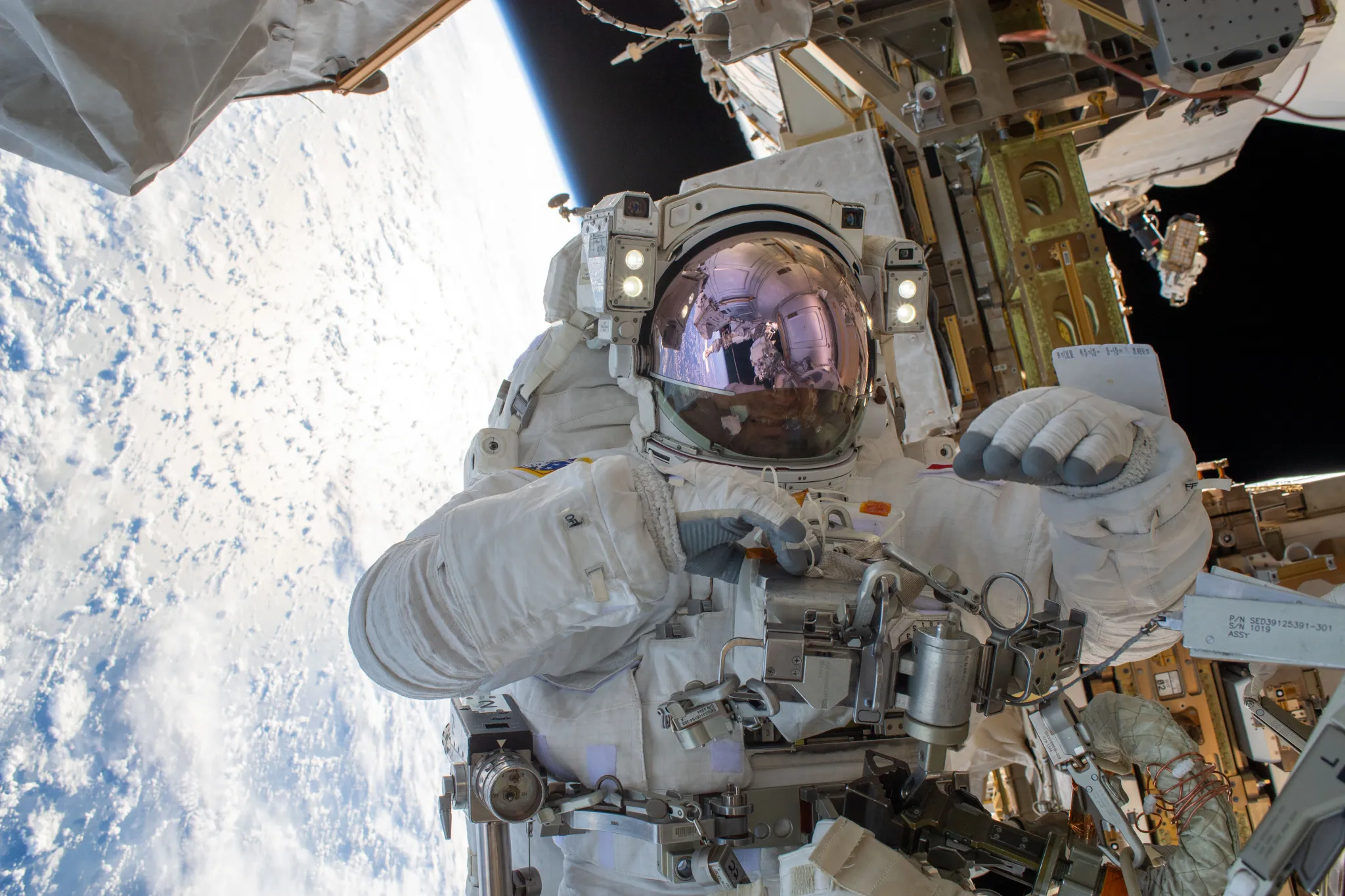
Canadian Space Agency astronaut Joshua Kutryk is pictured outside the International Space Station during a spacewalk that NASA dates to Oct. 29, 2026. According to the agency’s accompanying description, Kutryk and NASA astronaut Anil Menon installed a new roll-out solar array and carried out additional preparatory work during the excursion.
The station was 267 miles above the South Atlantic Ocean when the photograph was taken, NASA says. That location and altitude place the image over open ocean, with Earth providing the backdrop to a scene of work on the orbiting station. The caption identifies Kutryk as the astronaut pictured.
The solar array installation is the principal task identified in the brief account. Solar arrays supply electrical power, making work on that equipment part of maintaining the station’s ability to support its onboard systems and activities. The supplied description does not specify the new array’s power output or identify its installation position.
NASA also says the astronauts performed “get-ahead work,” a phrase indicating tasks undertaken in preparation for later activities. The excerpt does not explain what those tasks involved or which subsequent operations they were intended to support. It therefore offers only a limited account of the work beyond the array installation.
The pairing brings together astronauts from the Canadian Space Agency and NASA for an exterior station assignment. Kutryk’s identification in the photograph gives the image a Canadian connection, while Menon is named as his spacewalking partner. The supplied text does not assign individual installation steps to either astronaut.
The photograph provides a view of station operations that take place outside its inhabited interior. Its significance lies in the combination of an astronaut working above Earth and a specific equipment installation described by NASA. A single image, however, cannot establish the full sequence of the spacewalk or document every task completed.
The source material is an image caption rather than a detailed mission report, and the provided excerpt ends before the account is complete. It gives a date, location, two astronaut names and the central installation task, but no spacewalk duration or equipment-testing results. Those limits leave the operational details and subsequent status of the array unspecified.
For what happens next, the excerpt supplies no timetable for follow-up checks, future spacewalks or additional solar array work. A fuller NASA account would be needed to establish those steps and explain the preparatory tasks. The available description centers on the reported installation and the moment captured above the South Atlantic.
Primary source: NASA Breaking News. Newzly rewrites and structures source reporting for clarity; verify critical details at the original.