NASA's Swift Observatory Ends Science Mission After Two Decades
NASA's Neil Gehrels Swift Observatory has concluded its science operations after orbital decay dropped the spacecraft below a viable altitude, closing out a mission that transformed our understanding of gamma-ray bursts and cosmic transients.
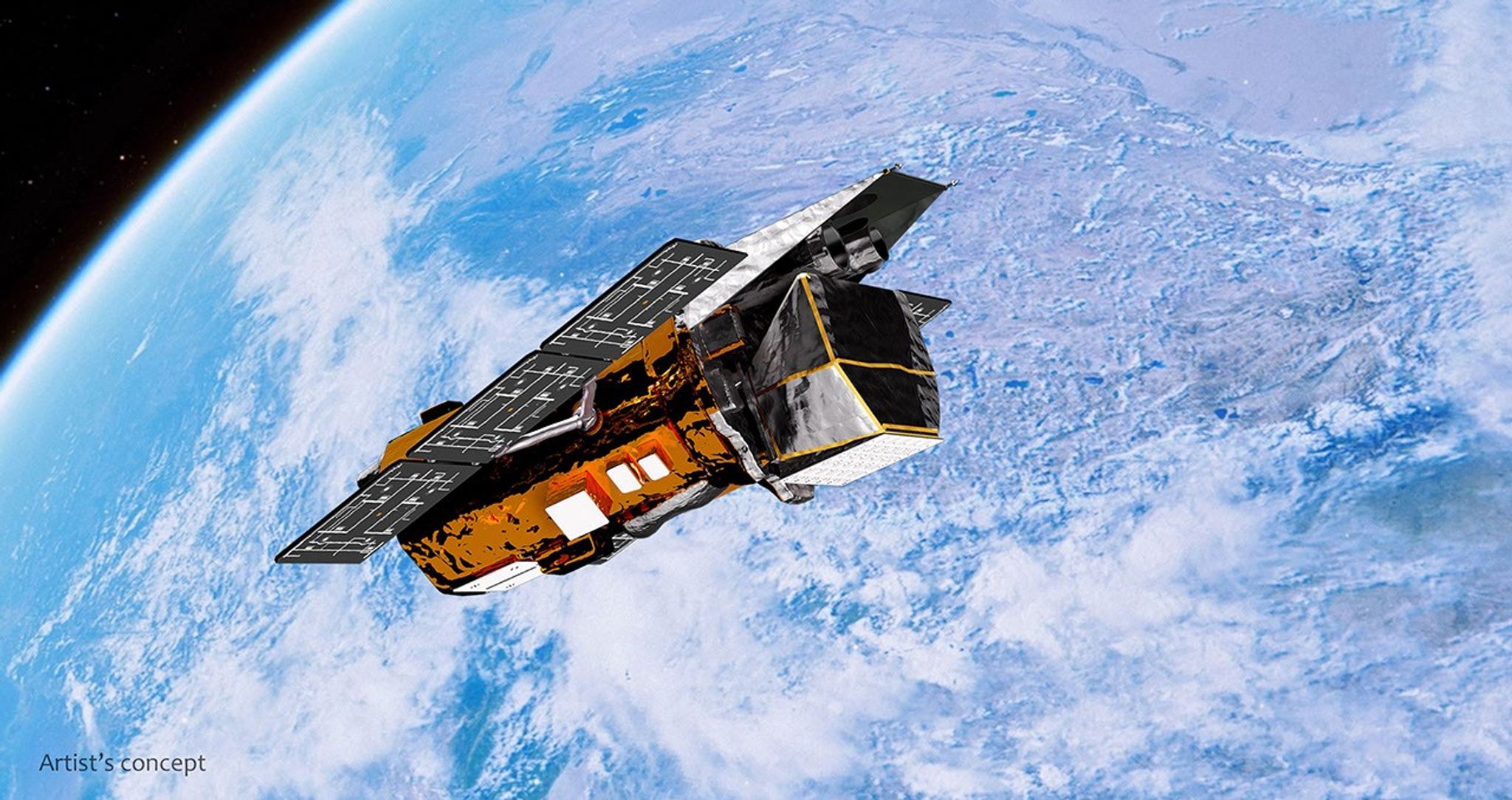
NASA's Neil Gehrels Swift Observatory has officially ended its science mission, the agency announced, after the spacecraft's decaying orbit brought it to an altitude of less than 171 miles (275 kilometers) above Earth's surface. At that height, increased atmospheric drag prevents the satellite's telescopes from maintaining the stable pointing required to study astronomical targets. Swift conducted its final observation on October 20, 2026.
Swift launched in November 2004 with a primary mandate to detect and rapidly respond to gamma-ray bursts — the most energetic explosions in the universe. The observatory was designed to swivel autonomously within seconds of detecting a burst, allowing its ultraviolet, optical, and X-ray instruments to capture the fleeting afterglows that follow these extreme events.
Over its operational lifetime, Swift fundamentally reshaped astronomers' understanding of gamma-ray bursts, providing evidence that these events arise from the collapse of massive stars or the mergers of compact objects such as neutron stars. The mission's rapid-response architecture became a model for time-domain astronomy.
Beyond gamma-ray bursts, Swift's instruments were routinely redirected to observe a wide range of transient phenomena, including supernovae, tidal disruption events — in which a star is shredded by a supermassive black hole — and comets within our own solar system. Its versatility made it one of NASA's most productive multi-wavelength observatories.
The spacecraft's orbit had been slowly declining for years, a natural consequence of low-Earth orbital mechanics and solar activity, which expands the upper atmosphere and increases drag on satellites. Mission managers and scientists had been planning for Swift's eventual end while continuing to maximize its scientific output.
Swift's decommissioning marks the close of a mission that outlasted its original projected lifetime by well over a decade. NASA has not confirmed a precise reentry date, but spacecraft at such low altitudes typically reenter the atmosphere within months, burning up largely or entirely before reaching the ground.
The observatory was renamed in 2018 to honor Neil Gehrels, the NASA astrophysicist who championed and led the mission from its inception until his death in 2017. Gehrels was widely credited with shaping Swift into the agile, community-accessible facility it became.
Data collected by Swift remains archived and continues to be used by researchers worldwide. The mission's catalogs of gamma-ray bursts, X-ray sources, and ultraviolet sky surveys are expected to inform astrophysics research for years to come.
NASA has not announced a direct successor to Swift, though next-generation missions and ground-based survey telescopes are expected to carry forward time-domain and high-energy transient science. The agency described Swift's end as the close of a chapter rather than a halt to the broader field it helped build.
Swift's final observation on October 20 caps more than two decades of service, during which the spacecraft detected thousands of gamma-ray bursts and contributed to discoveries ranging from the behavior of black holes to the electromagnetic signatures of gravitational-wave events. Its archive constitutes what NASA called a scientific bonanza that researchers will continue to mine for the foreseeable future.
Primary source: NASA Breaking News. Newzly rewrites and structures source reporting for clarity; verify critical details at the original.