NASA Sets 2027 Artemis III Mission to Test Moon Lander Operations in Orbit
NASA announced its 2027 Artemis III mission will test future lunar lander operations in low Earth orbit with a four-person crew before attempting an astronaut return to the Moon's surface.
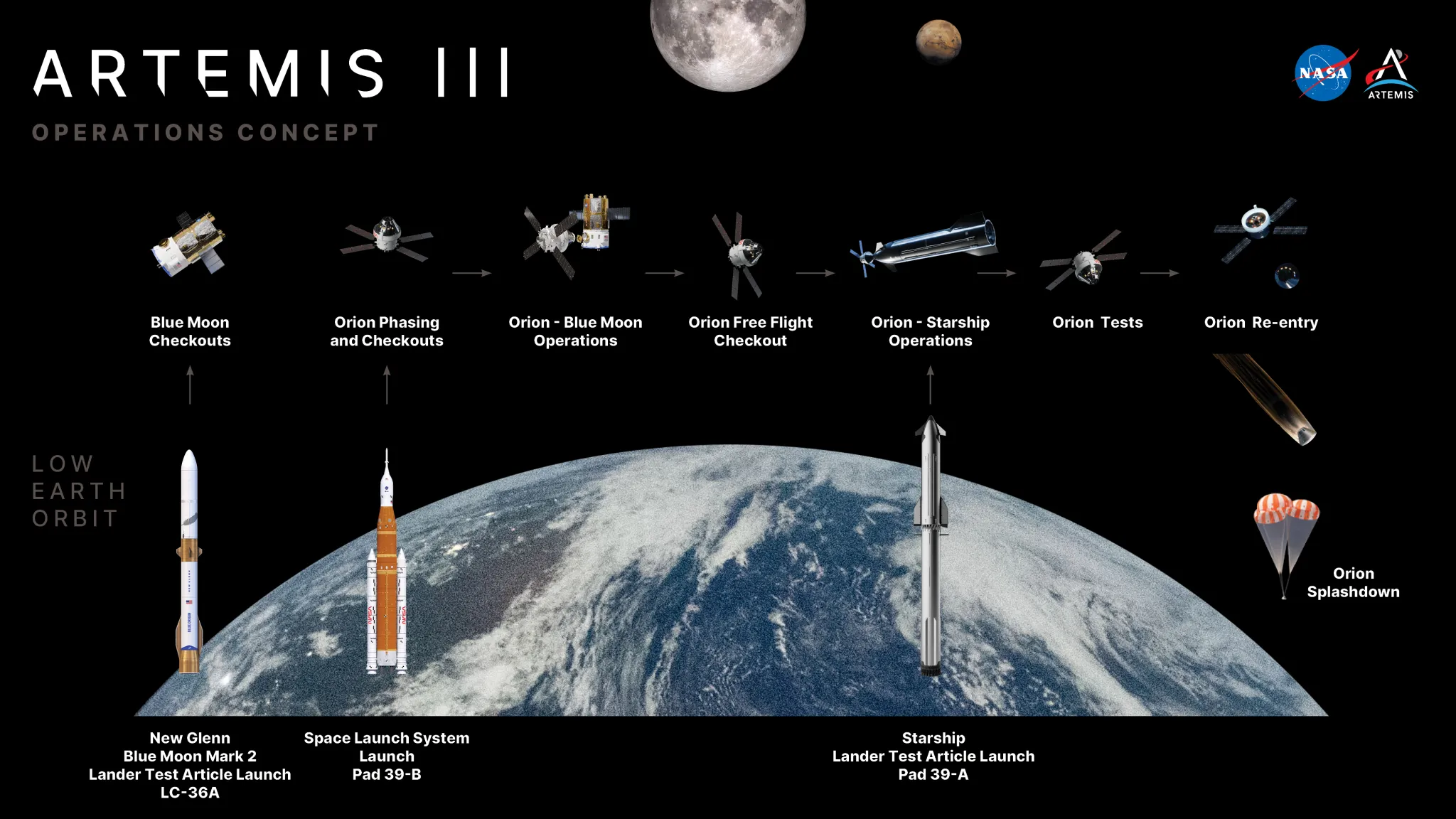
NASA has announced that its Artemis III mission, scheduled to launch in 2027, will conduct an orbital test flight focused on future lunar lander operations before astronauts return to the Moon's surface. The high-profile flight will send a four-member multinational crew into low Earth orbit aboard the agency's Orion spacecraft to evaluate essential spacecraft systems. Agency officials characterized the undertaking as one of the most ambitious and complex test missions in NASA's operational history.
The assigned flight crew brings together veteran spacefarers and newly qualified astronauts from both the United States and Europe. NASA astronauts Randy Bresnik, Frank Rubio, and Andre Douglas will fly alongside European Space Agency astronaut Luca Parmitano. The collaborative assignment highlights the integrated operational model that the agency and its international partners are employing for complex deep-space preparatory missions.
Under the updated operational roadmap, the Artemis III flight profile shifts primary testing of future lunar lander operations into low Earth orbit. Rather than attempting an immediate descent to the lunar terrain, the agency plans to validate operational mechanisms, maneuvering protocols, and spacecraft interfaces in an accessible orbital environment. This phased approach is structured to resolve operational hurdles before crews travel farther from Earth.
Testing lander systems in Earth orbit provides critical safety margins and logistical advantages for ground teams and flight controllers. Engineers can closely monitor docking procedures, integrated avionics, and navigation software under authentic orbital flight conditions. Gathering high-resolution operational telemetry close to home ensures that any anomalies can be evaluated and addressed without exposing crews to the severe constraints of deep space.
The mission represents an essential transition point in the broader Artemis campaign, which aims to return humans to the lunar surface for the first time in more than fifty years. A successful lunar landing requires flawless coordination between the crew module, prospective lander vehicles, and mission control networks. Demonstrating that these complex systems function seamlessly together in orbit is widely regarded as a vital prerequisite for future surface expeditions.
The inclusion of ESA astronaut Luca Parmitano underscores the increasingly collaborative nature of western human spaceflight programs. NASA has maintained long-standing partnerships with European and other international space agencies across decades of low Earth orbit operations. Extending those multilateral partnerships into the Artemis architecture allows partner nations to share operational burdens, technical expertise, and crew flight opportunities.
While specific mission timelines and test objectives will undergo continuous refinement, the agency's public roadmap sets the launch for 2027. Mission managers, engineers, and spacecraft developers now face an intensive schedule of system qualifications, software verification, and integrated hardware reviews. The coming years will require rigorous technical coordination to align lander hardware readiness with the Orion capsule's flight readiness schedule.
Looking ahead to 2027, the four astronauts will undergo extensive joint training regimens designed to simulate rendezvous profiles, emergency procedures, and manual docking operations. Space agency leadership is expected to release further technical parameters and mission milestones as flight plans mature. The outcomes of this orbital demonstration will ultimately determine the operational baseline and safety certification for humanity's eventual return to the lunar surface.
Primary source: NASA Breaking News. Newzly rewrites and structures source reporting for clarity; verify critical details at the original.