Netanyahu offers Eisenkot first turn as prime minister in unity bid; talks later said to collapse
Benjamin Netanyahu offered opposition leader Gadi Eisenkot the first turn as Israel’s prime minister in a proposed unity deal. Reports later said the talks collapsed with no further meetings planned.
In this piece
Netanyahu offered opposition leader Gadi Eisenkot the premiership’s first turn in a bid to form a unity government while described as at risk of losing power.…
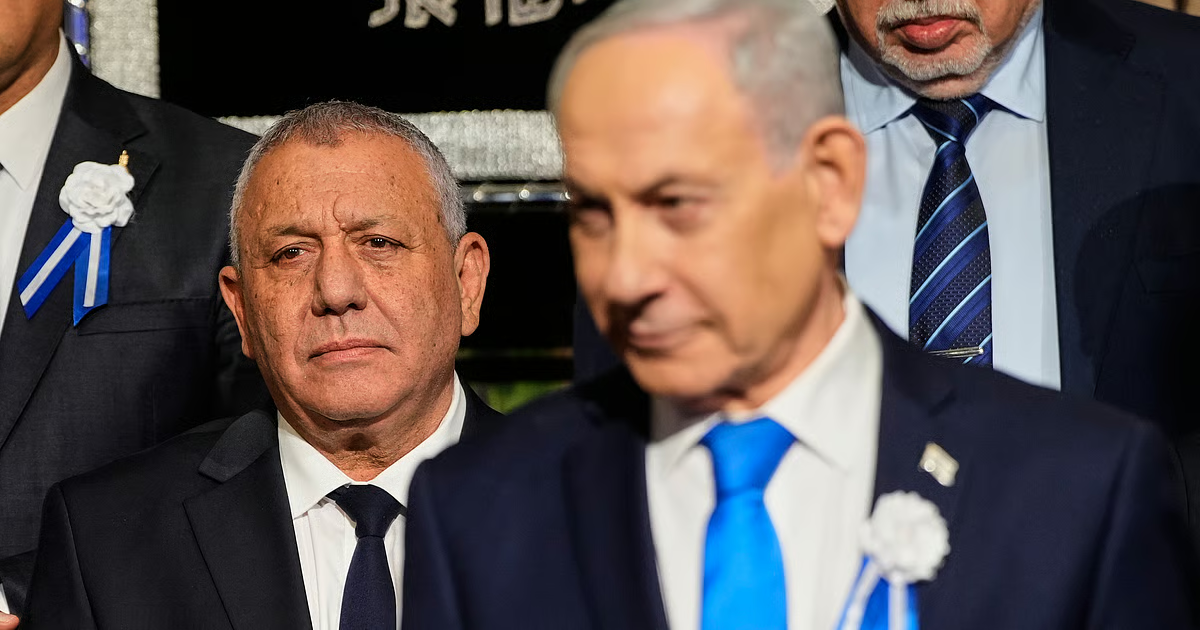
Israeli Prime Minister Benjamin Netanyahu has offered opposition leader Gadi Eisenkot the prime minister’s post in a bid to form a unity government, according to reports including an account in The New Indian Express. Telegraph India described the proposal as giving Eisenkot the first turn as Israel’s prime minister under a unity deal.
The same Telegraph India report framed the approach as coming while Netanyahu is at risk of losing power. The published accounts available here do not set out a full public text of any agreement, a rotation calendar beyond that first turn, or a list of conditions attached to the offer.
Al Jazeera reported that Eisenkot and Netanyahu held talks and posed the open question of whether they can agree on a unity government. That framing treats the contact as real and the outcome as unsettled, rather than as a completed coalition.
A unity arrangement built around handing the opposition leader the first turn in the premiership would be a sharp political concession by a sitting prime minister. The reports describe the offer and the talks; they do not, in the material reviewed here, quote either man on why the overture was made or on what Eisenkot asked in return.
The Economist noted Netanyahu’s proposal to Eisenkot in a world-in-brief item, alongside other international developments. That brief appearance confirms the proposal circulated widely, without adding terms, a timetable, or a statement of Eisenkot’s response.
Why the offer matters is tied to the power question Telegraph India highlighted. If Netanyahu’s position is under strain, a partnership with a prominent opposition figure could be an attempt to rebuild a governing majority. Whether Eisenkot’s camp, or other parties, would accept such a deal is not established in these accounts.
Any government formed on that basis would still need enough political support to take office and remain there. The reports aggregated here do not include a vote count, a roster of parties prepared to join, or a published schedule for how long Eisenkot would serve before any later rotation.
That gap in public detail widened with a later account. The Times of Israel reported that the Eisenkot–Netanyahu unity talks were said to have collapsed and that no further meetings were planned. The wording presents the breakdown as what sources said, not as a joint announcement by the two sides.
The sequence in the coverage is therefore an offer, talks, and then a report that those talks have ended. Outlets differ in emphasis: some led with the premiership offer and the question of whether a unity government is possible; The Times of Israel led with collapse and the absence of further meetings. No single account here reconciles those stages with an on-the-record statement from both camps.
Until either side speaks formally, the status of the initiative remains a matter of competing news reports. Readers can treat as reported the offer of a first turn as prime minister, the fact of talks, and a subsequent claim that the talks collapsed. They cannot treat a finished coalition, or a definitive joint end to negotiations, as established by this set of headlines and briefs.
What happens next depends on whether contact is reopened or whether each side turns to other partners. For now, the public picture is an unsuccessful-looking unity bid: a premiership offer made under reported political pressure, discussions that were held, and an Israeli report that no further meetings are planned.
Primary source: Google News India. Newzly rewrites and structures source reporting for clarity; verify critical details at the original.