Nvidia Shares Surge 31.5% as Board Reinstates Jensen Huang, Handing Trump ₹140 Crore Gain
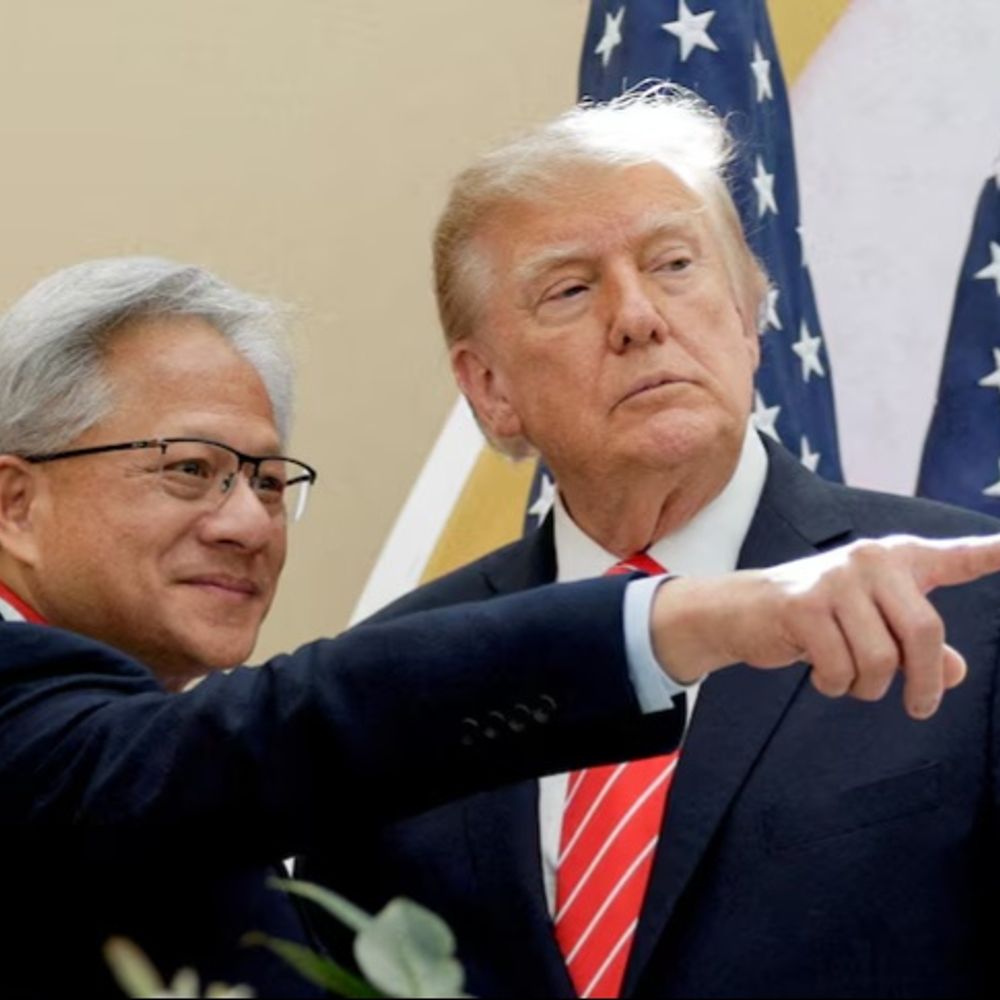
Nvidia shares surged 31.5 percent after the board reinstated CEO Jensen Huang following government intervention, handing Donald Trump an estimated 140 crore rupee windfall on his stock holdings.
In this piece
Nvidia stock soared 31.5 percent after the company reinstated chief executive Jensen Huang following a brief removal and White House intervention. The massive…
Nvidia shares surged by 31.5 percent in a historic single-day rally following the sudden reinstatement of Jensen Huang as chief executive officer. The sharp market rebound also generated an estimated paper profit of approximately 140 crore rupees, or 15 million dollars, for U.S. President Donald Trump, according to disclosures regarding his personal equity holdings.
Huang’s return came merely 11 days after his abrupt departure, which had followed internal disagreements and governance concerns that led the semiconductor giant's board of directors to remove him. After widespread pressure from technology industry leaders and active deliberations, Nvidia’s board voted unanimously to bring the co-founder back to helm the company.
President Trump openly touted his personal intervention in the board's decision-making process, asserting that he held direct conversations with company leadership to broker Huang’s return. Federal authorities reportedly provided assurances to the board confirming that Huang posed no national security concerns, paving the way for his immediate restoration to the corner office.
Government ethics disclosures and financial filings indicate that Trump’s investment portfolio held up to 370,000 shares of the artificial intelligence chipmaker. The dramatic market swing resulting from Huang's reinstatement generated a substantial financial windfall for the president, rapidly drawing heightened public and regulatory attention to his financial disclosures.
The 31.5 percent surge marked one of the largest single-day market capitalization increases in corporate history, adding nearly one trillion dollars to Nvidia’s overall valuation. The aggressive rebound also triggered a broader rally across global equity indices and major technology stocks, which had faltered following Huang's initial removal.
Huang, who co-founded Nvidia in 1993 and transformed it into the world's most valuable semiconductor designer, had stepped aside amid intense regulatory scrutiny over international chip exports and governance friction. His unexpected exit rattled investors worldwide, raising questions about Nvidia's leadership stability during a pivotal era for artificial intelligence infrastructure.
The rapid sequence of executive reshuffling and policy discussions has reignited debate among government ethics watchdogs regarding executive stock holdings. Critics and ethics analysts noted that policy shifts and direct administration commentary on publicly traded companies can directly influence asset prices and personal investment portfolios.
Nvidia remains at the core of the global technology race, supplying advanced graphics processing units that power contemporary generative artificial intelligence models and enterprise data centers. Huang's leadership has been widely regarded by Wall Street and Silicon Valley as indispensable to maintaining the company's competitive dominance against rising semiconductor rivals.
Market observers and corporate governance experts anticipate that Nvidia will face continued scrutiny regarding executive accountability and export licensing oversight in the months ahead. For now, investors and industry partners have welcomed the return of familiar leadership, even as broader political and ethical questions surrounding executive interventions linger.
Primary source: Divya Bhaskar Business. Newzly rewrites and structures source reporting for clarity; verify critical details at the original.