People Speak 338 Fewer Words Each Day Every Year as Digital Habits Expand, Study Finds
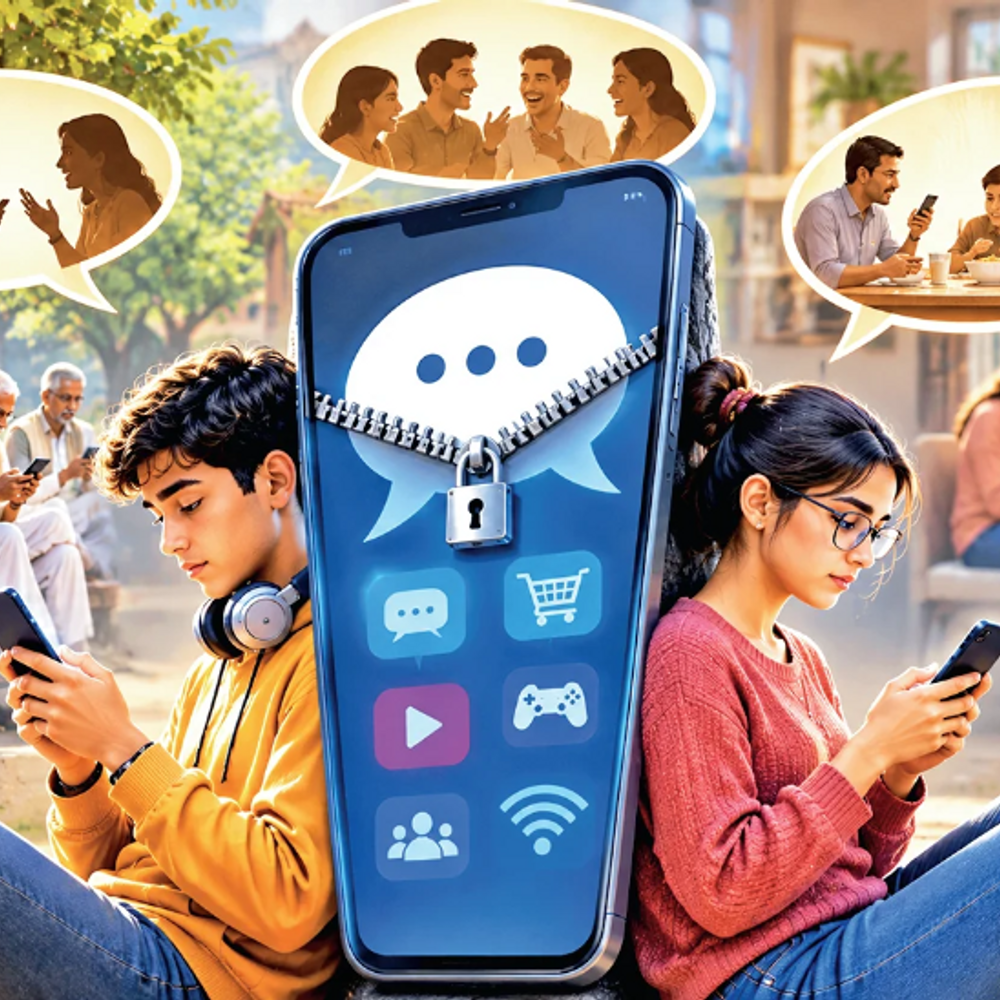
A comprehensive psychological study tracking conversational habits over 15 years reveals that people speak roughly 338 fewer words per day each year, coinciding with the rapid rise of smartphones and digital messaging.
In this piece
Research spanning from 2005 to 2019 shows a steady 28 percent drop in daily spoken words, with individuals speaking about 338 fewer words per day each year. The…
A landmark analysis tracking everyday verbal interactions reveals that people are speaking significantly less than they did two decades ago, shedding roughly 338 spoken words each day on average every year. The comprehensive study, published in the journal Perspectives on Psychological Science, documents a steady downward trajectory in real-world conversation across the early 21st century.
The investigation was led by researchers Dr. Valeria Pfeifer of the University of Missouri-Kansas City and Professor Matthias Mehl from the University of Arizona. To examine shifts in daily vocal habits, the team synthesized data from 22 separate observational studies conducted between 2005 and 2019, covering more than 2,000 adult participants.
Participants across the included datasets wore recording devices known as Electronically Activated Recorders, which captured ambient acoustic snippets intermittently throughout their waking hours. This naturalistic sampling technique allowed researchers to calculate objective counts of daily word production in authentic social environments rather than relying on self-reported estimates.
Over the fifteen-year assessment period, the cumulative decline translated to a nearly 28 percent drop in overall daily spoken words. By researchers' calculations, that yearly reduction of approximately 338 words per day accumulates to roughly 120,000 fewer spoken words uttered per individual each year compared to the prior period.
The decline in verbal communication appeared consistently across demographic boundaries, but it was particularly pronounced among younger cohorts. Participants aged 25 and younger exhibited the steepest decreases in conversational volume, reflecting a swift transformation in how younger generations maintain social bonds.
While the study observed behavioral patterns rather than directly measuring causal drivers, the timeline closely mirrors the proliferation of personal digital devices. Between 2005 and 2019, modern smartphones, high-speed mobile data, social networking platforms, and instant messaging services became deeply integrated into everyday life.
Beyond interpersonal texting, automated customer interactions have steadily displaced verbal transactions that once occurred routinely in public life. Self-checkout registers, automated banking kiosks, and app-based food ordering have eliminated casual, spoken exchanges that previously punctuated daily routines.
Social psychologists emphasize that regular verbal communication plays a vital role in psychological well-being, cognitive health, and the maintenance of meaningful relationships. Exchanging spoken words fosters empathy and emotional resonance through tone of voice and spontaneous vocal inflection, nuances that text-based communication rarely replicates.
Researchers cautioned that speaking fewer words does not automatically mean humans are communicating less frequently in the aggregate. Instead, human connection has increasingly migrated toward asynchronous, typed interactions, leaving open questions about how the loss of spoken dialogue influences emotional depth and community cohesion.
As artificial intelligence interfaces and voice-to-text tools continue to evolve, scientists are calling for ongoing longitudinal monitoring of social behavior. Further research will aim to determine whether this vocal reduction has plateaued or if conversational speech will face further erosion in an increasingly automated world.
Primary source: Divya Bhaskar Magazine. Newzly rewrites and structures source reporting for clarity; verify critical details at the original.