Rising Gold Prices Fuel Escalation of Illegal Mining Around Johannesburg
Soaring bullion prices and entrenched poverty are driving informal miners into abandoned shafts near Johannesburg, leaving scarred landscapes and destabilized communities as police enforcement falters.
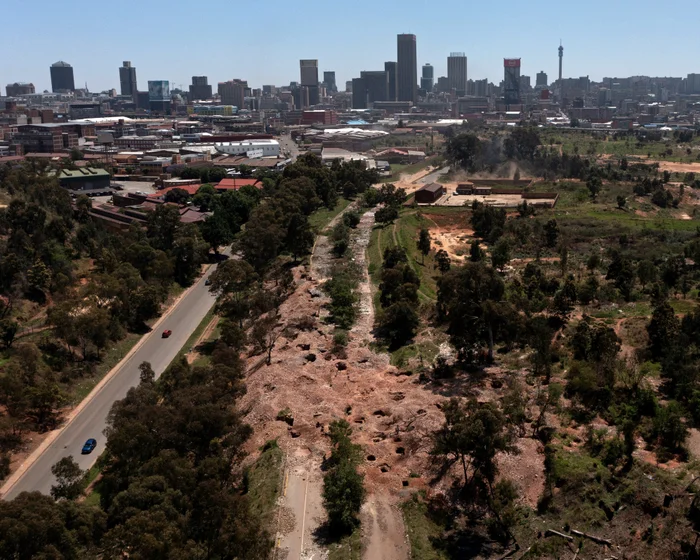
A surge in illicit gold prospecting across abandoned mining terrain west of Johannesburg has intensified pressure on local communities, as soaring global bullion prices draw informal diggers into fragile, disused shafts. In areas surrounding Roodepoort, informal mining groups have set up operations in plain view of residential settlements and welfare organizations, underscoring the relentless expansion of the unregulated trade.
At the frontlines of the disruption is Cora Bailey, who has worked in the townships around Roodepoort since 1991 treating injured animals through her charity, Community Led Animal Welfare (Claw). In late September, dozens of informal miners arrived directly across the dirt road from the charity's compound, establishing active digging sites in full view of staff and neighborhood residents.
The informal diggers are known locally across South Africa as zama zamas, a term derived from the Zulu phrase meaning roughly to take a chance. Driven by economic hardship and the lure of precious metals, these miners venture into decommissioned underground networks where industrial mining companies ceased operations years or decades ago.
The resurgence of such hazardous operations is closely tied to international commodity markets, where surging gold values have turned previously unprofitable subterranean remnants into lucrative targets. With high unemployment and deep poverty persisting across the region, abandoned shafts across the province continue to attract thousands willing to risk subterranean perils for scrap ore.
The environmental and physical fallout of this unregulated extraction has left deep scars on the landscape surrounding South Africa's commercial capital. Decades of heavy commercial mining combined with ongoing informal tunneling have destabilized ground structures, triggering sinkholes, weakening soil integrity, and endangering nearby surface infrastructure.
For community organizations like Claw and township residents living alongside these sites, the encroaching operations bring persistent disruption and safety hazards. The proliferation of makeshift excavation pits near populated roads complicates daily welfare work, compromises local access, and leaves open trenches that pose severe hazards to both domestic animals and pedestrians.
Despite periodic security clampdowns, state and law enforcement interventions have proven largely ineffective at halting the illicit trade. Police raids and task force operations frequently scatter workers on the surface, but the underlying operations routinely resume shortly after security personnel depart, leaving residents skeptical of official containment efforts.
Observers and community advocates emphasize that low-level diggers often function as convenient scapegoats for public frustration and official crackdowns, while the broader illicit networks driving the gold trade remain largely untouched. Although informal laborers shoulder the physical risks underground and face arrest, organized syndicates and buyers higher up the commercial supply chain continue to fuel the underground market.
With gold prices sustaining the informal economy and structural economic pressures showing little relief, local observers see no imminent end to the crisis gripping Johannesburg's mining belt. Until comprehensive policy solutions address both the syndicates profiting off the trade and the economic vulnerability driving men underground, communities near Roodepoort will continue navigating the fraught realities of living beside South Africa's lawless gold frontier.
Primary source: The Guardian World. Newzly rewrites and structures source reporting for clarity; verify critical details at the original.