Russian Warship Struck by Ukrainian Drones in Libya, Zelensky Says
Ukrainian President Volodymyr Zelensky reported that Ukrainian drones struck a Russian warship in Libya, while the Kremlin warned of escalating regional tensions but declined direct comment on the attacks.
In this piece
Ukrainian President Volodymyr Zelensky announced that Ukrainian drones struck a Russian warship in Libya, marking an unprecedented geographic expansion of…
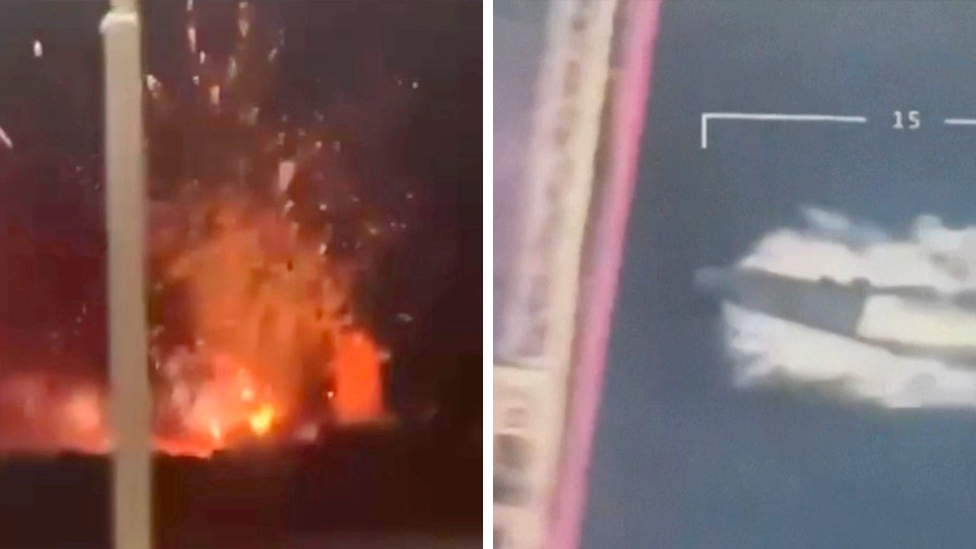
A Russian warship has been struck by Ukrainian drones in Libya, according to Ukrainian President Volodymyr Zelensky. The reported engagement marks a significant geographic expansion in Ukraine's ongoing campaign against Russian naval forces, moving long-range targeting far beyond traditional front lines. If confirmed, the operation illustrates Kyiv's willingness and ability to pursue Russian military assets stationed well outside the primary conflict zone.
Reacting to the reports, the Kremlin declined to comment directly on the specific attacks in Libya. Instead, Russian authorities issued a pointed statement warning of an escalation of tensions in the region. The reserved official reaction from Moscow highlights the sensitive nature of military operations conducted near strategic Mediterranean maritime corridors.
Ukraine's unmanned systems have played a pivotal role in challenging naval capabilities throughout recent months, frequently deploying aerial and sea drones to inflict damage on warships. However, the prospect of drone strikes reaching Russian positions in North Africa represents an unprecedented leap in operational range. Such maneuvers demonstrate how rapidly evolving drone technology continues to reshape modern naval engagements and redefine battlefield boundaries.
Russian defense and logistical assets have sustained a presence across the Mediterranean and North Africa for years, with Libya serving as a critical crossroads for regional influence. International observers and military analysts have monitored Russian naval movements in these waters as Moscow maintains supply routes and security agreements. The vulnerability of such remote outposts to drone strikes introduces new logistical vulnerabilities for Russian deployments far from domestic bases.
Neither side has released exhaustive technical assessments detailing the magnitude of the structural damage sustained by the vessel. The Kremlin's reluctance to provide specific commentary aligns with past communication strategies regarding military setbacks in foreign operating environments. Without direct acknowledgment or visual documentation released by Russian defense officials, the precise operational status of the targeted warship remains unclear.
Targeting foreign-deployed warships in a third sovereign nation elevates the broader geopolitical stakes of the war. Libya itself remains navigating fragile political and security dynamics following years of internal division and foreign involvement. Introducing remote combat strikes into the region risks entangling localized security frameworks with wider international confrontations, complicating diplomatic relations across North Africa and southern Europe.
Independent verification of military incidents in Libya presents severe logistical and informational challenges for outside observers. Access to coastal ports and military installations across the country is tightly restricted, limiting the ability of independent monitors to verify battlefield claims in real time. Consequently, the international community must weigh competing statements from Kyiv and Moscow alongside limited third-party intelligence.
Moscow's assertion that the strikes threaten to escalate regional tensions signals concern over the expanding radius of drone warfare. By emphasizing regional stability rather than discussing the warship itself, Russian officials seek to frame the actions as destabilizing to international waters. This diplomatic posture suggests that Moscow may use the reported incident to rally concern among regional partners wary of external military friction.
The reported strike is likely to prompt a comprehensive review of force protection measures for Russian naval vessels operating across the Mediterranean basin. Command structures will face increasing pressure to enhance air defense umbrellas and electronic countermeasures at remote maritime installations. At the same time, defense strategists will be watching closely to see whether Ukrainian forces attempt further asymmetric operations against distant naval targets.
As both governments navigate the aftermath of the reported strike, the strategic calculus governing naval deployments in foreign waters has fundamentally shifted. The incident underscores that geographical distance no longer guarantees immunity for naval assets in an era dominated by long-range unmanned systems. Moving forward, the diplomatic fallout and potential security repercussions across the Mediterranean will remain an urgent priority for regional and international observers alike.
Primary source: BBC World. Newzly rewrites and structures source reporting for clarity; verify critical details at the original.