Spacecraft returns to assess asteroid four years after deliberate crash
A spacecraft has returned to assess an asteroid four years after a deliberate collision knocked it off course, in a mission examining the aftermath of the impact, BBC Science reports.
In this piece
A spacecraft is studying the aftermath of a deliberate asteroid collision four years after the impact changed the object's course, according to BBC Science. The…
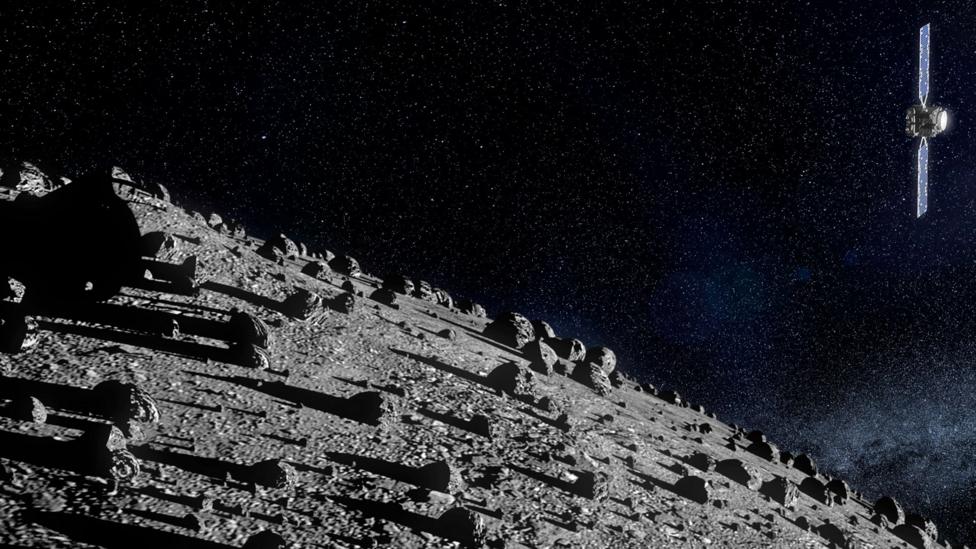
A spacecraft has returned to assess the damage to an asteroid four years after a deliberate spacecraft collision knocked it off course, according to BBC Science. The mission is examining the aftermath of an impact designed to alter the asteroid’s motion, bringing attention back to what the collision left behind.
The earlier collision and the current assessment address different parts of the same scientific question. Changing an asteroid’s course demonstrates an effect on its movement; studying the object afterward can help researchers understand the physical consequences of the strike and how those consequences relate to the change in course.
An intentional spacecraft impact transfers momentum to its target. But an asteroid is not necessarily a simple, solid object, and interpreting a collision requires understanding how its material responds. Examining the aftermath can therefore provide a different kind of evidence from observations that establish whether its path has changed.
The distinction matters for planetary defense, the broader effort to understand and potentially prevent hazardous asteroid impacts. A deliberate collision is one approach to changing an object’s trajectory. Learning how a target responds is important to assessing that approach, although a successful deflection does not by itself establish how every other asteroid would behave.
The four-year interval identified in the BBC Science headline places the assessment well after the original event. The task now is to investigate the resulting condition of the asteroid, rather than simply revisit the moment of collision. Any account of the damage will need to rest on observations from the follow-up mission.
The supplied BBC Science summary confirms that the mission is studying an asteroid deliberately knocked off course, but provides no measurements of the damage. It also does not specify the spacecraft’s instruments or describe findings from the assessment. There is therefore no basis in the available material to quantify changes to the asteroid’s surface or structure.
That leaves an important distinction between the purpose of the visit and its eventual results. An assessment can investigate what happened without yet providing a complete explanation of it. Conclusions about the impact’s physical effects, or what they imply for future deflection efforts, will depend on the evidence collected and its interpretation.
The next scientific step is to connect observations of the asteroid’s present condition with the earlier collision and the change in its course. As framed by BBC Science, the mission’s focus is now on examining the aftermath. Detailed findings will determine what the return visit adds to understanding of deliberate asteroid deflection.
Primary source: BBC Science. Newzly rewrites and structures source reporting for clarity; verify critical details at the original.