technology·Texas·Cameron County
SpaceX Returns Starship Rocket in Texas Tower Catch Test
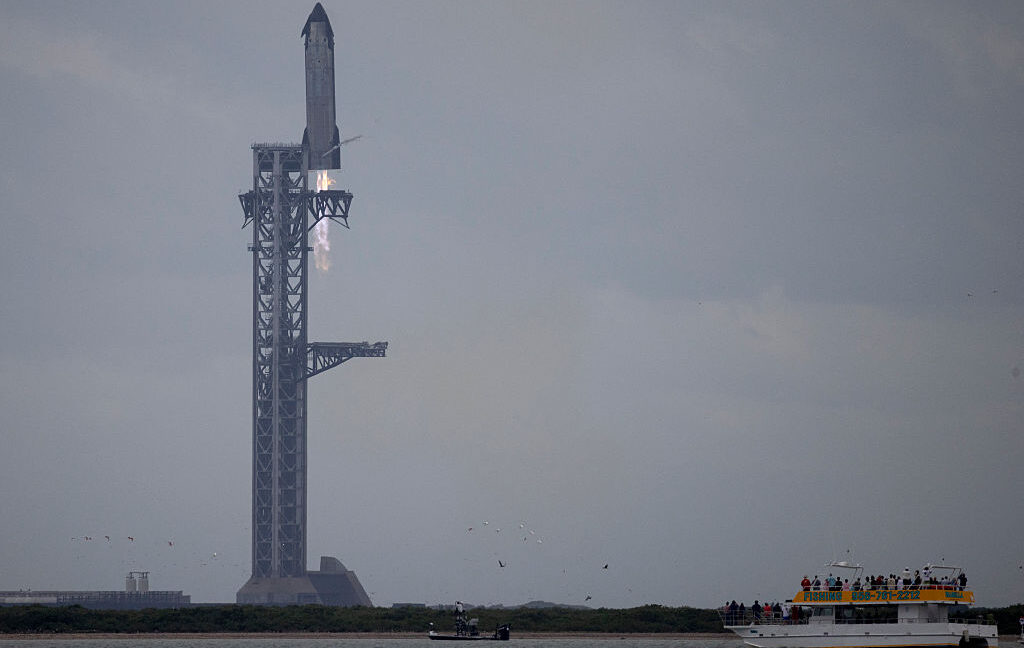
SpaceX executed an aerial tower catch of its Starship rocket in Texas, marking another milestone for orbital reusability even as booster anomalies altered the broader flight plan.
In this piece
SpaceX achieved another dramatic milestone at its Starbase facility in Texas by catching a returning Starship rocket with launch tower arms. While an anomaly…
SpaceX accomplished another dramatic engineering milestone during its latest Starship test flight from South Texas, successfully executing an aerial catch of the spacecraft using the mechanical arms of its launch tower. The test showcased the company's aggressive approach to orbital hardware recovery, even as engineers continued analyzing anomalies encountered during earlier phases of the flight.
The operation took place at SpaceX's Starbase development and launch complex in Cameron County, Texas. Spectators and flight tracking cameras captured the colossal vehicle descending through the coastal atmosphere, reorienting its engines, and settling neatly into the grasp of the massive retrieval tower known colloquially as Mechazilla.
While the recovery demonstrated breathtaking precision, the flight profile was not without technical complications. Mission controllers had initially envisioned a dual recovery test that would attempt to secure both the Super Heavy booster and the upper-stage Starship. However, anomalous sensor readings during the booster's descent forced the team to alter course, directing the first-stage rocket to a controlled splashdown in the Gulf of Mexico instead of a return to the pad.
Despite the early adjustment with the booster, the upper stage proceeded smoothly along its designated orbital trajectory. The vehicle completed a series of planned in-space objectives, including test deployments and systems verifications, before initiating its deorbit burn. The subsequent descent through the atmosphere tested the thermal protection system and aerodynamic steerage flaps under extreme physical conditions.
Catching a returning orbital stage represents a substantial technological evolution beyond conventional parachute recoveries or vertical touchdowns on ocean barges. The towering steel catch arms, engineered to absorb massive kinetic energy while aligning with micro-level guidance systems, must lock onto designated hard points on the vehicle within fractions of a second. The maneuver eliminates the weight penalty of heavy landing legs, allowing the vehicle to maximize payload capacity.
Full and rapid reusability remains the core architectural goal behind the entire Starship program. By returning rockets directly to their launch mounts rather than retrieving them from distant ocean platforms, SpaceX aims to compress turnaround times between flights from months to mere hours. If perfected, this operational model could dramatically slash the cost of launching heavy mass into low Earth orbit and deep space.
The ongoing flight tests carry high stakes not only for SpaceX's commercial satellite constellation but also for broader international space exploration programs. NASA has selected a customized variant of Starship to serve as the human landing system for the Artemis lunar missions. Sustained validation of orbital operations, heat shield resilience, and precision recovery mechanisms is critical to satisfying federal flight-readiness reviews.
Progress on the Starbase launch facility has required close coordination with the Federal Aviation Administration and local environmental regulators. Each developmental launch yields vast telemetry data that engineers feed directly into hardware iterations, often modifying structural components and software algorithms between flights. SpaceX continues to maintain a rapid prototyping methodology that embraces operational risks during early flight demonstrations.
Aerospace analysts note that while the successful tower catch reaffirms SpaceX's technical prowess, substantial hurdles remain before regular operational missions can begin. Ground crews at Starbase are now inspecting the caught vehicle to evaluate thermal wear, structural stress, and engine integrity following atmospheric reentry. As engineers review flight data from the dual-phase mission, preparations are already underway for upcoming test launches aimed at mastering simultaneous recovery operations.
Primary source: Ars Technica. Newzly rewrites and structures source reporting for clarity; verify critical details at the original.