Spain Paralyzed by First General Strike in 14 Years Over Housing Crisis
Millions of Spanish workers staged the country's first general strike in 14 years on Wednesday, disrupting transport and industry to demand decisive action on soaring housing costs ahead of upcoming national elections.
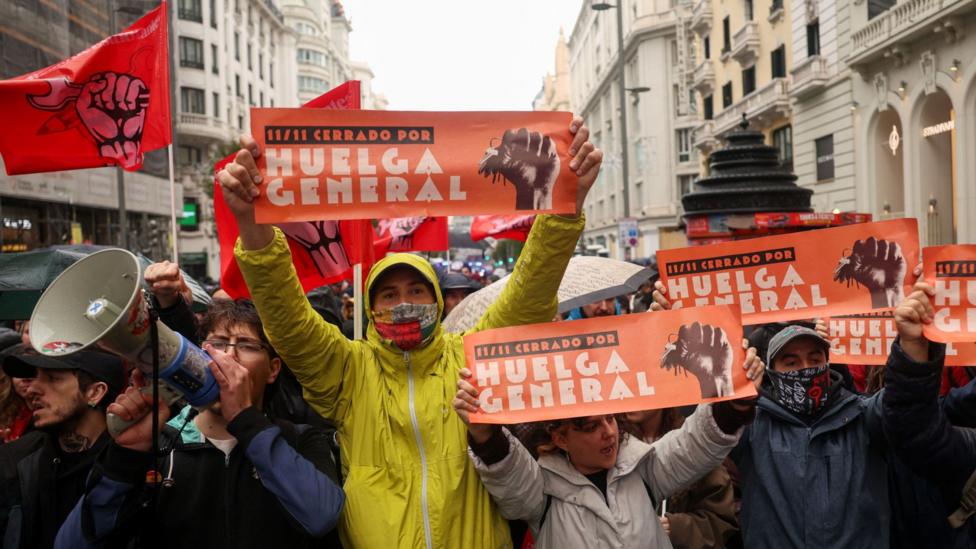
Millions of workers across Spain joined a 24-hour national general strike on Wednesday, paralyzing public transport, industrial operations, and public services in the country's first nationwide walkout in 14 years. Organized by major trade unions alongside housing advocacy groups, the industrial action was called to demand urgent government intervention amid an intensifying housing and cost-of-living crisis.
The coordinated action caused severe travel disruption across the eurozone's fourth-largest economy from the early hours of the morning. Commuters faced widespread cancellations and long delays across regional train systems, high-speed rail lines, and municipal metro and bus networks in major urban centers. Aviation hubs, including Madrid-Barajas and Barcelona-El Prat, operated under government-mandated minimum service levels as dozens of domestic and regional flights were grounded.
Strategic industrial and commercial sectors also ground to a halt as union members established picket lines across the country. Automotive manufacturing plants, commercial shipping ports, wholesale food markets, and waste management services reported near-total stoppages. Major commercial avenues saw widespread retail closures as shopkeepers joined or accommodated the strike call.
In downtown Madrid and Barcelona, tens of thousands of demonstrators filled major boulevards, carrying banners demanding rent controls and an immediate end to tenant evictions. Demonstrations were largely peaceful, though local authorities reported brief confrontations with police and sporadic road blockades where protesters ignited tires on commuter thoroughfares. Secondary rallies drew significant crowds in Valencia, Seville, and Bilbao throughout the afternoon.
At the heart of the labor mobilization is widespread public anger over soaring shelter costs. Labor confederations CCOO and UGT, joining forces with tenant associations, highlighted that average residential rents across Spain have nearly doubled over the past decade. Wages have consistently failed to keep pace with inflation, leaving younger workers and low-income families spending disproportionate shares of their monthly earnings on rent.
Public outrage has been further inflamed by recent high-profile eviction cases that have underscored the acute shortage of social and affordable housing. Union leaders argued that existing state housing legislation and rental caps have proved insufficient to rein in speculative buying and the rapid expansion of short-term holiday lets. Organizers emphasized that access to decent, affordable housing has evolved from a social policy concern into an urgent economic emergency.
The timing of the general strike carries immense political weight, taking place less than three weeks before Spaniards cast ballots in a snap parliamentary election. The widespread labor unrest has thrust housing affordability directly to the center of the electoral debate, forcing candidates across the political spectrum to adjust their campaign platforms. Ruling coalition leaders defended their social investments while acknowledging the persistent strain on household budgets.
Opposition parties and business associations offered contrasting assessments of the walkout, warning of the economic damage caused by halting critical logistics and commercial infrastructure. Conservative leaders criticized the strike as politically motivated ahead of the general election, arguing that supply shortages and business regulations are the primary drivers of housing pressures rather than private market excess.
The historic walkout underscores how housing insecurity has displaced unemployment as the primary social grievance for millions of Spanish citizens. As polling day approaches, the massive turnout sends an unmistakable message to the incoming parliament that piecemeal reforms will face fierce resistance from organized labor and civil society.
Primary source: BBC World. Newzly rewrites and structures source reporting for clarity; verify critical details at the original.