Spix's Macaw Revival Embroiled in Controversy Decades After Disappearance From Wild
More than three decades after vanishing from Brazilian skies, the rare Spix’s macaw is at the center of an ambitious global reintroduction effort that has deteriorated into deep controversy, diplomatic friction, and regulatory turmoil.
In this piece
The Spix’s macaw, the vibrant blue parrot that inspired the hit film 'Rio,' disappeared from South American skies more than thirty years ago. While an ambitious…
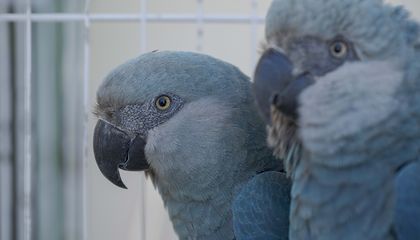
An ambitious international campaign to bring the Spix's macaw back from extinction in the wild has deteriorated into deep controversy and administrative confusion. More than three decades after the striking blue bird vanished from its native Brazilian skies, a high-profile initiative to restore the species is facing severe friction between conservationists, international partners, and government regulators.
The Spix's macaw captured global imagination as the inspiration for the 2011 animated blockbuster "Rio," which depicted the journey of a captive bird returning to South America. In reality, the species had disappeared from the wild by the early 2000s after decades of relentless poaching for the pet trade and rampant destruction of its habitat.
Because the wild population was completely wiped out, efforts to save the bird depended entirely on a fragile captive population scattered among private collectors and specialized foreign facilities. Rebuilding the numbers required years of artificial insemination, careful pedigree tracking, and intense international diplomacy to assemble birds capable of producing healthy offspring for future reintroduction.
The repatriation initiative brought together Brazilian biodiversity authorities, such as the Chico Mendes Institute for Biodiversity Conservation, alongside overseas partners including Germany's Association for the Conservation of Threatened Parrots. While initial releases of captive-bred macaws into their native dry scrubland were hailed as historic conservation breakthroughs, the collaborative relationship soon fractured over governance, regulatory standards, and operational oversight.
Over time, the project became embroiled in widening disputes regarding administrative transparency, biosecurity controls, and the legal jurisdiction over the birds. Brazilian officials launched inquiries into how the partnership functioned, while researchers raised pressing questions about disease prevention protocols following reports of avian viral threats that could endanger both captive flocks and native wildlife.
Biological hurdles have added further pressure to the already strained restoration efforts. Transitioning captive-reared macaws into the rugged caatinga biome requires extensive conditioning, as birds unaccustomed to wild conditions must learn to forage, identify shelter in native gallery trees, and evade natural predators without the guidance of wild flocks that vanished a generation ago.
The crisis highlights the acute challenges facing 21st-century conservation programs that rely heavily on private holdings to recover vanishing species. When a species disappears entirely from its natural range, public wildlife authorities frequently become dependent on external entities, creating delicate arrangements where national sovereignty, proprietary interests, and conservation ethics can quickly come into conflict.
Conservation specialists caution that captive breeding alone cannot guarantee ecological recovery if institutional partnerships and long-term governance fail. The saga illustrates that charismatic species and global publicity do not insulate recovery programs from organizational breakdowns, especially when scientific protocols are overshadowed by bureaucratic disagreements and shifting legal mandates.
The outlook for the Spix's macaw remains precarious as Brazilian authorities and international stakeholders assess the path forward amid stalled cooperation. Although hundreds of birds remain in captivity, ensuring that the vibrant blue parrot can once again establish a viable, self-sustaining wild population will depend on rebuilding trust, enforcing scientific oversight, and resolving ongoing regulatory impasses.
Primary source: Smithsonian Magazine. Newzly rewrites and structures source reporting for clarity; verify critical details at the original.