Stalin says DMK has no option but to back Delimitation Bill after INDIA outreach fails
The Hindu reports that M.K. Stalin says the DMK must support a Delimitation Bill after an INDIA bloc outreach failed, reopening Tamil Nadu’s fight over how Parliament seats are shared.
In this piece
The Hindu reports that Tamil Nadu Chief Minister M.K. Stalin says the DMK has no option but to support a Delimitation Bill after INDIA bloc outreach failed. The…
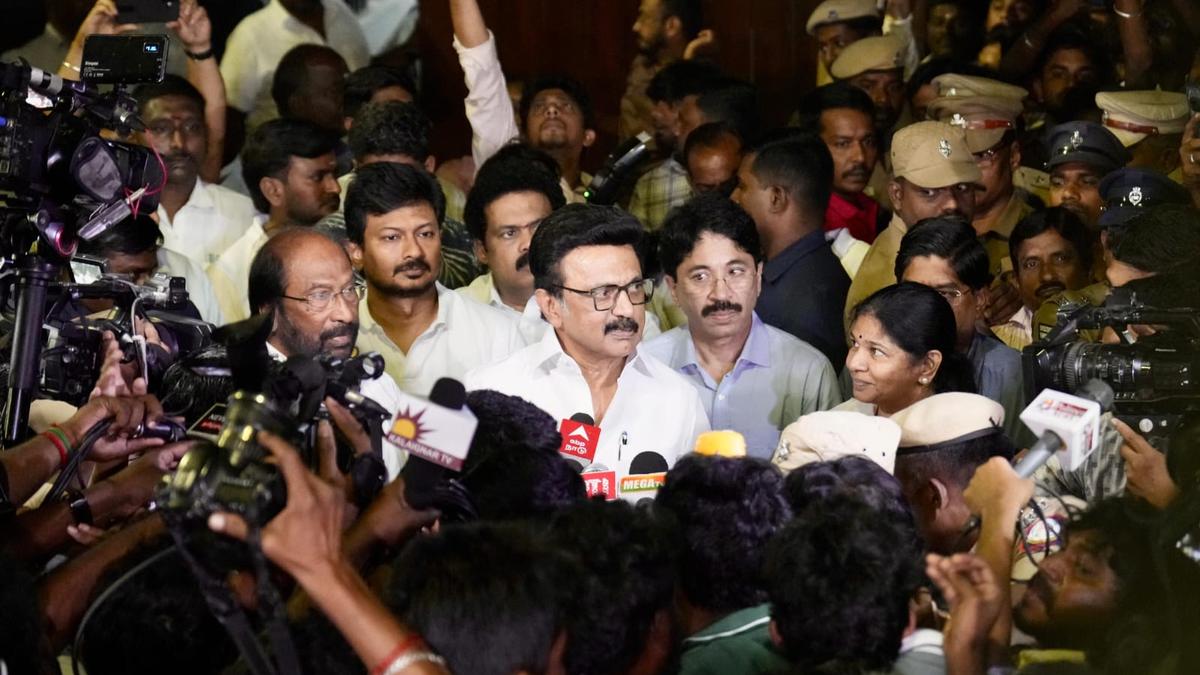
The Hindu has reported that Tamil Nadu Chief Minister M.K. Stalin says the Dravida Munnetra Kazhagam has no option but to support a Delimitation Bill after an outreach effort by the INDIA bloc failed. The account appeared in the newspaper’s Tamil Nadu coverage as circulated by Google News. The summary available for this article does not quote Stalin at length or identify who was approached.
Delimitation is the constitutional exercise of redrawing Lok Sabha and Assembly constituencies and reallocating seats among states so representation follows population. Successive amendments postponed a fresh population-based redistribution, and the next census-linked exercise has been widely expected after the first census conducted following 2026. That timetable has returned the issue to the center of national politics.
Tamil Nadu and other southern states have long argued that a formula based only on current population would cut their share of Parliament relative to states that grew faster. Their case is that such a shift would penalize places that slowed population growth through education, health and family planning. Stalin and the DMK have been among the firmest voices warning that the south’s weight in the Lok Sabha could decline.
The Hindu’s headline account sits against that record. It says the INDIA alliance, the opposition grouping in which the DMK is a leading partner, tried an outreach that did not succeed, and that Stalin then concluded the party must support the Delimitation Bill. The feed summary does not say what the outreach sought, which allies took part, or why the effort is described as a failure.
The word support is politically elastic. It can mean voting for a procedure, accepting a calendar, or endorsing a particular seat formula. The headline does not resolve which of those Stalin has in mind. Any reading of a firm legislative commitment should wait on the full report and the bill text.
For the DMK the stakes are constitutional and electoral. Tamil Nadu’s Lok Sabha strength shapes its voice on finance, language and federal schemes as well as its numbers in the House. A smaller contingent would change the state’s bargaining power. Party leaders have previously tied delimitation to the complaint that stronger social indicators can be punished when seats are allocated.
The same question has been hard for the INDIA bloc to answer with one voice. Partners from more populous states do not share the south’s fear of losing representation, so a joint line has been more difficult here than on some other critiques of the Union government. A reported failure of outreach is consistent with that tension. This account still does not name the allies said to have held back.
The claim that Stalin now sees support as unavoidable rests on The Hindu’s report as summarized in the news listing. No division figures, official DMK resolution or government reply appear in the material used here. The political conclusion should be read as that newspaper’s account of his position.
The next test is the bill itself, the census timetable and whether Parliament is asked to adopt a formula the DMK can defend at home. If the party does back the measure, it will have to tell its supporters how that vote fits years of argument that delimitation could dilute Tamil Nadu. Allies and the Union government will be watching whether the reported shift survives contact with the details.
Primary source: Google News Tamil Nadu. Newzly rewrites and structures source reporting for clarity; verify critical details at the original.