Supreme Court Rejects Trump Request to Stop California Ballot Count
The Supreme Court has rejected an emergency bid by the Trump administration to halt California from counting disputed ballots, ending a last-minute challenge on the eve of the midterm elections.
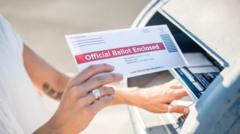
The Supreme Court has rejected an emergency request from the Trump administration seeking to halt the counting of disputed ballots in California. The decision delivers a major legal setback to federal efforts aimed at disqualifying the contested votes in the state. It ensures that local election administrators can continue their tallying operations without judicial disruption.
Handed down on the eve of the midterm elections, the high court's determination effectively brings a close to the administration's bid to invalidate the ballots. With balloting already underway and key races hanging in the balance, the timing of the order provides immediate clarity for state election officials. The ruling leaves the state's existing ballot-processing rules fully intact.
The dispute centered on an effort by the Trump administration to prevent state officials from tabulating certain contested ballots as part of California's midterm returns. Administration attorneys had turned to the nation's highest court on an emergency basis after earlier attempts to block the counting stalled. They had argued that counting the disputed ballots would cause irreparable harm to the integrity of the contest.
By denying the application, the justices declined to step in and alter the state's ballot tabulation procedures during an active election cycle. The order allows local officials across California to proceed under their established statutory frameworks for reviewing, verifying, and counting all submitted votes. The court did not issue an extensive rationale, following standard practice for emergency docket matters.
The legal confrontation arrived amid an intensely watched midterm election season marked by widespread debates over voting access and administrative oversight. Both major political parties have closely monitored ballot validation procedures across key states, frequently turning to the court system in the final days of campaigning. California, with its vast electorate and complex voting apparatus, has frequently served as a prominent venue for such legal skirmishes.
State officials had pushed back strongly against federal intervention, insisting that standard electoral procedures must be respected to guarantee that every lawful vote is counted. Representatives for election administration argued that halting the processing of ballots at the eleventh hour would disenfranchise legitimate voters and generate widespread administrative confusion. They urged the judiciary to let normal statutory processes unfold without interference.
For California election workers, the resolution of the emergency appeal removes a substantial operational uncertainty ahead of poll closures. State law provides specific timelines and safeguards for handling disputed ballots, and administrators can now execute those duties without the threat of a last-minute federal halt. Counting centers across the state are scheduled to begin reporting preliminary returns as soon as voting concludes.
Legal scholars noted that the decision reflects a broader judicial doctrine cautioning federal courts against changing election ground rules on the immediate brink of voting. The Supreme Court has repeatedly signaled that state election authorities need stability and predictability when managing the mechanics of a live election. By rebuffing the emergency challenge, the court adhered to that principle and avoided mid-election disruptions.
With the Supreme Court's refusal to intervene, the Trump administration's legal avenues to block the counting of these particular California ballots appear effectively exhausted. As the midterms conclude, public attention will turn from the courtroom to the counting centers, where election workers will finalize the official tally. The final certified results will incorporate the disputed ballots in accordance with existing state statutes.
Primary source: BBC World. Newzly rewrites and structures source reporting for clarity; verify critical details at the original.