Swimming Stoats Challenge Resolution Island’s Bird Refuge Vision
New Zealanders have long envisioned Resolution Island as a predator-free refuge for native birds. Stoats’ ability to swim to the island complicates that ambition, showing the limits of relying on surrounding water for protection.
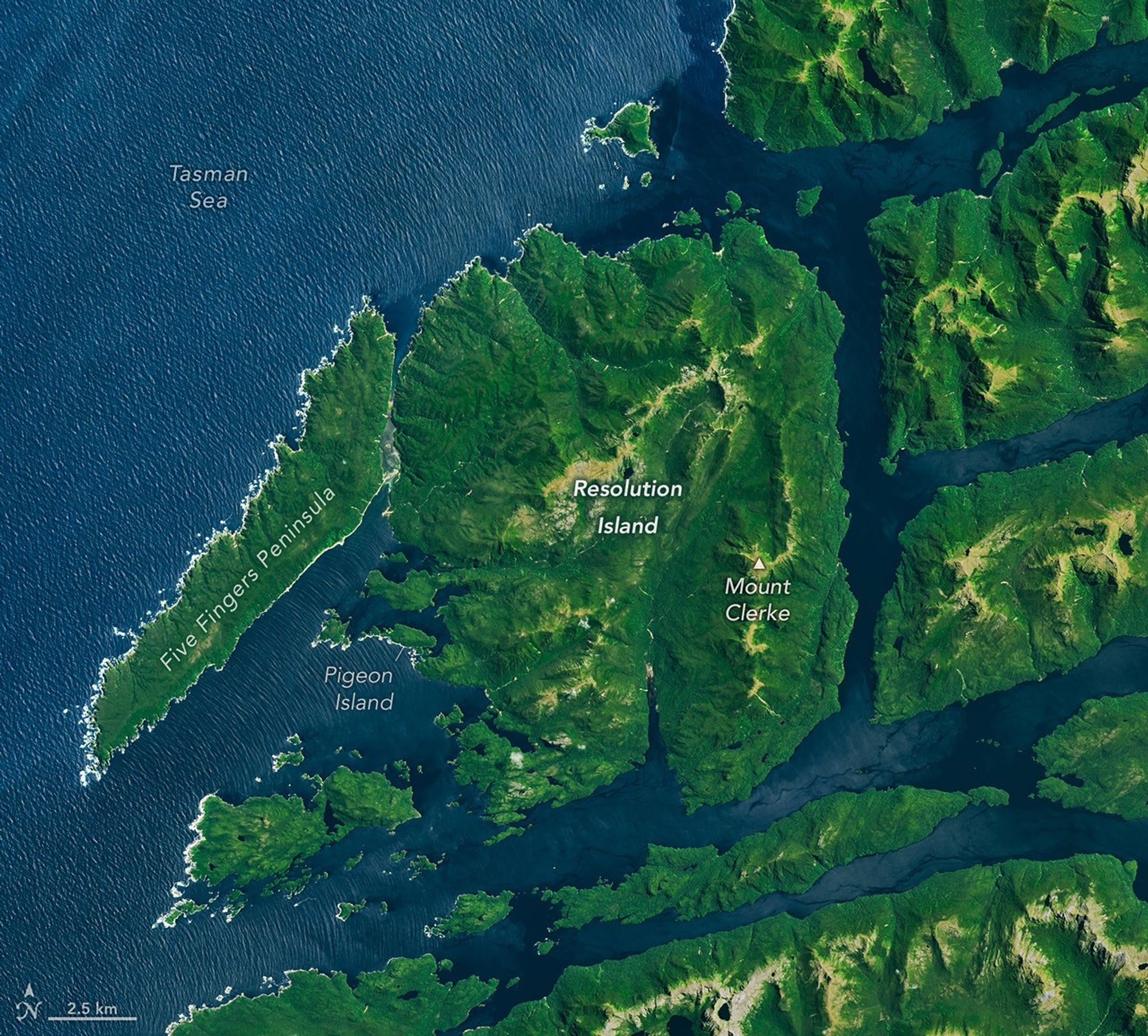
In this piece
Resolution Island has long been envisioned as a predator-free refuge for New Zealand’s native birds, according to NASA Earth Observatory. But swimming stoats…
Swimming stoats are challenging a longstanding vision for Resolution Island: a predator-free refuge for New Zealand’s native birds. A NASA Earth Observatory account highlights the tension between the protection people have envisioned for the island and the ability of predators to reach it across the water.
The ambition described in the account is one New Zealanders have held for years, rather than a newly announced conservation proposal. Its central promise is straightforward: an island without predators could offer native birds a refuge. The complication is equally important—being separated from other land by water does not necessarily keep unwanted animals out.
Stoats’ swimming ability makes that distinction particularly relevant here. Water may appear to form a natural boundary around a protected area, but a boundary is only an effective defense against animals that cannot cross it. The account presents swimming stoats as a challenge to the expectation that Resolution Island can remain beyond their reach.
For native birds, the significance of the refuge concept lies in the protection it is intended to deliver, not simply in the island’s location. A predator-free designation describes an ecological condition rather than a geographic feature. The presence or arrival of predators would therefore matter even if the landscape itself remained otherwise unchanged.
The story also illustrates a broader conservation distinction between establishing a desired condition and maintaining it. Removing a threat from an island, if achieved, would not by itself demonstrate that the threat could never return. Where predators can cross the surrounding water, any claim of lasting protection must account for that possibility rather than treating isolation as a guarantee.
That does not establish that the vision for Resolution Island is unattainable. It does mean the swimming behavior highlighted by Earth Observatory is central to understanding the challenge, rather than an incidental detail about the animals. The same stretch of water that separates a refuge from nearby land can still be a route of entry for a capable swimmer.
The supplied account does not establish the island’s current predator population, the condition of its native bird populations or the results of any particular conservation intervention. It therefore supports a narrower conclusion than either declaring the refuge secure or describing the effort as a failure. The documented tension is between a longstanding goal and a predator capable of overcoming a natural barrier.
Looking ahead, the question raised by the account is how the refuge ambition can accommodate that vulnerability. Any assessment of progress would need evidence about both protection for native birds and the continuing risk posed by arriving predators. Earth Observatory’s framing leaves Resolution Island as a reminder that a refuge’s boundaries and its defenses are not necessarily the same thing.
Primary source: NASA Breaking News. Newzly rewrites and structures source reporting for clarity; verify critical details at the original.