DMK Formally Backs Centre's Revised Delimitation Bill
The DMK has officially backed the Centre's revised delimitation Bill after the Union government agreed to protect Tamil Nadu's proportional seat share in Parliament, a move Chief Minister M.K. Stalin called a major victory.
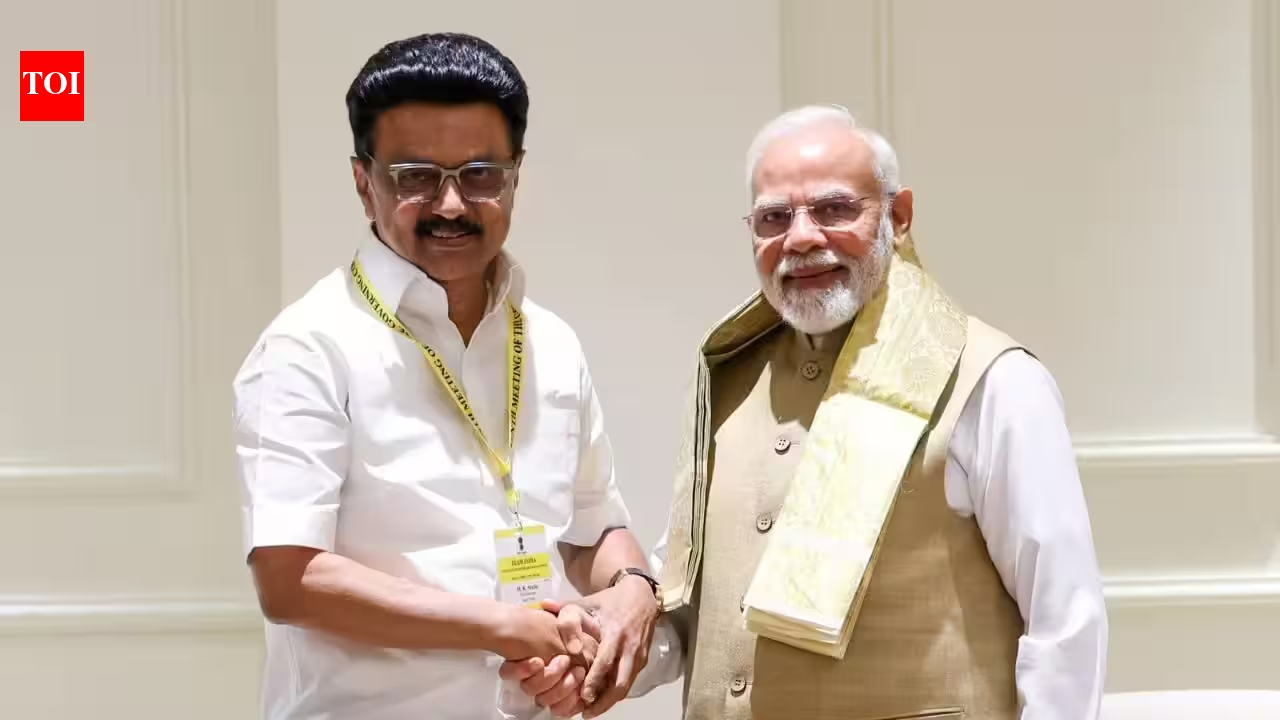
In this piece
Tamil Nadu Chief Minister M.K. Stalin announced the DMK's formal support for the Centre's revised delimitation Bill, calling it a major regional victory. The…
The Dravida Munnetra Kazhagam has formally declared its backing for the central government's revised delimitation Bill, marking a breakthrough ahead of an upcoming special session of Parliament. Tamil Nadu Chief Minister and party president M.K. Stalin hailed the development as a major victory for the state and the broader southern region. He stated that persistent advocacy by regional leaders compelled the Union government to accommodate key federal safeguards.
The decision was formalized following an extensive strategy meeting of DMK members of Parliament convened by Stalin at Anna Arivalayam, the party's headquarters in Chennai. Following detailed deliberations on the fine print of the legislative draft, the parliamentary party resolved to support the Bill during parliamentary debates. Party lawmakers agreed that the revised proposal resolved existential concerns regarding the political representation of southern states.
For years, regional leaders across southern India had mounted fierce resistance against standard delimitation models that adjust parliamentary seats strictly according to updated census data. Because southern states successfully executed national population control policies over the past five decades, a purely demographic recalculation threatened to slash their proportional influence in New Delhi. Political leaders repeatedly warned that penalizing states for good governance would rupture India's federal compact.
Stalin emphasized that the revised framework reflects written submissions and constitutional demands placed before the Centre by his administration. Rather than applying a disparate demographic formula, the revised draft establishes a uniform 50 percent increase in legislative and parliamentary seats across all states. This structural compromise ensures that populous northern states expand their representation without diminishing the relative political weight of the south.
Under the terms of the revised Bill, Tamil Nadu's proportional representation in the Lok Sabha will remain firmly locked at its historical share of 7.18 percent. Consequently, the state's parliamentary delegation will increase from 39 members to 59 seats once the new boundaries take effect. State officials noted that preserving this exact ratio satisfies Tamil Nadu's primary requirement for supporting electoral redistricting.
The DMK's endorsement also underscored growing tactical differences within the national opposition. During the Chennai meeting, the party leadership criticized the Congress party for what it described as an impracticable policy reversal on delimitation. The DMK urged opposition partners to recognize the tangible federal protections secured in the revised draft rather than maintaining blanket resistance to parliamentary modernization.
The central government's revised formulation appears designed to build bipartisan consensus ahead of an ambitious legislative calendar. Securing public backing from one of the south's most prominent regional parties provides the ruling coalition substantial political cover as legislative business begins. Federal officials have framed the compromise as proof that regional aspirations and national legislative expansion can coexist harmoniously.
Legal and constitutional scholars note that the uniform expansion model bypasses decades of contentious impasse surrounding national census milestones. By standardizing constituency growth nationwide while preserving inter-state ratios, Parliament seeks to prevent deep regional polarization. Nevertheless, administrative complexities concerning the exact delineation of interior assembly boundaries are expected to require extensive local consultation.
The Bill will soon undergo formal scrutiny on the floor of Parliament during the upcoming special sitting, where lawmakers from various regional parties plan to debate procedural details. With Tamil Nadu's ruling party firmly on board, the central government enters the parliamentary session with strengthened momentum. Observers will watch closely to see whether other southern regional parties follow the DMK's lead in endorsing the measure.
Primary source: Google News Tamil Nadu. Newzly rewrites and structures source reporting for clarity; verify critical details at the original.