‘The New Stanford Prison Experiment’ Ends With a Collective Walkout
Netflix’s reality series closes with participants choosing solidarity over confinement, an outcome executive producers Jane Lipsitz and Dan Cutforth say complicates its central question about power.
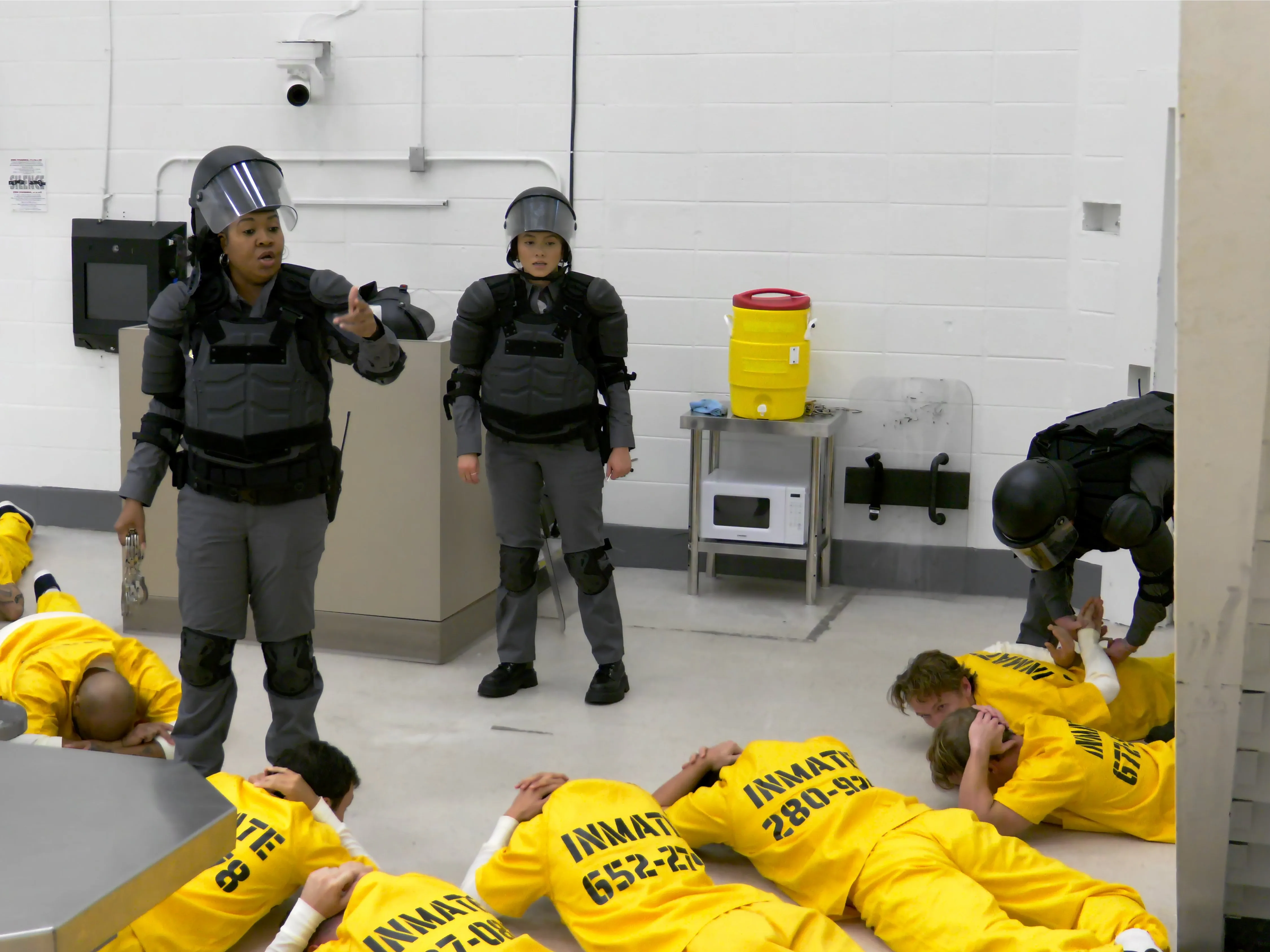
The New Stanford Prison Experiment ends with its remaining prisoners leaving together, arm-in-arm, rather than completing their scheduled confinement. The collective exit gives the Netflix reality series a more hopeful conclusion than the notorious study that inspired it, according to Variety’s account of the finale.
Spoilers follow for the six-episode series, which began streaming Oct. 21. Executive producers Jane Lipsitz and Dan Cutforth told Variety that the outcome challenged the premise they had set out to explore: whether power inevitably corrupts those who hold it.
The decisive moment arrives during the final self-governance phase, when participants are allowed to determine their own course. Some initially want to stay, but comedian Mike Paramore persuades fellow prisoner Chris Lee that leaving together would make a stronger statement. Their joint departure ends the exercise on day thirteen.
That resolution follows a production built around changing conditions rather than maintaining one fixed arrangement. Variety’s earlier reporting described interventions that altered the hierarchy and reversed participants’ roles, forcing people accustomed to exercising authority to experience confinement instead. Those changes are important context for interpreting the ending: the circumstances themselves did not remain constant.
The series brought thirty volunteers into a real prison for a planned two-week exercise, initially assigning eight as guards and twenty-two as prisoners. Filming took place in a decommissioned section of the Adult Detention Center in Cherokee County, Georgia. The participants came from varied backgrounds, unlike the narrow college-student population recruited for the original study.
Philip Zimbardo’s 1971 Stanford prison experiment was stopped after six days as the simulated environment deteriorated. Its ethical failures make any attempted reimagining a sensitive undertaking, not simply a familiar television premise. Netflix’s version therefore arrives with questions about both its treatment of participants and what audiences should infer from their behavior.
Lipsitz told Netflix’s Tudum that the production used psychological screening, continuous monitoring and access to psychologists around the clock. Participants also had a safe word allowing them to withdraw. Those measures, as described by the producers, distinguish the television production’s stated safeguards from the circumstances of the original exercise.
The hopeful finish does not establish a universal answer about human nature. A filmed, constructed environment with producer-led interventions offers a particular set of experiences, rather than proof that people will always respond similarly to authority. The contrast between the show’s opening question and its eventual resolution is consequently central to how the creators frame it.
In discussing the finale with Variety, Cutforth cautioned against broad conclusions about race and gender, while describing the series as a way to examine those issues. Both producers expressed interest in revisiting the setting, with Lipsitz suggesting that a different version could focus on women and pose different questions. For now, their stated ambition is for viewers to debate what unfolded rather than treat the ending as a definitive verdict on power.
Primary source: Variety. Newzly rewrites and structures source reporting for clarity; verify critical details at the original.