The Sony Aibo and the Early Vision of the Consumer Robot Revolution
A retrospective review highlights Sony’s late-1990s push to revolutionize personal technology through its Aibo robot dog, illustrating how early visions of domestic robotics continue to shape modern consumer artificial intelligence.
In this piece
In a retrospective examination, The Verge revisits Sony’s ambitious late-1990s campaign to bring companion robotics into everyday homes through the Aibo robot…
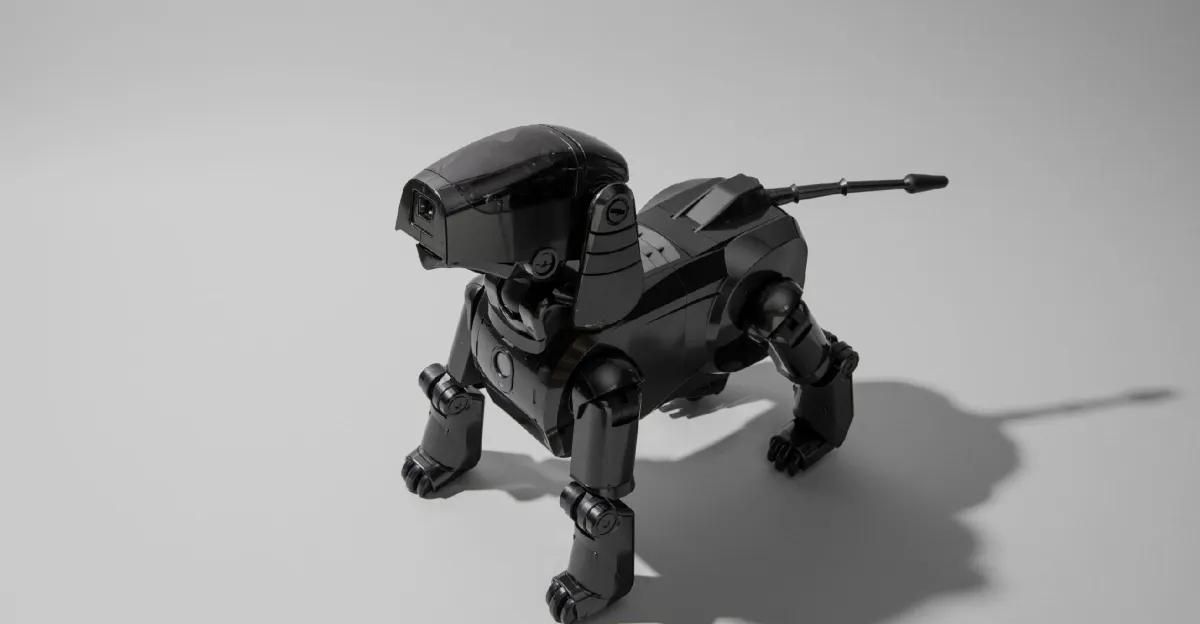
A retrospective exploration by The Verge highlights how Sony once envisioned a consumer landscape transformed by companion robotics, centering on its pioneering robotic dog, Aibo. During the late 1990s, the consumer electronics company operated under the belief that society stood on the edge of an imminent robotics revolution. Rather than limiting automated machines to industrial factory floors, the company anticipated that robots would soon inhabit homes as domestic companions, coworkers, and personal friends.
At the heart of that vision was the concept of the robotic pet, a technological format that Sony embraced as a practical entry point into daily household life. The original Aibo emerged from this philosophy as an ambitious effort to package advanced computing, autonomous behavior, and sensory interaction inside the familiar silhouette of a canine companion. By framing automated technology as a pet rather than an intimidating utility machine, the company sought to cultivate genuine emotional attachment among ordinary consumers.
According to the retrospective analysis, the corporate enthusiasm driving these early initiatives reflected an era of bold experimentation across the technology sector. Emerging software algorithms and miniaturized hardware components encouraged consumer electronics manufacturers to explore personal robotics as a plausible consumer category. Sony positioned itself among the foremost champions of this movement, confident that domestic machines would steadily transition from speculative luxury novelties to standard household fixtures.
Yet introducing autonomous consumer hardware into private living spaces presented fundamental technical and cultural hurdles. Operating an interactive robotic platform demanded sophisticated responses to unpredictable domestic environments, complex battery requirements, and sensitive sensor calibrations. While early adopters embraced the device with enthusiasm, the broader market landscape developed far more cautiously than corporate roadmaps initially projected.
The trajectory of Aibo also underscored shifting priorities within the wider consumer electronics industry over the past two decades. As computing rapidly pivoted toward personal computers, mobile smartphones, and ubiquitous internet connectivity, dedicated robotic hardware faced intense resource competition. Maintaining costly research, development, and proprietary component manufacturing required sustained financial commitment that proved challenging to scale across mass consumer demographics.
Despite these commercial friction points, the legacy of Sony's robotic canine remains a foundational milestone in human-robot interaction design. The project demonstrated that consumer hardware could provoke empathetic responses, paving the way for later generations of smart home devices and voice-enabled digital assistants. Many contemporary approaches to interactive domestic interfaces still trace their conceptual roots back to the design principles pioneered during the initial Aibo era.
Industry observers noted that Sony subsequently revived and reimagined the Aibo platform in modern iterations, integrating cloud connectivity, advanced artificial intelligence, and refined mechanical actuation. These newer developments reflect how modern processing power and machine learning have gradually caught up with concepts originally conceived decades earlier. The persistence of the platform demonstrates an enduring fascination with autonomous companions, even as market dynamics remain specialized.
Looking forward, the evolution of companion robotics continues to navigate the boundary between high-end novelty and everyday domestic utility. As artificial intelligence models evolve and robotic hardware becomes more adaptable, tech manufacturers continue to study early case studies like Aibo to understand how consumers welcome autonomous machines into personal spaces. The historical experiment serves as both an inspiring blueprint and a cautionary reminder of the gap between visionary ambition and practical mass adoption.
As The Verge's retrospective observes, Sony's early conviction about an imminent robotic takeover captured a distinct, optimistic moment in personal technology history. While humanoid coworkers and universal robot pets did not instantly populate every modern living room, the foundational quest to build machines that feel alive continues to shape contemporary robotics development.
Primary source: The Verge. Newzly rewrites and structures source reporting for clarity; verify critical details at the original.