Trump Drops Select Canada Tariffs to Aid Embattled Susan Collins in Maine
Donald Trump has rolled back tariffs on nine Canadian agricultural products to relieve Maine farmers, providing a critical political lift to embattled Republican Senator Susan Collins ahead of a decisive election for control of Congress.
The White House on Friday announced that Donald Trump is lifting a targeted set of United States tariffs on Canadian imports, stating that the decision was made to better serve the public interest. The executive action provides direct relief to specific border-dependent trade flows after months of escalating trade friction between Washington and Ottawa. The announcement marks a notable tactical shift in federal trade policy, targeting regional pressures while leaving the broader framework of international duties largely in place.
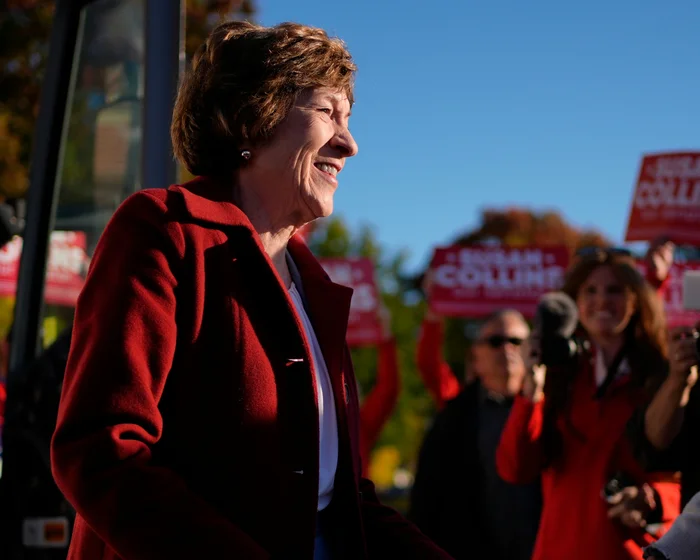
The policy change delivers an immediate political win to Susan Collins, the Republican senator from Maine who is navigating a fiercely contested re-election campaign. Collins faces a critical electoral challenge in a state where federal trade measures have provoked widespread dissatisfaction among constituents. Because the Senate remains intensely divided, the outcome of the contest in Maine is seen as a decisive factor in determining whether Democrats will succeed in flipping majority control of Congress.
Collins confirmed that the newly authorized tariff exemptions will apply directly to nine agricultural products that are integral to Maine's regional economy. The list of exempted commodities includes blueberries, potatoes, apples, and seaweed, each representing key agricultural and coastal operations across the state. Producers of these crops have faced mounting supply chain obstacles and cost volatility under the federal trade restrictions.
In explaining the necessity of the exclusions, Collins emphasized that Maine's farmers and agricultural businesses rely extensively on specialized equipment and operational materials sourced from across the Canadian border. She noted that these cross-border resources are unavailable from American suppliers or cannot be replaced without incurring significant expense. Without access to these Canadian inputs, growers warned that operational expenses would continue to escalate.
The retaliatory and reciprocal trade measures championed by the president have generated substantial controversy throughout northern border communities. Maine voters, particularly those tied to cross-border logistics, commercial farming, and rural commerce, have expressed persistent frustration over the economic fallout of the trade war. The strain on regional industries has amplified local scrutiny of national economic decisions, placing considerable political pressure on incumbent lawmakers.
The administration's selective relaxation of import taxes underscores the complex intersection between macroeconomic trade strategy and domestic political imperatives. By carving out narrow exemptions for prominent state commodities, the White House has moved to insulate a vulnerable ally facing an uphill legislative defense. Trade analysts observe that targeted carve-outs are frequently deployed when national trade policies collide directly with high-stakes electoral calculations.
Despite the relief announced for the nine specific agricultural goods, uncertainty remains regarding the administrative rollout and broader trade relations. Federal authorities have not indicated whether similar waivers could eventually be extended to other agricultural goods or manufacturing materials still subject to cross-border tariffs. Cross-border trade groups and regional industry leaders continue to assess the technical scope and timeline under which these exemptions will be officially implemented.
As the re-election campaign enters its decisive stretch, the impact of the tariff reprieve will be tested directly against prevailing voter sentiment across Maine. Observers note that while the measure offers tangible economic relief to specific agricultural growers, lingering voter outrage over the broader trade conflict may still influence the race. The coming weeks will demonstrate whether targeted federal interventions can effectively mitigate economic grievances in a race that could determine the balance of power in Washington.
Primary source: The Guardian Business. Newzly rewrites and structures source reporting for clarity; verify critical details at the original.