Two Visions of Spain Collide as Voters Weigh PM Sanchez's Record
Spanish Prime Minister Pedro Sánchez faces a critical electoral test as voters weigh his progressive record against a surging conservative and far-right opposition seeking a parliamentary majority.
In this piece
Spanish Prime Minister Pedro Sánchez is fighting for re-election against a formidable challenge from the conservative Popular Party and far-right Vox.…
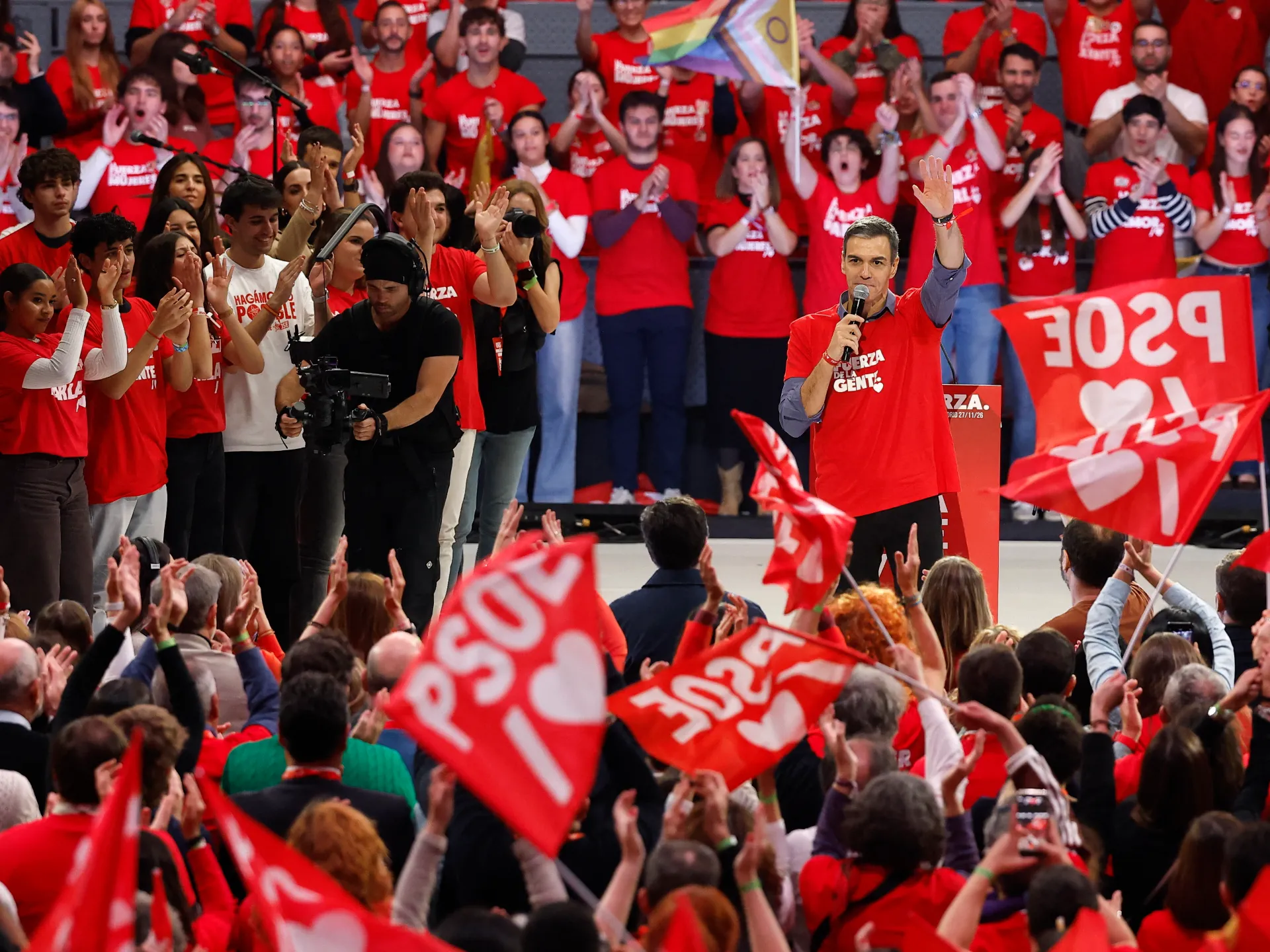
Spanish Prime Minister Pedro Sánchez is seeking re-election in a high-stakes national ballot that presents the electorate with starkly contrasting visions for the country's future, according to reporting by Al Jazeera. Opinion surveys conducted ahead of the vote suggest that the mainstream conservative Popular Party and the far-right Vox party could together secure an absolute majority in parliament. Such a parliamentary realignment would displace the incumbent left-wing administration and usher in Spain's most conservative government in decades.
At the helm of the Spanish Socialist Workers' Party, Sánchez has anchored his re-election bid to the social and economic achievements of his multi-party coalition government. His administration has repeatedly highlighted legislative measures that increased the national minimum wage, strengthened employment contracts, and curbed energy costs for consumers. Supporters maintain that these targeted market interventions provided essential relief to working-class families navigating broader European inflationary shocks.
Sánchez has consistently framed the election as a crucial democratic firewall designed to prevent the reversal of hard-won social gains and progressive rights. Campaigning across major metropolitan hubs, the prime minister has warned that a right-wing victory would jeopardize public welfare programs, pension protections, and climate transition policies. His coalition has urged progressive and undecided voters to mobilize in high numbers to protect the country's modernization agenda.
Conversely, the conservative Popular Party, alongside the hardline nationalist party Vox, has built sustained momentum by aggressively challenging the prime minister's executive record and governance model. Opposition leaders argue that interventionist economic rules and heavy public spending have restricted business growth and compounded national debt. In response, right-leaning candidates have campaigned on promises of widespread tax reductions, streamlined regulatory frameworks, and tighter immigration controls.
The prospect of a right-wing governing alliance carries profound historical resonance for Spain's domestic political landscape. If the Popular Party requires Vox's votes to achieve a governing threshold, it would facilitate the first entry of a far-right movement into the national cabinet since the democratic transition following Francisco Franco's death. Political analysts emphasize that such an outcome would represent a watershed moment in contemporary Spanish democracy.
Voter deliberations have also been shaped by mounting domestic frustrations, particularly an intensifying affordability crisis in the housing market. Despite national housing reforms introduced during Sánchez's term, steep rental hikes and supply shortages have triggered substantial public dissatisfaction in urban centers. Opposition parties have capitalized on these economic pressures, while the governing coalition argues that municipal implementation hurdles have hindered the full impact of their tenant protections.
Beyond the Iberian Peninsula, European policymakers are monitoring the Madrid election closely as an indicator of broader ideological trends across the continent. A victory for the conservative and nationalist bloc would reinforce recent rightward political shifts observed in several European Union member states. Conversely, a re-election victory for Sánchez would offer a notable triumph for social democratic governance in Western Europe.
With political analysts anticipating razor-thin margins in critical regional constituencies, the immediate aftermath of the vote is expected to trigger intense coalition bargaining. Because Spain's proportional electoral system rarely delivers single-party majorities, the distribution of regional seats will decide whether Sánchez can reassemble a governing coalition or hand power to his conservative rivals. Both camps remain focused on turnout as the final vote count determines the nation's political trajectory.
Primary source: Al Jazeera. Newzly rewrites and structures source reporting for clarity; verify critical details at the original.