UK launches low- and zero-interest loans for home energy upgrades
The government-backed Warm Homes Loan Scheme will help UK households finance solar panels, batteries and heat pumps, spreading installation costs over years rather than requiring payment upfront.
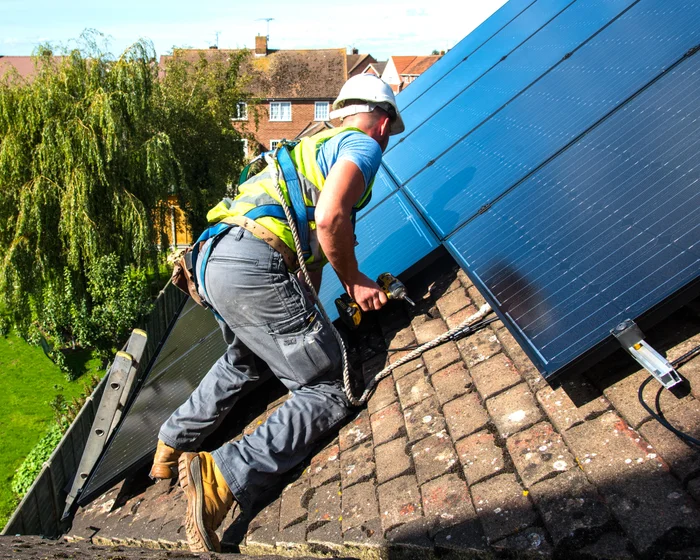
Households across the UK can apply for low- or zero-interest loans to install solar panels, batteries and heat pumps under a government-backed scheme launched on Tuesday. The Warm Homes Loan Scheme aims to remove the need to pay installation costs upfront and help more households reduce their energy bills.
The Guardian reported that the financing could give thousands more households access to low-carbon technologies, with support reaching £35,000. The central proposition is to spread the expense of home upgrades over time, rather than require households to find the full purchase price before work begins.
A government factsheet published on October 27 says the scheme covers England, Scotland, Wales and Northern Ireland. Ten lenders are participating initially, with some products offering interest-free borrowing and certain repayment periods extending to 30 years. Availability across the UK does not mean every applicant will qualify for every product.
The launch addresses a distinction between the potential long-term benefits of an upgrade and the immediate challenge of paying for it. A household may want cleaner heating or its own electricity generation but lack the cash to proceed. Financing changes when that expense is paid, rather than eliminating the expense itself.
That distinction also matters when assessing claims about lower bills. A reduction in spending on energy is not automatically an equivalent improvement in a household’s overall budget once loan repayments are included. Whether an installation produces a net financial benefit will depend on the project’s costs, its performance and the borrowing agreement.
The scheme rules describe a lender-led system supported by public funding, rather than a government loan issued directly to each household. Participating lenders retain responsibility for designing their products and assessing credit risk. The rules also state that the government does not underwrite individual loans or intervene in credit decisions.
Public support takes the form of a capital grant to participating lenders, worth up to 20% of an eligible loan and paid after installation has been verified. The stated purpose is to make reduced-rate finance more affordable to provide while keeping lending and servicing within the existing market. Government backing therefore should not be read as a guarantee of approval.
For households, the practical comparison is between the complete installation and financing packages available to them. A lower interest rate is useful, but the total repayment amount and length of the agreement remain important. A smaller monthly payment can also mean carrying the borrowing for longer, making the full terms more informative than the headline offer alone.
The next stage will be whether the financing translates into completed installations and meaningful savings for borrowers. The government describes the launch as the first part of the scheme, with more lenders and products expected to follow. Its wider impact will depend on household take-up and how the available offers perform in practice.
Primary source: The Guardian Business. Newzly rewrites and structures source reporting for clarity; verify critical details at the original.