Ukrainian Strike Partially Destroys Strategic Crimean Bridge
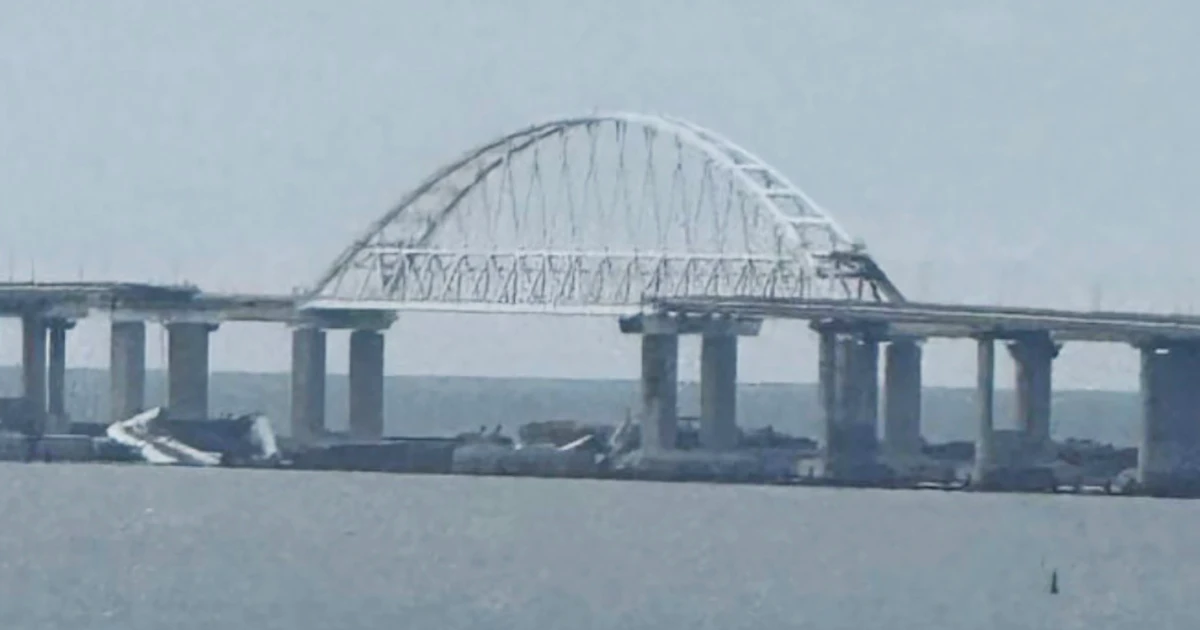
A major Ukrainian strike has partially destroyed the strategic Crimean road bridge, sending a large section into the sea and dealing a severe logistical and symbolic blow to Russian President Vladimir Putin.
In this piece
Ukrainian forces have partially destroyed the Kerch Strait bridge in Crimea, plunging a large roadway section into the water and severing a crucial Russian…
A precision Ukrainian strike has partially destroyed the Crimean bridge, collapsing a large section of the vital roadway into the sea and severing a critical transit route connecting mainland Russia to occupied Crimea. The targeted assault on the Kerch Strait crossing marks one of Kyiv's most consequential strategic blows against Moscow's logistics network. Reports from international news organizations confirmed that the structure suffered severe structural damage that abruptly halted traffic along the heavily guarded link.
According to reports from The New York Times and NBC News, the explosion sheared off an expansive segment of the road bridge, sending debris into the waters below. While Russian authorities have historically scrambled to downplay strikes on the crossing, visual evidence and independent accounts indicated extensive devastation along the roadway. Officials in Kyiv did not immediately disclose the exact operational methods used, though military observers noted the coordinated nature of the attack.
The Kerch Strait bridge, personally championed and inaugurated by Russian President Vladimir Putin following the 2014 annexation of Crimea, holds immense symbolic and operational value for the Kremlin. Beyond serving as a visible emblem of Moscow’s claims over the peninsula, the crossing functions as a principal supply artery for Russian forces operating in southern Ukraine. Any sustained disruption to the artery compounds mounting logistical challenges for Russian troop deployments and materiel transport.
In its November 16 assessment, the Institute for the Study of War highlighted that strikes against key Russian ground lines of communication severely constrain Moscow's operational flexibility. Military analysts have repeatedly emphasized that degrading Crimea's transport links limits Russia's capacity to rotate forces and replenish ammunition across contested front lines. The latest strike exposes persistent vulnerabilities in Russia's integrated air and coastal defense networks around the peninsula.
The timing of the operation demonstrates that Ukraine retains significant capabilities to strike high-value Russian infrastructure despite ongoing pressure across eastern battlegrounds. As observed by The Guardian, analysts suggested Ukrainian planners had preserved critical long-range strike options for strategic moments to shift momentum. By executing a complex attack on such a heavily defended target, Kyiv reinforced its determination to challenge Russian control over occupied territories.
The attack carries substantial geopolitical weight, delivering a public setback to Putin ahead of anticipated diplomatic engagements involving world leaders, including meetings connected to Chinese leader Xi Jinping and Donald Trump. As reported by Reuters, the timing complicates Moscow’s efforts to project absolute control over the conflict zone during international discussions. The visible damage to such a prominent national landmark presents an uncomfortable reality for Russian state messaging on the eve of delicate foreign talks.
With road transit crippled across the strait, Russian military planners face the immediate dilemma of rerouting essential military convoys through vulnerable overland corridors in southern Ukraine. Those alternate rail and road routes run substantially closer to front-line Ukrainian artillery and strike assets, elevating the risk of further interdiction. Transport delays are widely expected to ripple across supply depots supporting Russian operational formations.
Repairing a major submerged span of the bridge will likely require months of engineering work under the persistent threat of secondary attacks. Russian emergency response teams and engineering units are expected to initiate structural assessments, while security forces tighten surveillance throughout the Kerch Strait corridor. Kyiv has signaled that all military infrastructure on occupied territory remains legitimate targets, leaving the crossing in a state of perpetual vulnerability.
As international diplomats observe the fallout, the strike reinforces the fluid dynamics governing the broader war. While Moscow continues to pursue operations along the front lines, Kyiv's ability to dismantle key Russian logistical pillars underscores that the battle for Crimea remains central to the war's ultimate trajectory. Both sides now brace for the operational and political repercussions of the bridge's partial collapse in the weeks ahead.
Primary source: Google News U.S.. Newzly rewrites and structures source reporting for clarity; verify critical details at the original.