US-Based Gujarati Couple Adopts Two Young Children from Surat Orphanage
A New York-based couple of Gujarati origin has legally adopted two young children from an orphanage in Surat, completing a multi-year inter-country adoption process overseen by district authorities.
In this piece
Two young children rescued from the streets of Surat, Gujarat, are set to begin new lives in New York after being legally adopted by an Indian-American couple.…
Two young children rescued from the streets and sheltered in an orphanage in Surat, Gujarat, are embarking on a new life in the United States following their legal adoption by an Indian-American couple. The children, aged four and five, had been living at a specialized adoption agency in the Katargam area after being placed under institutional care. Local administrative officials formally completed the pre-adoption handover, allowing the youngsters to relocate to New York with their adoptive parents.
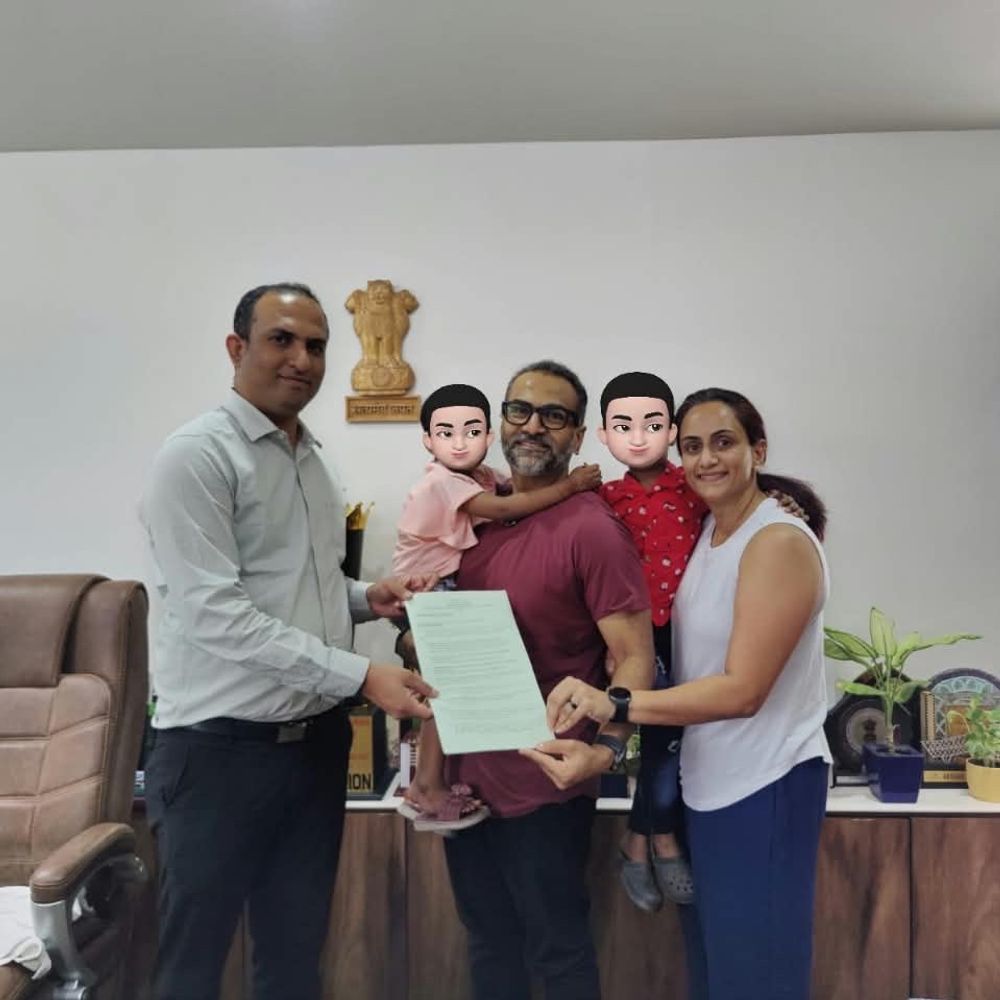
The administrative formalities culminated at the Surat district collectorate, where officials presented the official adoption documentation to the couple. The process concluded a multi-year journey for the prospective parents, who are originally from Gujarat and currently work in the financial sector in the United States. Authorities verified all necessary approvals under statutory inter-country adoption frameworks before permitting the transfer of custody.
Both children had previously been discovered in vulnerable circumstances and rescued from public spaces before being brought to the Katargam child care institution. Social welfare authorities provided them with temporary shelter, medical care, and continuous monitoring while attempting to identify any biological guardians. After statutory inquiries confirmed that no guardians could be traced, child welfare authorities legally declared the children free for adoption.
The cross-border placement was executed under the stringent guidelines established by India's Central Adoption Resource Authority, known as CARA, in coordination with international adoption norms. Under Indian legal procedures, prospective adoptive parents seeking inter-country adoptions must navigate an exhaustive verification pipeline, including extensive background checks, financial evaluations, and home studies conducted in their country of residence. Officials noted that the New York-based couple had initiated their application approximately three years ago.
Inter-country adoptions in India operate under strict regulatory supervision designed to prioritize child welfare and prevent trafficking or exploitation. Following legal amendments and centralized digital processing, CARA mandates that domestic applicants receive initial consideration before children become eligible for international placement. When prospective parents residing abroad are matched, district magistrates and specialized adoption agencies review case files to ensure full compliance with the Juvenile Justice Act.
The successful placement highlights the role of specialized adoption agencies in rehabilitating orphaned and abandoned minors who face uncertain futures without family support. Child welfare experts have long emphasized that while institutional homes provide vital safety and basic necessities, permanent family environments remain crucial for emotional and cognitive development. Placements of older toddlers who have spent years in institutional custody are frequently regarded by social workers as particularly significant milestones.
For members of the Indian diaspora, adopting from their home country or ancestral state represents a meaningful avenue to build families while maintaining cultural connections. Non-resident Indians and foreign citizens of Indian origin form a substantial proportion of overseas adoption applicants processed through the CARA system. Agencies often observe that such placements facilitate cultural continuity and smoother community assimilation as children transition into unfamiliar overseas environments.
With the formal transfer completed in Surat, the family will complete passport, exit visa, and travel arrangements before flying to New York to establish their new household. Under CARA regulations and international convention standards, the adoption process does not end with custody handover. Authorized overseas agencies will conduct scheduled home visits and submit periodic post-adoption progress reports to Indian welfare authorities to ensure the children's well-being and successful integration.
Primary source: Divya Bhaskar NRG. Newzly rewrites and structures source reporting for clarity; verify critical details at the original.