Venezuela Signs Military Deal With US Less Than a Year After Maduro's Removal
Venezuela has signed a military pact with the United States less than a year after Nicolás Maduro's removal, marking a dramatic strategic turnaround between the two nations.
In this piece
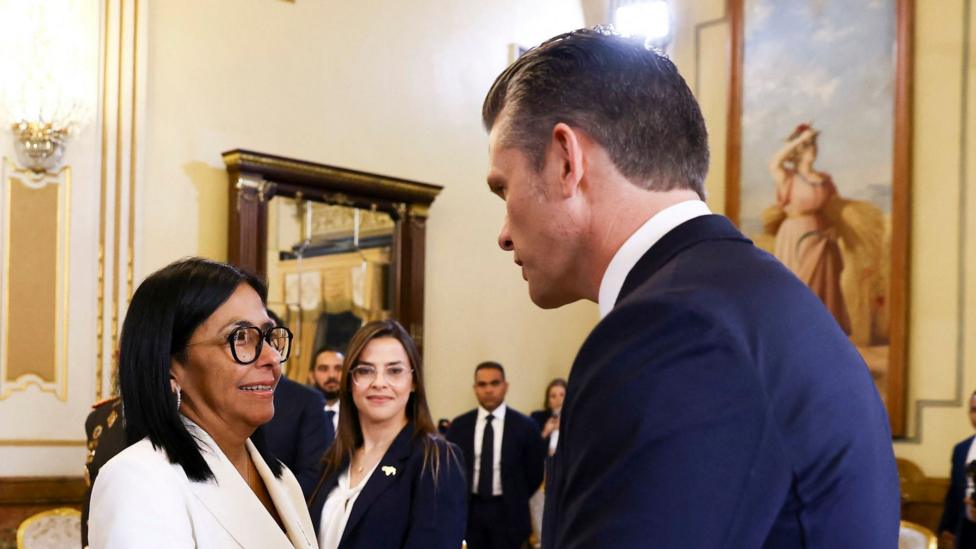
Venezuela has signed a military agreement with the United States less than a year after the removal of Nicolás Maduro. The U.S. Secretary of Defense welcomed…
Venezuela has entered into a formal military agreement with the United States less than a year after the removal of former president Nicolás Maduro from power. The bilateral pact signals a profound realignment in Western Hemisphere geopolitics following decades of bitter confrontation between Washington and Caracas. Officials described the accord as a major breakthrough in restoring formal defense ties between the two nations.
Announcing the development, the U.S. Secretary of Defense emphasized the extraordinary speed and nature of the diplomatic shift. In public remarks, the defense chief stated that Venezuela has gone from our most aggressive regional threat to a compliant security partner. The statement underscored how fundamentally security relations have evolved in the months following the change in Venezuelan leadership.
The newly established agreement marks the formal re-establishment of direct military cooperation between Washington and Caracas after years of diplomatic rupture. Under previous administrations, communication channels had effectively collapsed under the weight of escalating sanctions, rhetorical hostilities, and diplomatic expulsions. This pact provides an official framework for security dialogue that appeared unthinkable only a year ago.
Maduro's departure from power less than twelve months ago served as the crucial turning point enabling this sweeping foreign policy reset. Throughout his tenure, Caracas routinely framed the United States as an existential adversary seeking to undermine Venezuelan sovereignty. With his removal, new political realities in the Venezuelan capital opened direct channels of communication with American defense planners.
The pace of the rapprochement has drawn significant attention across the Americas, reflecting a concerted effort by both sides to stabilize strategic ties. U.S. authorities have moved swiftly to build institutional relationships with Venezuela's armed forces and defense institutions. Analysts point out that establishing cooperative security ties with Caracas serves as a core priority for Washington's broader hemispheric strategy.
The geopolitical implications of the deal extend well beyond bilateral relations between the two governments. For years, Venezuela maintained close strategic, defense, and economic relationships with foreign powers that directly challenged U.S. regional influence. Bringing Caracas into a formal security partnership with Washington significantly alters the strategic balance across Latin America and the Caribbean basin.
The agreement is anticipated to touch upon shared regional security priorities, including maritime monitoring and counter-narcotics coordination. Collaborative initiatives could help address illicit trafficking corridors that flourished during the prolonged breakdown in bilateral law enforcement cooperation. Enhancing shared domain awareness in northern South America remains a central interest for regional defense planners.
Domestically, forging an overt military relationship with the United States represents a delicate transition within Venezuela's political landscape. Decades of entrenched political polarization and anti-interventionist doctrine mean that defense cooperation with the Pentagon will remain under intense scrutiny. Sustaining the partnership will likely require balancing cooperation with domestic political sensitivities.
The Pentagon's explicit description of Venezuela as a compliant security partner also highlights the scope of the strategic shift underway. The phrasing reflects a high level of confidence in Washington regarding the direction of the bilateral relationship and Caracas's willingness to coordinate on security matters. It represents a dramatic departure from the era of reciprocal threats and military posturing.
Looking ahead, both capitals face the task of operationalizing the agreement and defining the practical mechanics of their military collaboration. Diplomats and defense officials will need to establish routine working protocols as the new framework takes effect. As the implementation process unfolds, governments throughout the hemisphere will closely monitor how the evolving partnership shapes regional defense dynamics.
Primary source: BBC US & Canada. Newzly rewrites and structures source reporting for clarity; verify critical details at the original.