world·Karnataka·Bidar District
Vijayendra Faces Protests in Basavakalyan Over Lingayat Religious Status Remarks
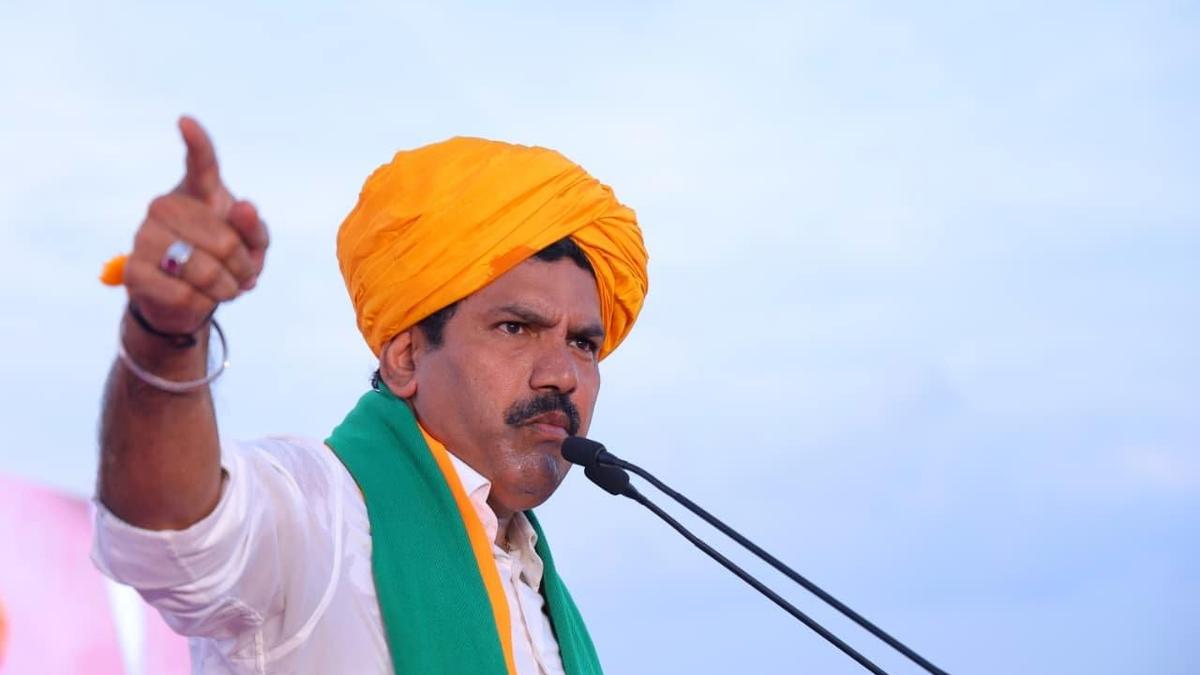
Karnataka BJP president B.Y. Vijayendra was forced to cut short his speech in Basavakalyan after his opposition to granting separate religious status to Lingayats triggered vocal protests among attendees.
In this piece
Karnataka BJP chief B.Y. Vijayendra faced intense protests at the 47th Sharana Kammata in Basavakalyan after opposing separate religious status for Lingayats.…
Karnataka Bharatiya Janata Party president B.Y. Vijayendra encountered intense protests on Saturday during an address at the 47th Sharana Kammata and Anubhava Mantapa Utsav in Basavakalyan. The disruption occurred after Vijayendra publicly voiced opposition to granting a separate religious status to the Lingayat community, prompting vocal objections from the audience. As unrest spread near the stage, the BJP leader was forced to cut short his remarks and leave the event premises prematurely.
The annual congregation in the historic town of Basavakalyan in Bidar district celebrates the teachings of 12th-century social reformer Basaveshwara and the Sharana spiritual tradition. Vijayendra had begun his speech on a conciliatory note, strongly condemning recent derogatory remarks made by an author against Basaveshwara. However, the tone shifted abruptly when his address touched upon the enduring debate surrounding the community's constitutional and religious standing.
Audience members and Basava followers took immediate exception to his remarks asserting that Lingayats are part of the broader Hindu framework rather than an independent faith. Slogans and loud interruptions erupted from sections of the gathering, halting the proceedings as participants registered their grievance. Demonstrators gathered closer to the dais to challenge the state party chief, creating chaotic scenes that organizers struggled to contain.
Faced with escalating chants and heated verbal exchanges across the venue, security personnel and local organizers intervened to prevent further confrontation. Following brief consultations with police officials on site, Vijayendra decided to curtail his speech rather than prolong the standoff. Law enforcement officers escorted him safely away from the venue as agitated attendees continued to voice their displeasure.
The confrontation highlights the deep-seated sensitivities surrounding the demand for independent religious recognition for Lingayats, a movement that has persisted across Karnataka for decades. Proponents maintain that Basaveshwara founded a unique, egalitarian faith in the 12th century that explicitly rejected Vedic rituals, temple-centric worship, and the caste hierarchy. Advocates argue that this distinct philosophy warrants formal statutory recognition as a minority religion distinct from Hinduism.
In contrast, several conservative religious mutts, Veerashaiva organizations, and the BJP have consistently maintained that Lingayats and Veerashaivas form an indivisible part of Sanatana Dharma. Critics of the separate religion demand contend that carving out a separate status divides the community and fragments the broader Hindu fold for political purposes. This ideological rift has repeatedly generated friction between orthodox traditionalists and progressive Basava followers across northern Karnataka.
The episode carries particular political weight for Vijayendra, who represents the Shikaripura constituency and is the son of veteran former chief minister B.S. Yediyurappa. The Lingayat community forms the traditional electoral backbone of the BJP in Karnataka, a base largely cultivated and preserved under Yediyurappa's leadership. Navigating community expectations while upholding the national party's ideological platform presents a delicate challenge for the younger state president.
The issue previously reached a political peak ahead of the 2018 Karnataka Assembly elections, when the state government recommended religious minority status to the central authorities. That move sparked contentious debate across the state before the Union government ultimately declined the proposal. The Basavakalyan incident demonstrates that the underlying community grievances and philosophical divisions remain potent, capable of surfacing unexpectedly at cultural gatherings.
Following the incident, local authorities monitored the situation in Basavakalyan to ensure that subsequent festivities at the historic site proceeded without further disruption. Community leaders and organizers emphasized the need to preserve the spiritual sanctity of the Anubhava Mantapa platform while allowing philosophical dialogue. Political observers note that community identity and religious classification will likely remain sensitive subjects as Karnataka's political parties seek to maintain their regional coalitions.
Primary source: The Hindu. Newzly rewrites and structures source reporting for clarity; verify critical details at the original.