Artists, poets and activists flag shrinking space for expression at Delhi conclave
At a conclave in Delhi, artists, poets and activists said the room for free expression is narrowing, The Hindu reported, treating the complaint as a shared concern rather than a single case.
In this piece
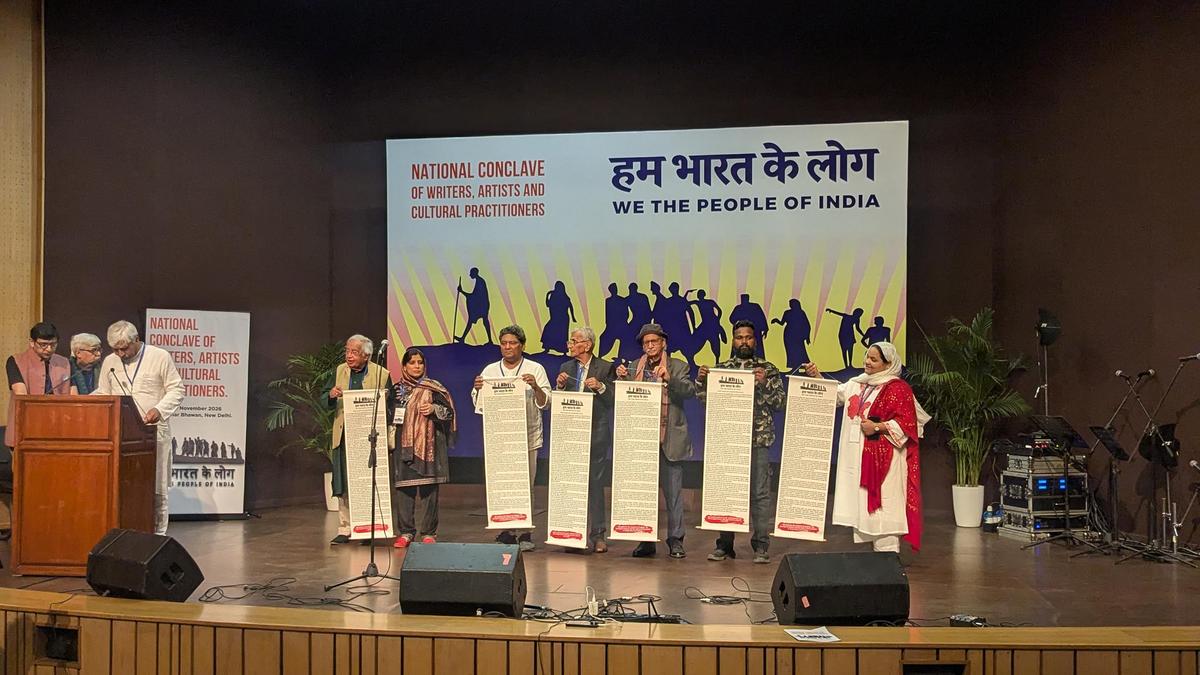
The Hindu reported that artists, poets and activists at a Delhi conclave warned of a shrinking space for freedom of expression. The account gives the warning…
Artists, poets and activists used a conclave in Delhi to flag what they described as a shrinking space for freedom of expression, according to a report by The Hindu carried on Google News.
The published account, as available from the news listing, centres on that warning. It identifies the participants by the roles they brought to the gathering — artists, poets and activists — and places the discussion in Delhi. It does not, in the material at hand, set out a full programme, a list of speakers or a formal resolution.
The phrase attached to their intervention, “shrinking space,” is a complaint about conditions rather than a claim about one artwork, poem or protest. The Hindu’s framing presents it as a collective flag raised at the conclave, not as a finding issued by a court or a government body.
Delhi is a frequent setting for cultural meetings and public discussions that draw people from across India. A conclave of this kind typically brings practitioners and campaigners into the same room so that questions of art, language and public speech can be argued together. The report does not describe how this particular meeting was organised or who convened it.
Freedom of expression is a standing subject in Indian public life because speech, art and protest often meet official rules, platform policies and social pressure at the same time. Participants who say the space is shrinking are usually pointing to that overlap: fewer chances to show work, publish, or speak without consequence. The Hindu report, as summarised in the listing, does not itemise particular bans, cases or incidents behind the remark.
For artists and poets, the stake is practical as well as principled. Exhibition, publication and performance depend on venues, editors, funders and audiences. Activists at the same table are more often concerned with assembly, criticism of authority and the ability to organise. The conclave’s value, on the strength of the report, is that those perspectives were offered together.
What remains unclear from the available text is the scale of agreement in the room. The listing does not say whether the warning was unanimous, how many people attended, or whether officials, institutions or critics of the claim were present to respond. Those details would change how widely the “shrinking space” line can be read.
The report also does not record quotes beyond the substance of the flag itself, nor does it describe next steps the participants said they would take. Any reading that turns the conclave into a campaign launch, a legal strategy or a partisan event would go past what The Hindu’s item, as circulated, actually establishes.
The discussion still matters because Delhi gatherings of this sort often feed later coverage, cultural programming and civic debate. A warning delivered by artists, poets and activists can shape how audiences and institutions talk about risk in creative work, even when the first dispatch is brief.
The Hindu’s account leaves the immediate record at the warning itself. Further reporting would be needed to identify speakers, the organisers, any specific examples cited in the hall and whether the conclave produced a statement. Until then, the established point is narrow and clear: at a Delhi conclave, artists, poets and activists said the space for freedom of expression is shrinking.
Primary source: Google News Delhi. Newzly rewrites and structures source reporting for clarity; verify critical details at the original.