BepiColombo Reaches Mercury Ahead of Historic Orbital Insertion
After an eight-year, six-billion-mile journey, the joint European-Japanese BepiColombo probe has reached Mercury and is preparing to enter orbit on Saturday as only the second mission to circle the planet.
In this piece
The European-Japanese BepiColombo mission has arrived at Mercury after a voyage of more than eight years and six billion miles. Flight controllers plan to fire…
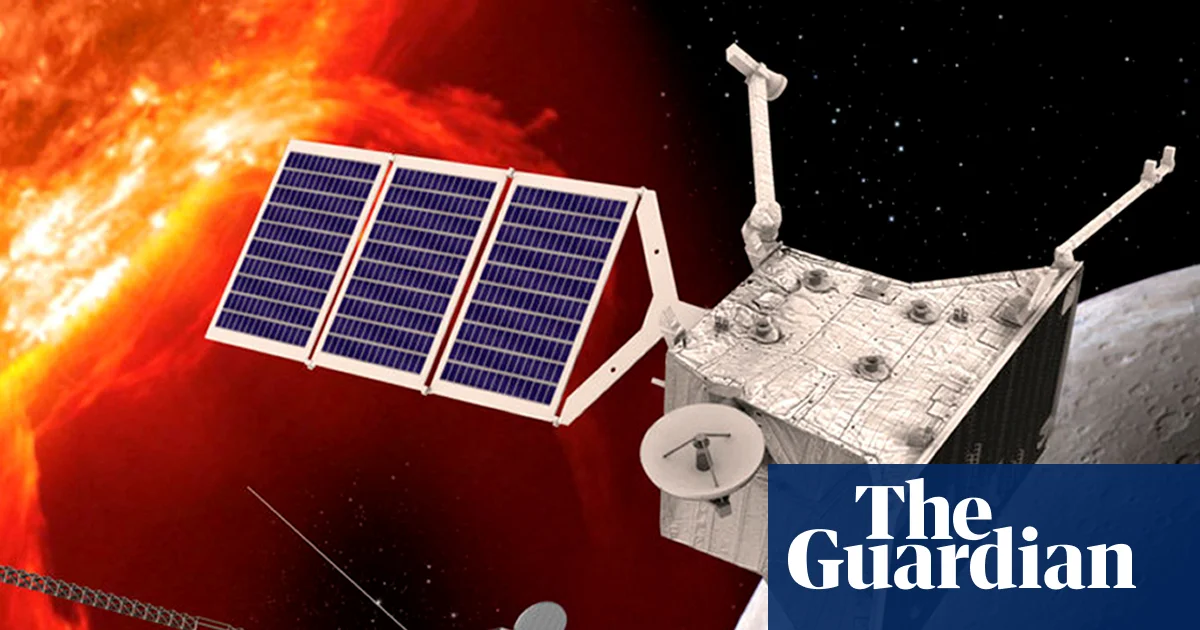
A joint European-Japanese space mission has reached Mercury after an epic voyage spanning more than eight years and six billion miles. The BepiColombo spacecraft has arrived in the vicinity of the sun's closest neighbor and is now preparing to swing into orbit around the tiny, barely explored world. The complex maneuver represents the culmination of years of interplanetary cruising across the inner solar system.
The mission is set to make history this weekend when flight controllers fire the spacecraft's onboard thrusters on Saturday to send it into orbit. If the critical burn succeeds, BepiColombo will become only the second mission in history to successfully circle the first rock from the sun. The delicate arrival requires extreme precision to ensure the probe is captured by the planet's gravitational field.
Configured as a double probe, the BepiColombo spacecraft combines European and Japanese space hardware designed to perform complementary scientific observations. Once separated and established in their target paths, the tandem instruments are slated to study the planet from distinct vantage points. The cooperative international effort reflects years of joint planning and specialized engineering tailored for deep-space science.
Mercury stands as the smallest planet in the solar system, yet it remains one of the least examined celestial neighbors in our planetary neighborhood. Its close proximity to the sun creates severe thermal and gravitational challenges that make reaching and operating around the planet extraordinarily difficult. The arrival of a dedicated orbital mission therefore provides a rare opportunity to gather sustained measurements.
A central goal of the BepiColombo mission is to map the scorched planet's surface in extensive detail. Scientists seek to examine Mercury's heavily cratered landscape, geological formations, and exterior features to reconstruct the planet's dynamic history. High-resolution surveys from orbit will help researchers catalogue planetary landmarks that have remained largely obscured from view.
In addition to surface cartography, the probe is equipped to probe deep beneath the planet's crust to analyze its interior. Planetary scientists are particularly focused on shedding light on Mercury's unusually large metallic core, which occupies a disproportionate volume compared to the cores of other rocky planets. Unraveling the nature of this dense center could explain how the planet retained its composition so close to the solar furnace.
Understanding the internal mechanisms and composition of Mercury carries broad implications for planetary science as a whole. Because Mercury is the innermost world, discoveries regarding its geological makeup can illuminate the physical and chemical conditions present during the earliest stages of planetary birth. Such findings may also assist researchers in interpreting the evolutionary trajectories of terrestrial exoplanets discovered orbiting near distant stars.
The impending orbital insertion marks only the second occasion in the history of space exploration that an artificial satellite has attempted to orbit Mercury. Traveling six billion miles over more than eight years required an intricate series of navigational steps and planetary flybys to manage the spacecraft's orbital velocity. Achieving orbit around the diminutive world stands as one of the most demanding navigational tasks in modern spaceflight.
All attention now turns to Saturday, when ground controllers will monitor the spacecraft closely during its decisive thruster firing. The orbital insertion burn will decide whether the mission can begin its multi-year phase of mapping and internal investigation. If the thruster maneuver goes as anticipated, the joint mission will open an expansive new era of scientific discovery at the inner boundary of the solar system.
Primary source: The Guardian Science. Newzly rewrites and structures source reporting for clarity; verify critical details at the original.