What Are Heat Pumps and How Much Do They Cost?
Governments are encouraging households to adopt heat pumps to reduce fossil fuel consumption and lower utility bills, though high upfront costs and property suitability remain key challenges.
In this piece
Governments are pushing for wider adoption of heat pumps to curb fossil fuel reliance and lower household energy bills. While the clean heating technology…
Governments are stepping up efforts to accelerate the adoption of heat pumps across residential homes, targeting a substantial reduction in fossil fuel reliance and household energy bills. Official clean heating initiatives increasingly frame the technology as a dual-purpose solution capable of addressing environmental mandates while protecting consumers from volatile energy commodity markets. Policymakers view domestic heating decarbonization as an essential component of broader national energy security strategies.
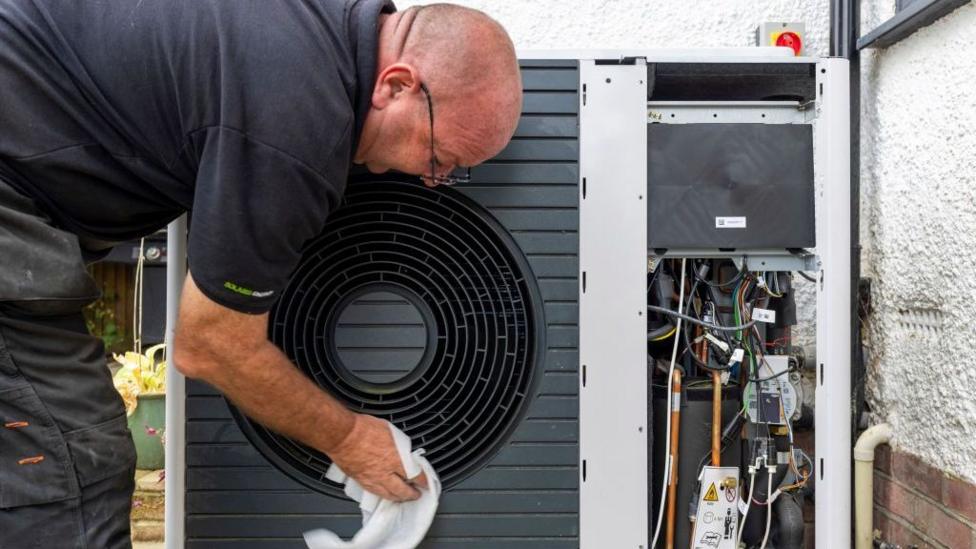
At a technical level, heat pumps function by transferring ambient thermal energy into buildings rather than generating heat directly through combustion. Operating on thermodynamic principles akin to a household refrigerator running in reverse, these systems draw warmth from outside air, ground sources, or ambient water. Electrical compressors then circulate refrigerant fluids through a closed cycle to elevate the captured heat to comfortable indoor temperatures.
Traditional domestic heating systems across most industrialized regions rely heavily on burning fossil fuels such as natural gas or heating oil. Because heat pumps operate entirely on electricity, their greenhouse gas emissions drop progressively as national power grids incorporate larger shares of wind, solar, and other zero-emission generation. This operational transition decouples everyday space heating from direct carbon emissions at the point of consumption.
Engineers and energy researchers frequently cite thermodynamic efficiency as the primary technological advantage of heat pump installations. Unlike conventional fuel boilers that cannot exceed a one-to-one energy conversion ratio, modern heat pumps can deliver several units of heat energy for each unit of electricity consumed. Under optimal installation and weather conditions, this multiplier effect allows systems to provide substantial thermal output with comparatively modest energy input.
However, upfront financial costs continue to represent the single largest hurdle for widespread homeowner adoption. Purchasing the heat pump hardware and completing professional installation typically requires capital outlays several times greater than replacing an ordinary gas boiler. In many cases, properties may also require updated hot water storage tanks, upgraded electrical supplies, or larger pipework before installation can proceed.
System performance and operating economy are also closely connected to the physical fabric and insulation quality of the building itself. Heat pumps typically supply warmth at lower, steadier water temperatures than conventional combustion boilers, making effective wall, floor, and loft insulation critical for maintaining indoor comfort. Homes with significant draughts or older, undersized radiators often require targeted energy efficiency retrofits to maximize heating performance.
Whether switching to a heat pump translates into immediate savings on domestic utility bills depends heavily on the price ratio between electricity and fossil fuels. In energy markets where electricity carries significantly higher per-unit prices or policy levies than piped gas, operating savings can be modest unless efficiency gains are sufficiently high. Balancing equipment costs against monthly operational expenditures remains a primary consideration for families weighing the economic transition.
From an environmental and policy perspective, modernizing home heating is indispensable to meeting legally binding carbon reduction targets. Residential heating accounts for a substantial fraction of overall national fossil fuel demand and urban air emissions in temperate zones. Accelerating the transition toward electric heat systems is widely recognized by scientific and regulatory authorities as crucial for phasing out residential fossil fuel infrastructure.
Looking ahead, the speed of heat pump deployment will hinge on whether policymakers and industry stakeholders can lower upfront expenses and simplify the transition process for consumers. Support programs, manufacturing scale, and growing technician workforces are expected to play pivotal roles in making clean heating accessible across diverse housing sectors. As governments refine their long-term clean energy roadmaps, delivering affordable, dependable heating solutions will remain a decisive priority.
Primary source: BBC Science. Newzly rewrites and structures source reporting for clarity; verify critical details at the original.