Bihar Power Utilities Complete TERI Energy Storage Training to Accelerate Grid Modernization
Officials from Bihar's power utilities completed a two-day capacity-building programme on Battery Energy Storage Systems organized by TERI, strengthening technical capabilities as the state targets 6.1 GWh of storage by 2030.
In this piece
Bihar's energy utilities have concluded a specialized two-day training programme on Battery Energy Storage Systems led by TERI, GIZ, and the central renewables…
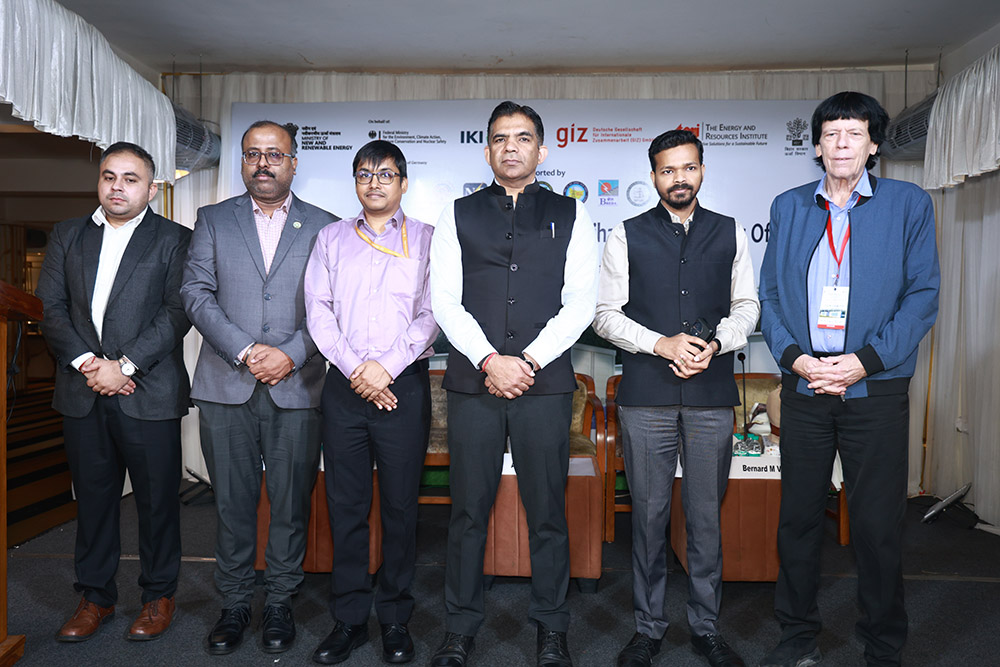
The Energy and Resources Institute, in collaboration with Deutsche Gesellschaft für Internationale Zusammenarbeit and the Ministry of New and Renewable Energy, has concluded a two-day capacity-building programme on Battery Energy Storage Systems in Patna. The initiative was designed to bolster the technical, operational, and regulatory preparedness of Bihar's power sector institutions as the state accelerates its transition toward clean energy.
The training sessions brought together engineers, planners, and senior officials from across the state's power ecosystem. Key participating entities included the Bihar Renewable Energy Development Agency, Bihar State Power Holding Company Limited, Bihar State Power Generation Company Limited, and Bihar State Power Transmission Company Limited, along with state distribution utilities North Bihar Power Distribution Company Limited and South Bihar Power Distribution Company Limited.
Organized under the Indo-German development cooperation project titled Energy Storage for Renewable Energy Integration in India, known as StoREin, the workshop provided comprehensive instruction on deploying grid-scale battery systems. Curriculum modules addressed the full lifecycle of energy storage projects, ranging from technical sizing and grid-forming inverter controls to economic modeling and safety protocols.
Participants evaluated operational strategies for integrating second-life electric vehicle batteries and addressing cybersecurity vulnerabilities in modern smart grid architectures. Expert trainers also led detailed discussions on fire protection standards, asset degradation tracking, and the integration of battery management systems into state dispatch frameworks.
The capacity-building drive aligns directly with the ambitious targets outlined under the Bihar Renewable Energy Policy, which sets a goal of achieving 24 gigawatts of renewable energy capacity alongside 6.1 gigawatt-hours of energy storage by 2030. Reaching these benchmarks will require rapid infrastructure expansion and an internal workforce capable of executing complex procurement and grid synchronization tasks.
Grid-scale battery storage has emerged as an urgent priority for Bihar due to widening divergences between power supply and electricity consumption patterns. Peak electricity demand across the state has repeatedly surged past 9,400 megawatts during late evening hours, precisely when rooftop and utility-scale solar generation drops to zero.
State utility planners have emphasized that containerized battery storage installations can be developed and commissioned in roughly 12 to 15 months, offering a dramatically shorter gestation period than conventional pumped storage hydro projects. By absorbing surplus daytime solar generation and discharging it during peak evening windows, storage systems can stabilize grid frequency and curtail reliance on costly spot-market power purchases.
Bihar is already advancing concrete storage assets across multiple districts, anchored by a major solar-plus-storage installation at Kajra in Lakhisarai district that features planned battery capacity alongside solar generation. State generation authorities have also moved forward with standalone storage tenders under tariff-based competitive bidding, complemented by utility-level storage projects planned in Barauni.
State regulatory frameworks have adapted to support these procurement mechanisms, with the Bihar Electricity Regulatory Commission reviewing and approving long-term power purchase agreements tied to multi-hour battery storage. These regulatory approvals establish predictable revenue streams for project developers while giving distribution companies guaranteed access to dispatchable green electricity during peak deficit hours.
As Bihar prepares to tender additional storage capacity, officials indicated that the operational insights gained from the training will inform upcoming tender specifications, interconnection standards, and monitoring routines. Organizers noted that continued technical collaboration between national research institutes, international development partners, and state utilities will be vital to ensuring the smooth rollout of battery storage across the eastern region.
Primary source: Google News Bihar. Newzly rewrites and structures source reporting for clarity; verify critical details at the original.