Brazil’s Famed Spix’s Macaw Revival Stalls Amid Deepening Controversy
Decades after vanishing from the wild, the rare blue parrot that inspired the animated film 'Rio' became the centerpiece of an ambitious reintroduction campaign that has now unraveled amid sharp scientific dispute and operational turmoil.
In this piece
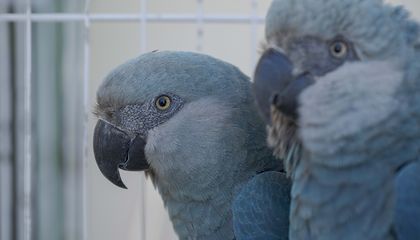
The Spix’s macaw, a rare blue parrot native to Brazil that inspired the animated movie 'Rio,' disappeared from the wild decades ago. While an international…
A high-profile international initiative designed to restore Brazil’s iconic Spix’s macaw to its natural habitat has unraveled amid widespread controversy and institutional friction. More than three decades after the striking blue bird disappeared from the wild, the ambitious project that once promised a landmark ecological revival has stalled, leaving conservationists grappling with an uncertain path forward.
The Spix’s macaw captured global imagination in 2011 as the inspiration for Blu, the charming protagonist of the hit animated film "Rio." In the fictional narrative, the species overcomes steep odds to thrive once again in South American forests. In reality, the species has faced a far more precarious and contentious journey since disappearing from the wild around the turn of the century.
Decades of rampant habitat loss and aggressive poaching by international wildlife traffickers stripped the semi-arid Caatinga woodlands of northeastern Brazil of the bird. By the early 2000s, the species was officially declared extinct in the wild, with only a few dozen birds surviving in private collections and specialized aviaries worldwide. In response, a patchwork of private breeders, international organizations, and government wildlife authorities banded together to establish a coordinated captive-breeding program.
The long-term goal centered on breeding healthy generations in captivity and gradually returning them to protected reserves in Brazil. Early milestones in the multi-million-dollar program generated significant optimism, culminating in initial releases intended to test whether captive-reared macaws could adapt to the harsh environment. Conservationists hailed the releases as an inspiring triumph that might serve as a model for rescuing other critically endangered wildlife.
That optimism quickly gave way to bitter discord among the key institutions involved in the project. The complex partnership began fracturing over disputes involving governance, international oversight, and the handling of the captive population. Rather than functioning as a unified scientific endeavor, the initiative became entangled in conflicting priorities and legal disputes over custody and control of the remaining birds.
Compounding the administrative gridlock were severe biological concerns, including heightened biosecurity risks within breeding facilities. Researchers and veterinarians raised alarms regarding avian illnesses, such as beak and feather disease, which pose an existential threat to fragile avian populations with limited genetic diversity. Managing health safeguards while attempting to scale captive numbers created mounting friction between scientific advisors and facility managers.
The breakdown of the program carries serious implications that extend far beyond a single species. Reintroducing animals that are entirely extinct in the wild requires near-perfect alignment among governments, private caretakers, and field scientists. When trust erodes and institutional coordination collapses, the delicate biological momentum built over decades of painstaking captive breeding can evaporate within a few breeding seasons.
The situation also highlights the precarious reliance on private aviculturists to safeguard public ecological heritage. Because private collections held most surviving Spix's macaws following their extirpation in the wild, public authorities had to negotiate complex agreements to access the gene pool. The resulting disputes demonstrate how privatized conservation models can clash with national conservation sovereignty and transparent scientific standards.
Moving forward, independent wildlife experts stress that salvaging the Spix’s macaw will require rebuilding broken regulatory oversight and restoring scientific transparency. Any sustainable path toward wild recovery depends on resolving open disputes between international partners and establishing rigorous disease monitoring across all captive groups. For now, the dream of seeing wild blue macaws reclaim their historic skies remains tangled in the very human conflicts that conservation was meant to transcend.
Primary source: Smithsonian Magazine. Newzly rewrites and structures source reporting for clarity; verify critical details at the original.