Delhi Government Opens Arvind Kejriwal's Former Residence to Media
The Delhi government has opened former Chief Minister Arvind Kejriwal’s controversial Flagstaff Road residence to journalists, showcasing extensive luxury renovations and itemized price tags ahead of planned public tours.
In this piece
The Delhi government hosted a media walkthrough of 6, Flagstaff Road, the former residence of Arvind Kejriwal dubbed 'Sheesh Mahal,' before opening it to public…
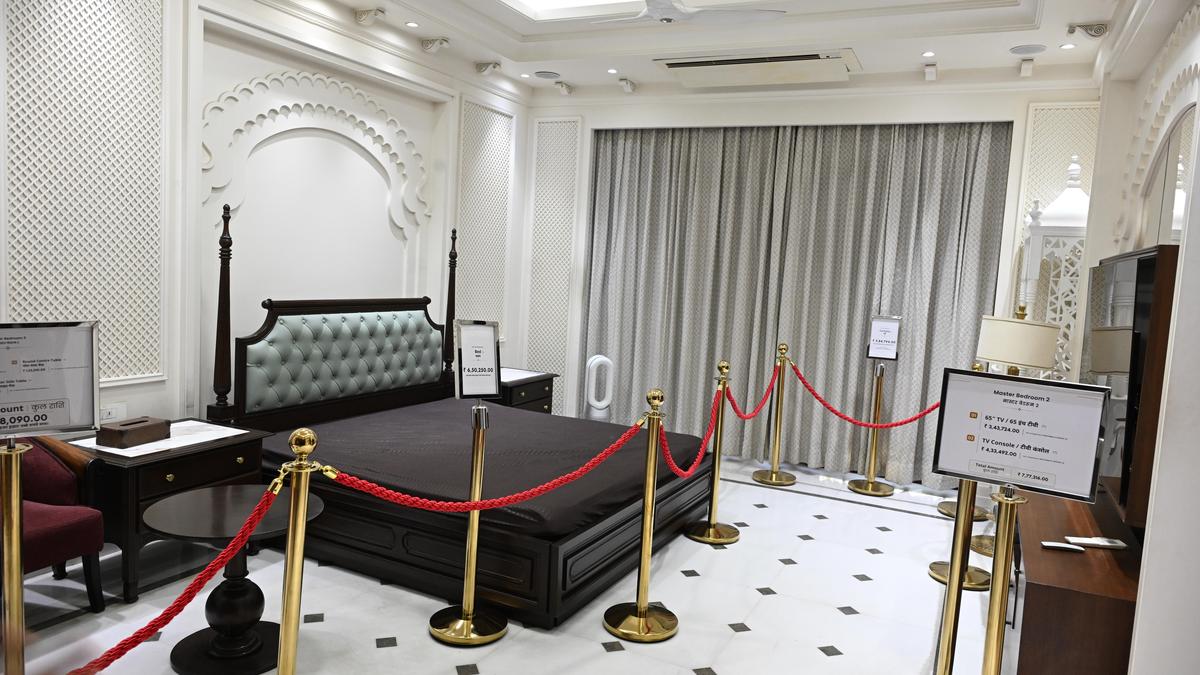
The Delhi government has opened the 6, Flagstaff Road bungalow, the former official residence of former Chief Minister Arvind Kejriwal, to journalists ahead of planned public viewing. The property, labeled "Sheesh Mahal" by political opponents, was opened for an escorted media walkthrough showcasing its interior renovations, layout, and fittings. The government organized the visit to provide an unhindered look inside the sprawling Civil Lines complex before general visitors are granted access.
During the guided tour, public works officials and representatives led reporters through the multi-level premises, drawing attention to decorative elements, imported marble, and premium fixtures. Government representatives highlighted itemized costs for several luxury installations, pointing to expensive chandeliers, specialized furnishings, and automated systems across the estate. Placards placed across various rooms indicated high-end specifications, with officials asserting that public funds were inappropriately channeled into private opulence.
The administration framed the media preview as a step toward public accountability, alleging that tens of crores of rupees were spent on lavish alterations during Kejriwal's tenure. Officials argued that the scale of expenditure sharply contrasted with standard allocations for ministerial quarters and circumvented conventional administrative approvals. They contended that taxpayers have a democratic right to witness firsthand how government resources were utilized on executive housing.
Leaders of the Aam Aadmi Party have consistently pushed back against the accusations, dismissing the ongoing campaign as a targeted political diversion designed to discredit their leadership. The party has maintained that the bungalow, originally constructed decades ago, suffered from severe structural degradation, water leakage, and safety hazards that demanded comprehensive reconstruction. Spokespersons emphasized that modernizing government offices and official residences is a standard administrative procedure carried out by engineers rather than personal indulgence.
The political dispute over the Flagstaff Road residence first erupted when audit inquiries and opposition parties questioned the approval processes and financial sanctions surrounding the multi-crore overhaul. Opponents argued that the refurbishment went far beyond routine maintenance, initiating complaints that led to formal reviews by central and local oversight bodies. Those inquiries centered on whether building permissions, cost ceilings, and heritage preservation norms were bypassed during the construction phase.
The controversy took on outsized political symbolism because Kejriwal and the Aam Aadmi Party originally rose to national prominence on a platform of strict anti-corruption and austere governance. Political adversaries seized on the opulent fixtures to challenge that founding political identity, turning the property into a centerpiece of electoral debates and press confrontations across the capital. The term "Sheesh Mahal" quickly became a recurring campaign slogan aimed at undermining the party's grassroots appeal.
Following the media preview, authorities announced that the doors of the bungalow will soon be opened to common citizens through an organized ticketing system. Officials indicated that guided slots and nominal entry fees will be implemented to manage visitor flow while allowing residents of Delhi to inspect the premises directly. Preparations are reportedly underway to establish secure visitor pathways and logistical controls to accommodate anticipated public curiosity.
Kejriwal vacated the Flagstaff Road estate following his resignation from the chief minister's post, after which the property became embroiled in bureaucratic wrangling over possession, inventory records, and official allotment. The estate has since remained unoccupied by subsequent administrative leaders while formal inquiries into its procurement and renovation files proceeded. Departmental reviews have continued to assess the inventory of fittings and fixtures left inside the premises.
With public tours slated to commence in the coming days, the government intends to keep the spotlight firmly on governance standards, administrative ethics, and public expenditure. Political observers expect the site to remain a deeply polarized issue as rival parties continue to trade charges over institutional transparency and executive propriety in the national capital. The coming weeks will test how the broader public responds to the unprecedented move of opening a former chief minister's official quarters to public scrutiny.
Primary source: Google News Delhi. Newzly rewrites and structures source reporting for clarity; verify critical details at the original.