From the Space Station, Lightning Looks Like Fireworks Between Clouds
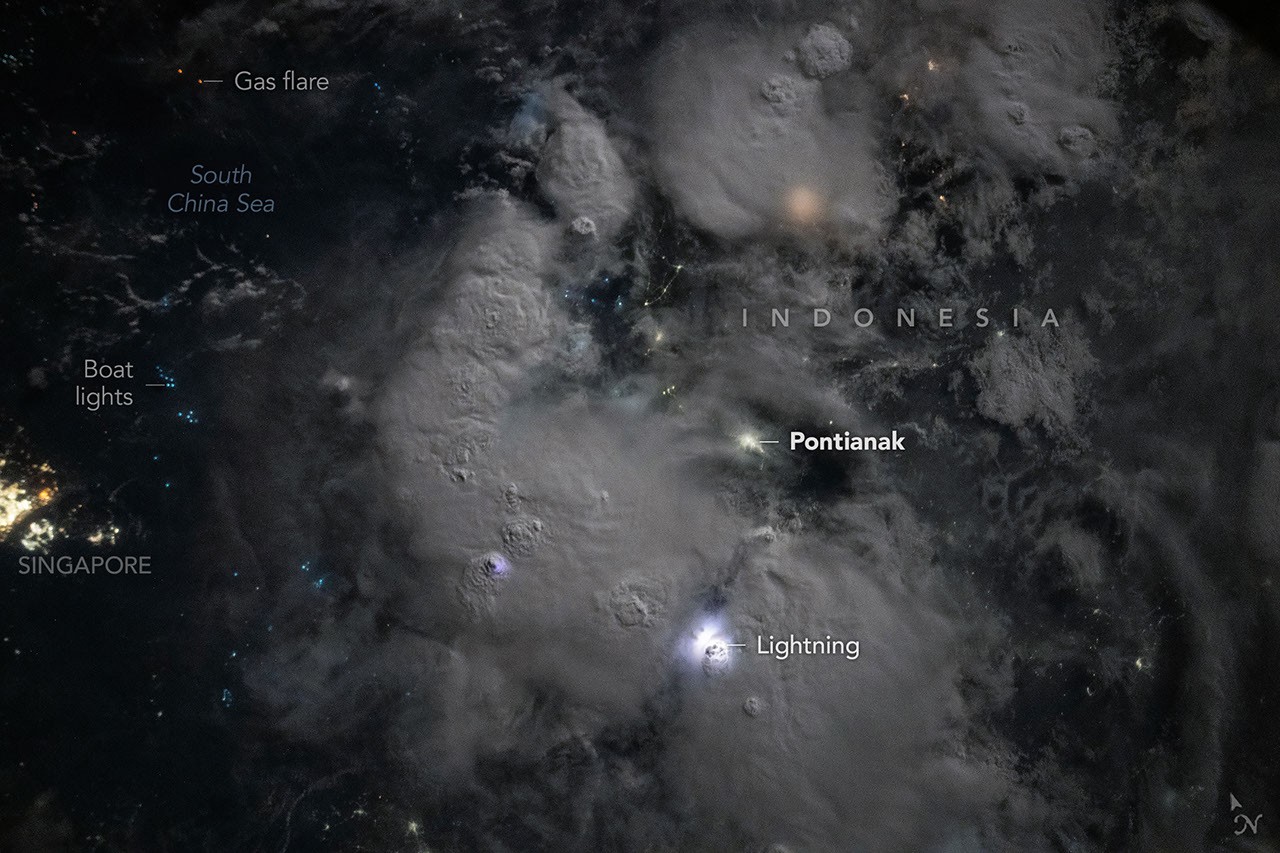
NASA’s Earth Observatory says the spectacular sight of lightning stands out for many astronauts looking back at Earth from the space station. The agency likens the flashes to fireworks tossed from cloud to cloud.
In this piece
A NASA Earth Observatory item titled “Tossing Fireworks from Cloud to Cloud” highlights lightning as a view many astronauts remember from the International…
NASA’s Earth Observatory is drawing attention to a view many astronauts say stays with them: lightning flashing across Earth as seen from the International Space Station. The item, titled “Tossing Fireworks from Cloud to Cloud,” describes that spectacle as a standout when crews look back at the planet.
The accompanying summary is brief. It says that for many astronauts, the spectacular sight of lightning stands out when they look down from the station. NASA frames the discharges as fireworks being tossed from cloud to cloud, an image offered to readers rather than a technical label for one storm.
From orbit, weather appears as a moving pattern of clouds, daylight, and darkness rather than a single local forecast. Lightning is among the weather processes bright enough to register at once against Earth’s night side, which helps explain why station crews have described it as memorable among other sights from above.
The title’s cloud-to-cloud image points to electrical discharges traveling between clouds, a path meteorologists have long distinguished from bolts that reach the ground. The NASA note does not identify a particular flash, region, or storm system beyond that comparison.
The station’s vantage is what makes the fireworks comparison intelligible. Astronauts are high enough to see broad fields of cloud tops, so a series of flashes can look like light moving across a storm instead of a single strike at one place on the ground. The published text does not specify which crew, camera, or orbital pass produced the view.
That limit shapes how the item should be read. The material released with the headline does not name a date, a place on Earth, an instrument, or a quoted astronaut. Finer claims about where the lightning occurred, or about a new measurement tied to the scene, would go beyond what NASA stated in the short notice.
The observation still matches a familiar use of astronaut photography: it shows the atmosphere as an active system that people on the ground usually meet from inside one storm. Lightning is both a hazard for aviation and outdoor activity and a visible sign of strong convection. The Earth Observatory piece itself does not attach new safety guidance or a new research result to the image.
NASA’s Earth Observatory regularly publishes views of the planet, including photographs taken by station crews, as a public window on Earth science. A lightning view sits where that outreach meets the ordinary experience of thunderstorms. The agency’s short description treats the sight as something many astronauts notice, rather than as a one-time anomaly.
Readers looking for the photograph, its caption, and any location or crew details will find them on the Earth Observatory page NASA linked from its breaking-news listing. Until those details are taken from the full caption, the confirmed point remains the one NASA stated: from the station, lightning can look like fireworks thrown from cloud to cloud.
Primary source: NASA Breaking News. Newzly rewrites and structures source reporting for clarity; verify critical details at the original.