NASA Picture of the Day Sets the Milky Way Against an Aurora
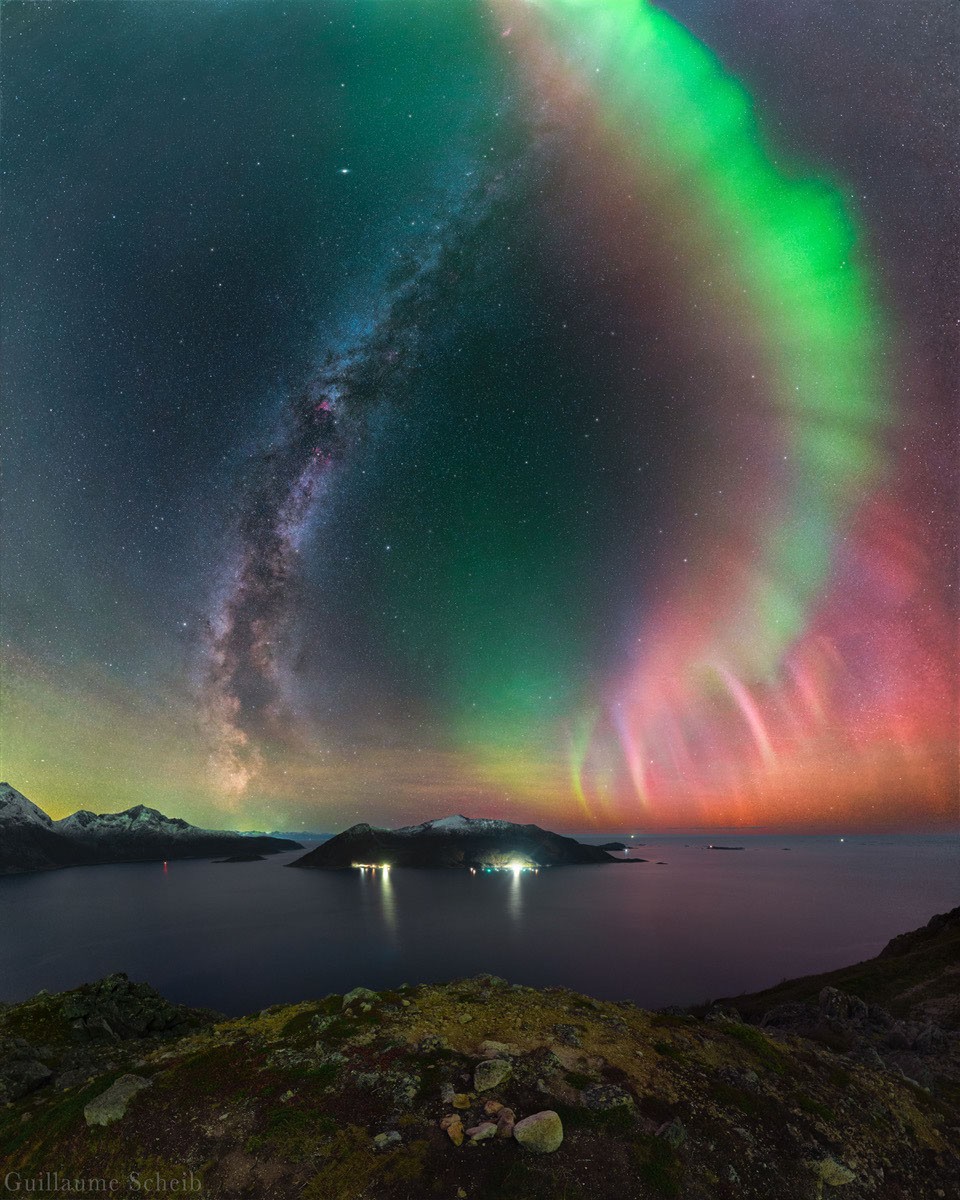
NASA’s Astronomy Picture of the Day for November 17, 2026, is titled “Milky Way versus Aurora,” with original and annotated views and the series’ usual short note from a professional astronomer.
In this piece
NASA featured “Milky Way versus Aurora” as its Astronomy Picture of the Day for November 17, 2026. The entry follows APOD’s daily format: a cosmos photograph…
NASA’s Astronomy Picture of the Day for November 17, 2026, is titled “Milky Way versus Aurora,” setting the galaxy’s starry band against the glow of an aurora in a single featured image. The listing points to both an original view and an annotated view. The item appears on NASA’s science site as that day’s picture of the cosmos.
The program’s standing description, included with the post, says each day a different image or photograph of the universe is featured, along with a brief explanation written by a professional astronomer. That is the structure behind Tuesday’s selection. The page also carries the usual archive, calendar, and education links that surround the daily feature.
The title is the firmest statement of what the photograph shows. “Milky Way versus Aurora” frames the distant galaxy and a luminous display in Earth’s atmosphere as visual counterparts in one sky. Location, photographer credit, and a technical account of how the frame was made sit outside the text that circulated with the listing.
In ordinary terms, the Milky Way is the galaxy that holds the Sun. To the eye it can look like a pale band of stars and dust across a dark sky. An aurora is light produced high in Earth’s atmosphere when energetic particles, guided by the planet’s magnetic field, strike atmospheric gases.
A single photograph can hold both because they lie at very different distances along the same line of sight. Auroral light forms relatively near Earth. The Milky Way’s band is a view through the disk of the galaxy, far beyond the atmosphere that is glowing in the foreground.
The mention of an annotated version alongside the original indicates that NASA is offering a labeled companion so viewers can separate features in the scene. The available text stops short of listing those labels. The annotation key belongs on the full image page rather than in the short feed.
Much of the circulated text is navigation and the standard APOD introduction, ending at the annotated Milky Way reference. Camera settings, a named observing site, and any tie to a particular solar event are absent from that record and remain unconfirmed here. Reporting from the excerpt can safely carry the date, the title, and the dual presentation.
Night-sky pictures often invite strong inferences. A bright aurora can coincide with disturbed space weather, and a visible Milky Way implies a dark sky, while the listing itself stays with the pairing. Storm timing, forecasts, and place names await the full caption on the NASA page.
Features like this still matter for public astronomy. APOD is built to put one carefully chosen photograph, and a short professional note, in front of a broad audience every day. For November 17, the chosen subject is the contrast between galactic structure and atmospheric light.
Skywatchers often meet the two subjects under different conditions. Auroras draw the most attention at higher latitudes and during stronger solar activity, while the Milky Way’s faint band rewards dark skies and a clear view of the horizon. Tuesday’s title joins them in one picture and leaves open whether the image is offered as a viewing guide.
The entry will remain in the APOD archive under its November 17, 2026, date as the series moves on to the next day’s image. Readers looking for the astronomer’s explanation, the annotation, and photo credits can use NASA’s science page for “Milky Way versus Aurora.” Until that fuller caption is in hand, the reliable facts are the date, the title, the original and annotated views, and APOD’s standard daily format.
Primary source: NASA Breaking News. Newzly rewrites and structures source reporting for clarity; verify critical details at the original.